The Silver Lake Reservoir gets plenty of foot traffic from people walking its 2.2-mile loop, but until recently, there was one thing missing from their morning routine: a good cup of coffee without having to stray from its path.
This is where Cafe APÁ comes in: a small Suzuki truck turned into a mobile espresso stand. A tapestry draped over the truck bed reads “APÁ Coffee” in burnt reddish-brown paint. The hum of a generator blends with the morning birds and the rustling trees. On the bed of the truck, a red espresso machine sits alongside bags of coffee beans, a molcajete filled with giant oranges, pumpkins lining the makeshift counter, and a red vase of dried flowers. It’s a tiny operation, but every detail feels carefully considered.
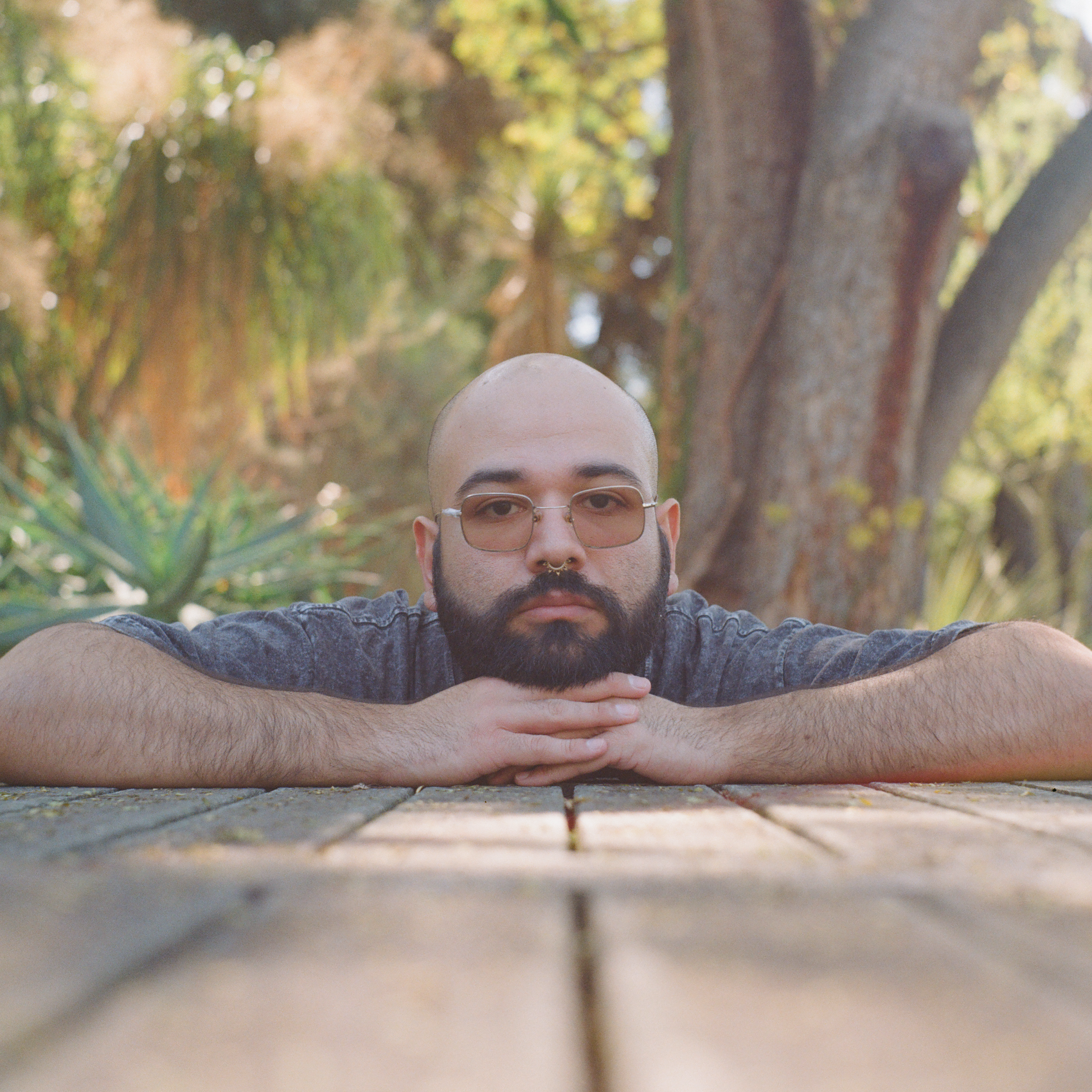
Quique, the man behind all the espresso pours and toasted spices filling the morning air, wears a black Dickies jumpsuit with APÁ painted in the same burnt red across the pocket. He was born and raised in West Adams, in a family from El Salvador, and the stories and traditions they passed down have helped shape his relationship with coffee.
“APÁ is an unapologetic thank you to my parents for teaching me to be proud of my roots,” he says. “The name APÁ comes from my dad. It’s a familiar, affectionate way of saying ‘dad’ in Spanish, but even though it’s named after him, it’s really a tribute to both my parents and our family. If you’ve seen the man with the mustache and glasses in our posts or hanging around the truck, that’s my dad.”
Said dad, Carlos, is hard to miss. He sits on one of the orange cushions near the flower bed, chatting with customers while Quique works the espresso machine. It’s a small detail, but it changes the whole experience. The truck might be a coffee stand, but it also feels like an extension of Quique's home.
“I grew up hearing stories about coffee in El Salvador,” Quique says. “Picking the cherries, drying them, preparing each cup your own way. My grandmother even sold coffee on the side of the street, and here I am, generations later, doing something similar in Los Angeles.”
The beans he uses come from Juayúa, El Salvador, where they're grown, harvested, and processed before being shipped green to Los Angeles for roasting. Roasted medium-light, they bring out notes of blueberry and Concord grape, with the acidity of cherimoya and a cacao nib finish.
Quique doesn’t have formal coffee shop training, but has quickly developed a rhythm of his own. The setup invites people to stick around, whether they're settling onto an orange cushion or chatting with a stranger while they wait.
“One of my favorite things so far has been seeing the people APÁ brings together,” Quique says. “People from completely different backgrounds meeting over coffee, sharing stories, and becoming friends. That’s really what I hope to keep building.”
The menu is simple. There's café con alguashte, coffee flavored with the customary seasoning of toasted, ground pumpkin seed; americanos sweetened with panela, or unrefined cane sugar; a shuco de matcha, in which fermented purple corn meets silky, umami-rich, single-origin matcha from Japan’s first harvest.
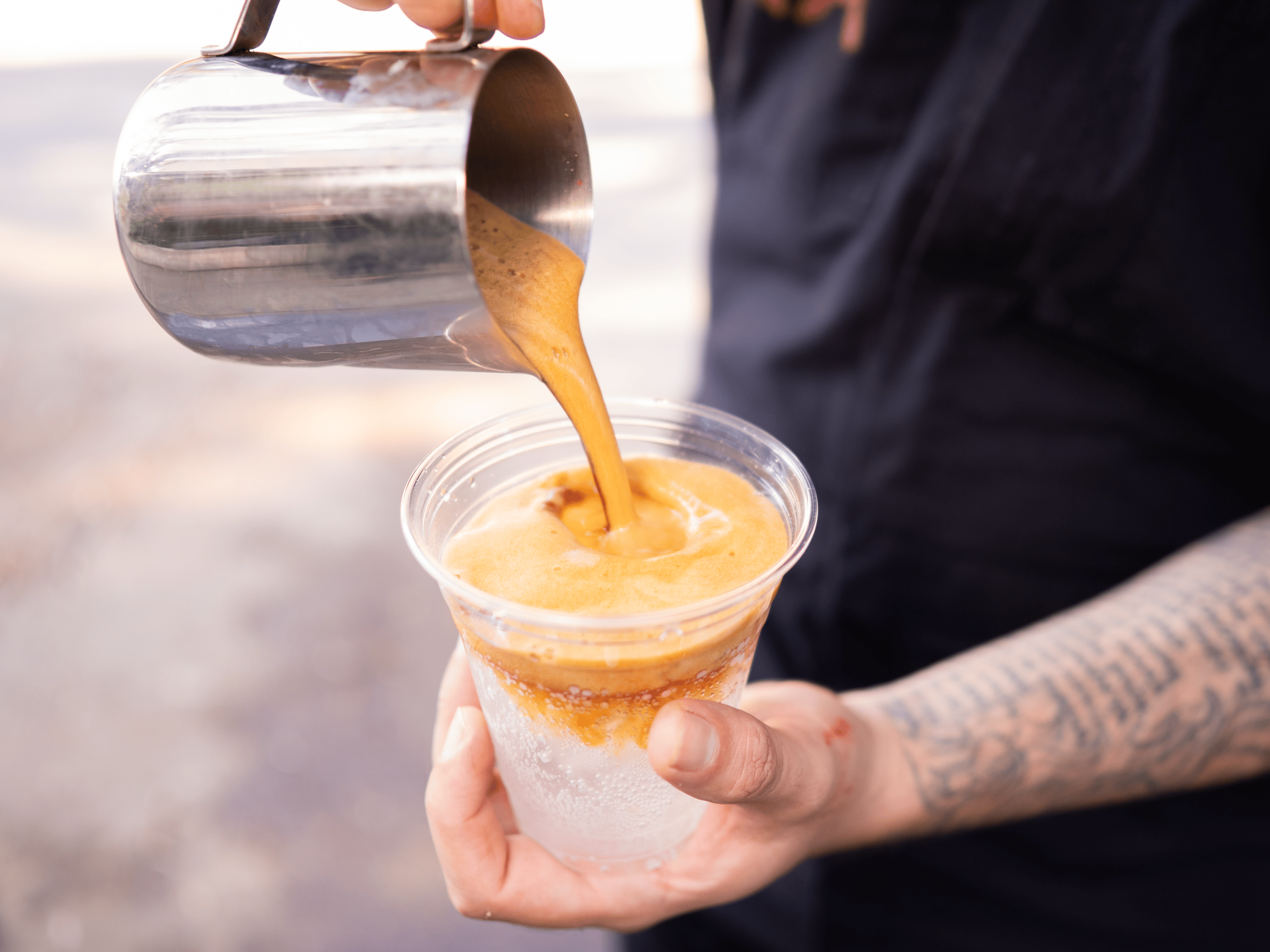
There's also panela and orange, which is Juayúa single-origin espresso and sparkling Mineragua water, lifted with panela that has been infused with orange peel and fresh organic orange zest. Espresso shots and pour-overs bear caramel depth, bright citrus, and a clean finish.
The drinks highlight Salvadoran ingredients and coffee traditions, bringing a taste of Quique’s family’s homeland to the side of the reservoir.
“I wanted to create something that celebrated our culture without watering it down to fit into the specialty coffee world,” he says. “Our flavors, traditions, and stories deserve to exist as they are.”
Coffee isn’t Quique's only creative outlet. When he's not pulling espresso shots, he’s making art for his other project, APÁ ESTUDIOS, drawing from many of the same influences that shape APÁ.
“My art practice is really an extension of that curiosity,” he tells L.A. TACO. “I love working with different materials, textures, and objects, and a lot of what I create is influenced by my Salvadoran roots, Los Angeles, family, labor, and the stories we carry with us.”
On the truck bed sits TEKISIC, a concrete and wood sculpture Quique designed for pour-over coffee. It’s a great example of how his art practice intersects with his coffee stand. His website sums up the philosophy behind his work: objects made by human hands, without hiding the labor behind them.
The line keeps growing, but nobody seems particularly bothered by the wait. One customer tells me they discovered APÁ on TikTok. Another couple has come from Watts to try it before starting their day.
“I’m Salvadoran and my husband is Guatemalan, so we knew we had to come before work,” one woman tells me.
Quique works alone, weighing each shot and making every drink with care. Emilio Valdez, L.A. TACO’s contributing photographer, has spent several years as a barista, and watching Quique work triggers flashbacks to his own shifts: a line of people watching as you pour one cup at a time.
Feeling for Quique, he jokes, “You can give me a bad shot. I don’t mind, I swear.”
“I would never,” Quique says, never cutting corners, even if you ask him to. The beans are ground in the moment, each shot is weighed out, and orange is hand-zested over drinks for the little extra touch.
Quique made us an off-menu special of café de palo.
“It’s something we do in the countryside,” he explains. “Roast a green coffee at home to a medium-dark roast, put allspice in, the star canela (which refers to a combination of star anise and cinnamon), cacao, and morro seed. Roast all of that, grind, and then you brew it. I did all that, then I turned it into a syrup to enjoy as a latte.”
The café de palo is silky, slightly fruity, with a creamy caramel flavor; it's less bitter, with a round mouthfeel.
Quique has dreams of making the café de palo as big as its Mexican variation, café de olla.
“Or even bigger!” he says.
Some customers have been coming since APÁ first started operations a few weeks ago. One woman stops by, sees the growing line, and lights up.
“Look at this line!” she tells him. “That’s what I like to see!”
She says it with the pride of someone watching a friend’s hard work pay off, then settles in next to Quique’s dad for their morning check-in.
L.A. has plenty of coffee shops with immaculate interiors and menus full of tasting notes. There is something so alluring about the anti-pretentiousness of APÁ: It's a man, his father, his truck, and a single espresso machine against the world. People keep showing up ready to make APÁ part of their morning routine.
“I really don’t know exactly what APÁ will become yet,” Quique says. “But I know I want to keep creating, sharing good coffee, and building something meaningful that makes people feel welcome.”
If the first few weeks are any sign, APÁ is only getting started.
To keep up with Cafe APÁ follow them on Instagram, where they post their schedule daily.