


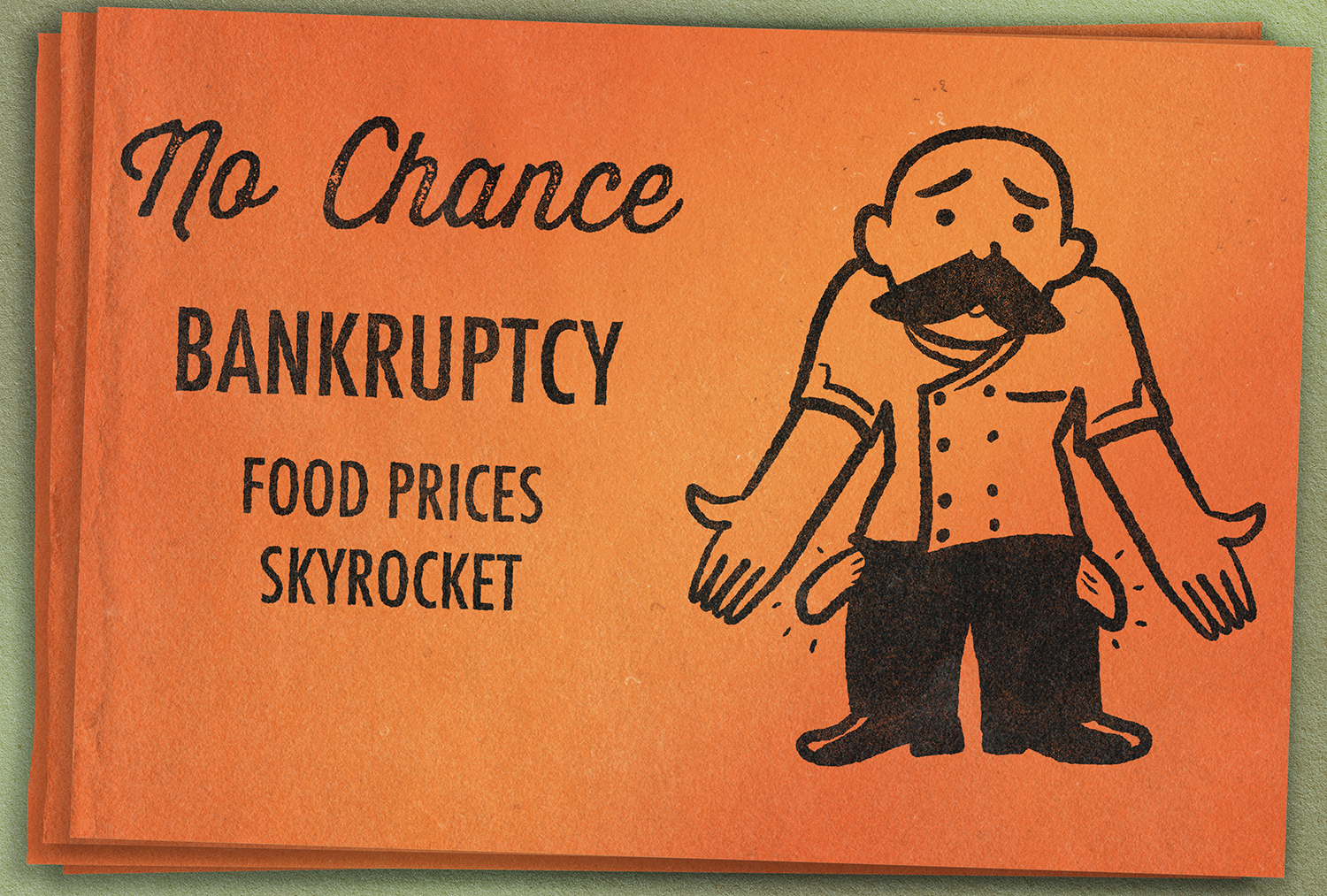
Long before Gilberto Cetina Jr. was sourcing seafood like fresh uni from purveyors like Sea Stephanie Fish in Santa Barbara for his Michelin-starred marisquería in Historic South Central or locally caught sustainable bluefin from the Channel Islands, he was loading up his mom and dad’s Astro Van with goods from Restaurant Depot as he stepped up to help his parents run Chichén Itza.
“I hope they keep it as it is,” he tells L.A. TACO. “Lots of restaurants make ends meet by shopping there. I know we did for a long time with Chichén Itza.”

Like thousands of others across the country, Cetina heard the news about Sysco, one of the country’s largest wholesale restaurant food distributors, and its recent $29 billion acquisition of Restaurant Depot.
The acquisition was announced in March, and restaurant owners from across the country took to social media to say it would not bode well for mom and pop restaurants, since they do not serve enough volume to justify ordering from Sysco, which has a reputation for charging higher prices.
"It was a place the little guy could go and get competitive pricing on just about anything that a restaurant could need to operate locally,” said this caption on a viral Instagram pizza post by a pizza maker.
The historic purchase attracted the attention of Andrea Borgen Abdallah, the Director of Community Engagement at Independent Restaurant Coalition. They are a national nonprofit organization formed in 2020 by chefs and independent operators to advocate for policy changes. They have made it their mission to stop this purchase.
Their website now has a pop-up with a questionnaire collecting information from restaurants to show that having both a “broadline distributor and an independent cash-and-carry warehouse creates meaningful competition that benefits your business,” rather than both owned by the same entity. They hope to collect enough of them to show the Federal Trade Commission that there is enough interest from independent restaurants to at least investigate the merger, which is supposed to happen sometime in the first quarter of 2027 (January through March).

“I don’t believe Sysco’s argument that this merger will kind of create all kinds of streamlining resulting in cutting costs that will then deliver that value back to its customers,” Abdallah tells L.A. TACO.
Refuting the promise that Sysco’s CEO, Kevin Hourican, made during an interview on April 30 saying, “Let me just hit it right out of the gate: We will absolutely not be raising prices at Restaurant Depot." Hourican ensured that any claims suggesting that Sysco attempted to eliminate a threat, including those made by the Independent Restaurant Coalition, "couldn’t be further from the truth."
Many are comparing this merger to Ticketmaster merging with Live Nation in 2010, which has resulted in the sky-high ticket sales for concerts that have become commonplace now. The high cost of ticket sales for live music is also undoubtedly a factor in the current “blue dot fever” trend of artists canceling their tours due to low ticket sales. Sixteen years later, a federal jury in New York ruled that Live Nation Entertainment (which owns Ticketmaster) operated as an illegal monopoly in the live entertainment and ticketing industry and also found that the ticket site indeed did overcharge for tickets.
“We’ve seen time and time again in different parts of our industry and different parts of our economy, that as these companies merge and become these, like, enormous conglomerates, prices continue to tick up,” says Abdallah. “You know, there isn’t a lot of savings being delivered to consumers.”

“The biggest problem with Sysco is the name Sysco itself,” Diego Argotti of Estrano tells L.A. TACO.
“Nobody really admits that they go to Restaurant Depot, but we all do at one point or another,” Argotti admits. “You can buy some very good quality stuff if you’re willing to spend the money for it there.”
However, for a chef like Argotti, who prides himself on some of the most delicious “chaos-style” dishes that he’s helped innovate, like a crispy pig ear Caesar salad and beef tongue-and-octopus risotto, it’s the principle of using a mass distributor like Sysco for his highly individualistic approach.
“I don’t know, it’s just the idea of seeing the same truck deliver food to your restaurant that probably also just stopped at IKEA and Chucky E. Cheese. A chef I worked with once told me, I would never buy my meat where I also buy my toilet paper,” he says.
Plus, he still prefers the personal connections that he makes with his purveyors and farmers.
“My meat guy knows exactly how I like my meat,” he says.
Nonetheless, he loves to shop at Restaurant Depot because it’s a quintessential L.A. experience.
“You see Armenian restaurant owners shop for the same ingredients that a taquero also uses,” Argotti says. “The food reflects L.A.’s working class.”
Another fear that generally comes up with Sysco buying Restaurant Depot is the homogeneity of their inventory spreading across restaurants. People have come up with a term for it: “Syscofication.”
On Reddit, some are already noticing this with chain restaurants starting to offer the same mozzarella sticks offered by Sysco. It’s also important to note that Sysco sells fresh food as well, not just frozen food. In 2024, Sysco was also found to be buying seafood from a Chinese processor accused of using the forced labor of China's systematically repressed and persecuted Uyghur population.
When asking Argotti specifically if he thinks that the purchase will make the cost of dining out in L.A. go up, he responds that it’s going to go up no matter what.
“Even doing this pop-up a month ago was way cheaper,” he says. “I’m spending 5% more here and there, and it all starts adding up.”
Argotti used to pride himself at only charging $12 per plate of his street pasta. At his last collaboration pop-up with Superiority Burger, his vegan pasta cost $18.
“People have been saying ‘It’s the worst time to open a restaurant’ for the last ten years, man,” he says. “It’s a whole generation of us now defying the odds or becoming a statistic.”
Abdallah is hopeful that her Independent Restaurant Coalition will prevail because there is a precedent: when the FTC stopped Sysco from buying US Foods in 2015.
“When a restaurant closes, there’s an entire ecosystem that suffers," Abdallah says. "Small independent restaurants purchase from other small independent businesses, whether they’re farmers or winemakers or beverage distributors. When restaurants close, it also harms the rest of the food system. And I think that’s important to acknowledge, because we’re in this really fragile place right now.”
Abdallah, who used to own a restaurant herself—Barcito in Downtown L.A.—predicts that the merger could lead to even more restaurants closing soon.
“The great thing about Restaurant Depot is that it’s the same prices for everyone, and you were able to use those prices to negotiate better prices for goods from Sysco. And if that competitor no longer exists, that’s bad for independent restaurants, and it’s bad for consumers, too,” she says, telling L.A. TACO that this purchase has by far generated the most inquiries and interest from their members.
In L.A.’s taco life, there will always be a world where family-owned restaurants, or in the case of Los Angeles, streetside taquerías don’t rely on Restaurant Depot or Sysco. Instead, buying local and direct from other immigrant-owned businesses in L.A.

“We’ve always liked working with local businesses in the L.A. Produce District,” says Alejandro Salas, the second-generation owner of Tire Shop Taquería. “Many of the vendors we’ve worked with are family-run, women-owned, and Latino-owned. It’s a community that’s always been about building together, adapting, and supporting each other.”


