Organizing against data centers in the San Gabriel Valley has produced a new crop of political challengers who want to take the fight region-wide.
Data center proposals have tested the political will and regulatory competence of small cities that are hungry for development dollars and sparked an unprecedented political mobilization among the unincorporated communities surrounding the City of Industry.
There, three sites have been considered for data facilities: the Puente Hills Mall, the former site of Madrid Middle School, and a warehouse owned by Majestic Realty.
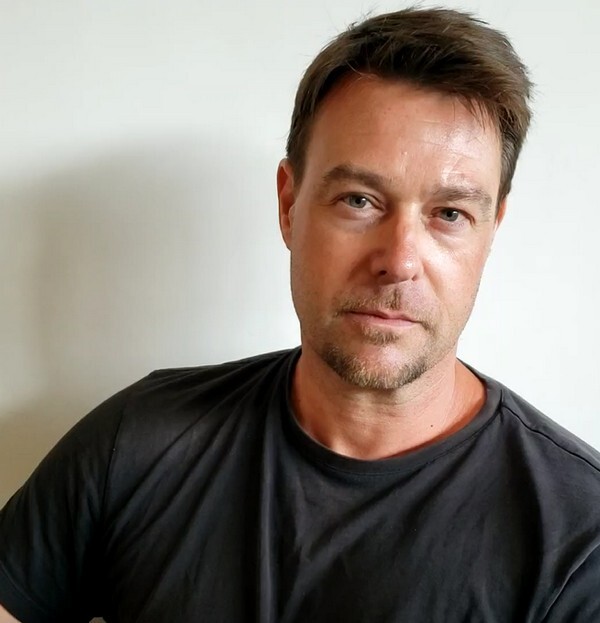
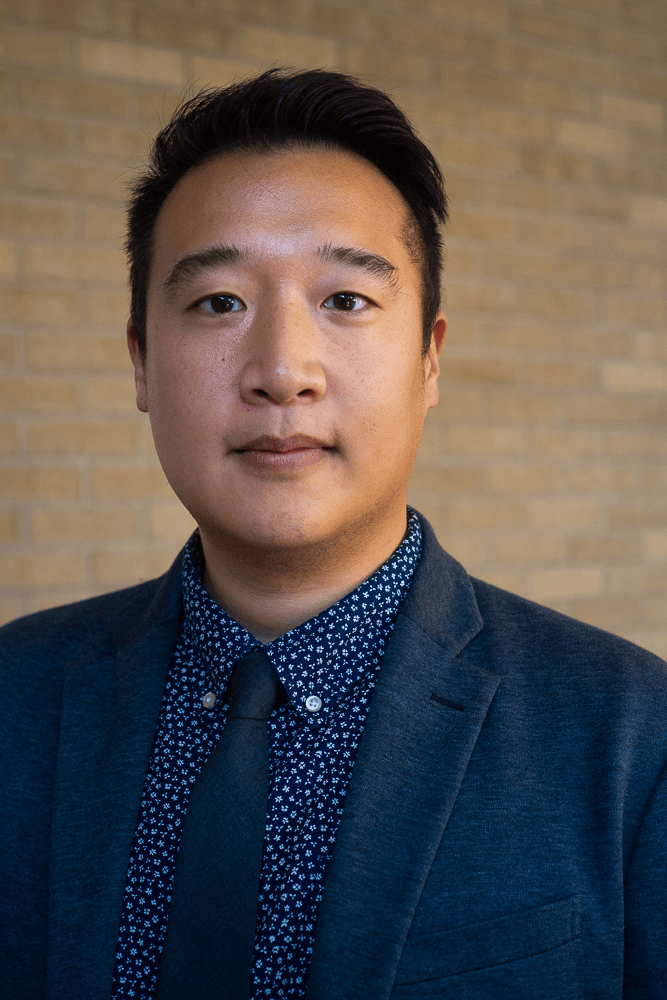
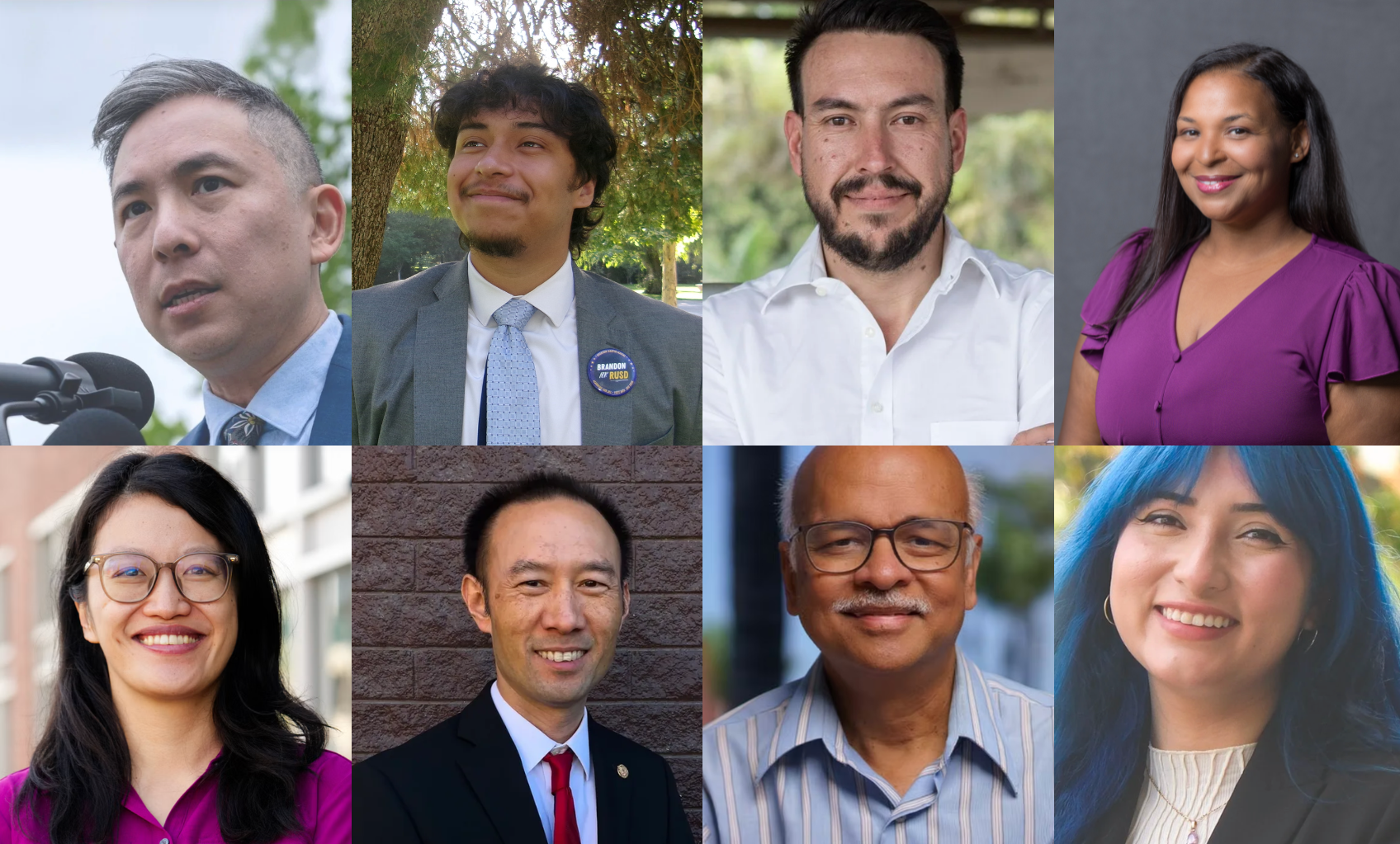
In Monterey Park, newcomer Steven Kung, the founder of "No Data Centers Monterey Park," is challenging Vinh T. Ngo, an incumbent councilmember representing the area where the city’s now-withdrawn data center was proposed.
Next door in Alhambra, voters will consider a ballot measure banning data centers, on top of the existing ordinance prohibiting them within the borders of the city. Both candidates for City Council District 1, Amy J. Wong and Ron Sahu, have touted their own anti-data center credentials.
In West Covina, Leslie Garcia, an air quality instrument specialist with the South Coast Air Quality Management District, is running for city council after helping organize "No Data Center San Gabriel Valley."
In the unincorporated communities of Bassett and Rowland Heights, where school boards are the highest elected offices in the land, three candidates have anti-data center organizing backgrounds: Falynn Love Thompson and Brandon Macias are running for seats in Rowland; and Sam Brown-Vasquez is running in Bassett.
Each was spurred into campaigning after learning of the City of Industry’s intention to locate a data center at the Puente Hills Mall. All of them have questions about the way A.I. is being used in classrooms.
“This election is a referendum on the conduct” of elected officials, Kung says. “They didn’t do their homework and didn’t recognize that a data center would bring all of these dangers.”
Data centers have emerged as a broad-spectrum electoral issue as city officials across the county embrace A.I.-powered surveillance and enforcement technology. At least 16 cities across the San Gabriel Valley have contracts to use A.I.-powered Flock license plate readers.
Voters are wary; nearly two-thirds of Americans believe A.I. is advancing too quickly and two-thirds have little or no confidence in the federal government's ability to regulate it effectively, according to a July Pew Research survey.
Macias, a school board candidate at the age of 20, says the last year of data center organizing has shaken his faith in government. He’s an Occidental College political science major whose job as a student aide could be eliminated if his district decides to employ chatbots for tutoring and guidance.
“Growing up, you’re taught that the whole idea behind democracy is that most everyone wants to do the right thing, you just have to fight the good fight,” Macias said. “But we’re seeing such an insane disregard for people, for communities, for nature. To see that reality just shatters the idea that local government is somehow intrinsically good.”
“Growing up, you’re taught that the whole idea behind democracy is that most everyone wants to do the right thing, you just have to fight the good fight,” Macias says. “But we’re seeing such an insane disregard for people, for communities, for nature. To see that reality just shatters the idea that local government is somehow intrinsically good.”
THE REAL ANTI-DATA CENTER CANDIDATE
Kung, a TV and film director and writer who has worked on “Fresh Off the Boat” and “Dear White People,” learned of Monterey Park’s data center proposal late last year.
He was alarmed to find his house was about 500 feet away from the proposed site. The city only notifies property owners of public hearings for prospective developments within a 300-foot radius.
Kung couldn’t understand why the city planned to forgo an official environmental review. He never wanted to run for office. He spoke up at meetings, organized his neighbors, and invited Ngo over to his house for dinner to meet with a group of residents concerned about the proposal. But Ngo stopped short of giving them his support, Kung said.
And now, Ngo has sent mailers pitching himself as the anti-data center candidate. “Only one candidate made the motion to keep data centers out of Monterey Park,” one reads.
“He’s trying to claim credit for fixing the mess that he made himself,” Kung says. “You can’t gaslight an entire movement.”
Ngo, reached by email, declined an interview, saying he was busy with election duties. He later sent a statement saying he is “proud to have led the effort for City Council.” He did not respond to specific questions about whether he initially supported the data center proposal.
What’s undeniable is that Monterey Park officials’ handling of the data center proposal outraged both residents and the data center applicant, HMC Stratcap.
In a letter, HMC Stratcap’s attorney threatened legal action, accusing the city of contradicting its own environmental review, unconstitutional regulatory takings, and abuse of discretion. The firm ultimately withdrew its application and has not filed suit.
The council’s initial environmental review findings also faced a legal challenge. The city-commissioned report estimated the facility’s maximum power generation at 49.5 megawatts, just below the 50-megawatt threshold that might trigger a California Energy Commission review.
A comment letter by the Center for Biological Diversity estimated the data center’s power demand at 66 megawatts, and threatened legal action if the city failed to complete an environmental impact report.
Residents also accused Councilmember Thomas Wong of failing to acknowledge a conflict of interest. Wong works as a public affairs manager for Southern California Edison, which would have supplied power to the project; he voted on each council action related to the site.
In January, the Fair Political Practices Commission concluded that Wong was disqualified from future votes on the project and must recuse himself due to financial conflicts of interest.
Wong is running for re-election unopposed. He did not respond to requests for comment.
A BACKDOOR TO DATA CENTER DEVELOPMENT
Falynn Love Thompson, 43, is a Rowland Heights girl, born and raised. Her first job was at a local flower shop, and she met her husband at the Puente Hills Mall, a meet-cute as they rode the escalators outside the movie theater one day.
Thompson still has both the husband and a job in flowers, but the mall is slated for redevelopment, and Industry officials are considering a proposal that includes a data center by Real Estate Development Associates, LLC, a real estate investment firm based in Newport Beach.
She didn’t consider public office until she went to that 800-person meeting at the Rowland Heights community council in March. There, in the parking lot, she filmed and uploaded a video about the City of Industry’s proposed data center zoning that got more than 400,000 views. She’s been making videos and attending meetings in surrounding cities about data centers and battery storage facilities ever since.
“This has very much become about having your kids grow up where you grew up and protecting that,” Thompson, a mother to two daughters, says.
“This has very much become about having your kids grow up where you grew up and protecting that,” Thompson said, mother to two daughters.
Community councils are nonprofit groups that advocate for unincorporated areas in L.A. County, much like neighborhood councils in the city of Los Angeles.
Like school boards, they don’t have regulatory power or land use rights with which to push back against data centers, but these bodies have become one of the only democratic outlets for simmering anti-data center sentiment in the unincorporated communities bordering the City of Industry.
County Supervisor Hilda Solis, who represents this area, introduced a motion in response to data center concerns in April, and last month the county planning director issued an interim guidance prohibiting “all development of large-scale data centers (as defined by the ordinance) in all zones.”
Sam Brown-Vasquez, Bassett Unified School Board candidate and one of the founders of "No Data Centers San Gabriel Valley," says Bassett and other neighboring communities are shut out of land use decisions for which they will bear the human cost. Part of the reason he’s running for school board is to help coordinate a “more robust response” to harmful land use decisions in the City of Industry.
“Where do we draw the line? As a school board, we have a duty to prepare our students for college and career readiness. I don’t see how that’s possible with rampant, unregulated use of A.I.,” Brown-Vasquez says.
Cities like Industry, with looser codes and few residents to complain, offer the ideal conditions for data center clusters, also called hyperscale centers.
Industrial cities represent a back door to data center development all over L.A. County, and they have a long, documented history as democratically unaccountable municipalities rife with corruption and repeated misappropriation of public funds.
Yet, last month, Gavin Newsom signed SB 1274 into law, which defines industrial cities as any municipality with fewer than 25,000 residents and a majority of its land zoned or devoted to non-residential commercial uses.
An official definition is a legislative boon to industrial cities, giving them standing to advocate for more public funds, carve out exemptions, and make category-specific regulatory demands.
It’s the first lobbying victory for the self-styled “Big Four,” an intergovernmental lobbying coalition consisting of Santa Fe Springs, Industry, Commerce, and Vernon that commands 24 percent of Los Angeles County’s industrial space.
State Senator Bob Archuleta sponsored the legislation, which passed the Senate unanimously.
Clustering data centers multiplies the cost to the environment and to the power grid. Diesel backup generators spew particulate matter into the air. Battery energy storage facilities create elevated fire risk. Data center cooling technology produces harmful noise pollution, pumps heated air into the atmosphere, and releases wastewater contaminated with a cocktail of forever chemicals.
School boards have an obligation to provide a safe learning environment and prepare students for college and careers. To Brown-Vasquez, that means fighting data center development and asking questions about A.I. in classrooms. He favors banning the use of LLMs in schools and opposes not just data centers but automation in general, because of the potential to cause mass unemployment.
Brown-Vasquez helped convince Bassett Unified’s school board to adopt a resolution opposing the City of Industry Planning Commission's decision to allow data centers city-wide.
School boards can also exercise oversight over projects near schools. If school authorities submit timely comments on environmental review processes, cities must respond in writing. They can also retain counsel and technical experts to challenge environmental review findings and weigh in on air quality issues.
“I refuse to believe that there is no environmental mechanism or accountability mechanism that applies if the actions of an unaccountable city harm children and expose them to unclean air and lead pollution,” Brown-Vasquez says.
Macias, the 20-year-old school board candidate, lives in South San Jose Hills, another unincorporated community in the San Gabriel Valley.
After entering Rowland Heights Unified School District as an English language learner, his first foray into politics came in seventh grade, when he successfully applied for public funds to pay for water stations around the school.
“Project Aqueduct” was a huge success, and getting stuff done just became his nerdy hobby. In high school, Macias formed a student advocacy union with the goal of collectively bargaining with administrators over school policy. Most recently, he was elected vice president of the Rowland Heights Community Coordinating Council.
He decided to run for school board after that 800-person meeting at the Rowland Heights Community Center in March. He was blown away by the fact that all those people had come to the board that he was a part of looking for help, and none of them were elected officials with any power.
“It just shows that there’s a problem with our electeds,” Macias says. ”This should have never gotten to us. It should have been their fight.”