One Saturday at sunset, my parents cheerfully herded us into the minivan after announcing that we were going to get ice cream. Half an hour later, we were clustered around a table in the outdoor dining area of a Fosters Freeze, enjoying our cones. The sky turned dark, and stars began to twinkle. With our desserts finished, we headed back home. As we passed the river, Dad told us this spooky legend.
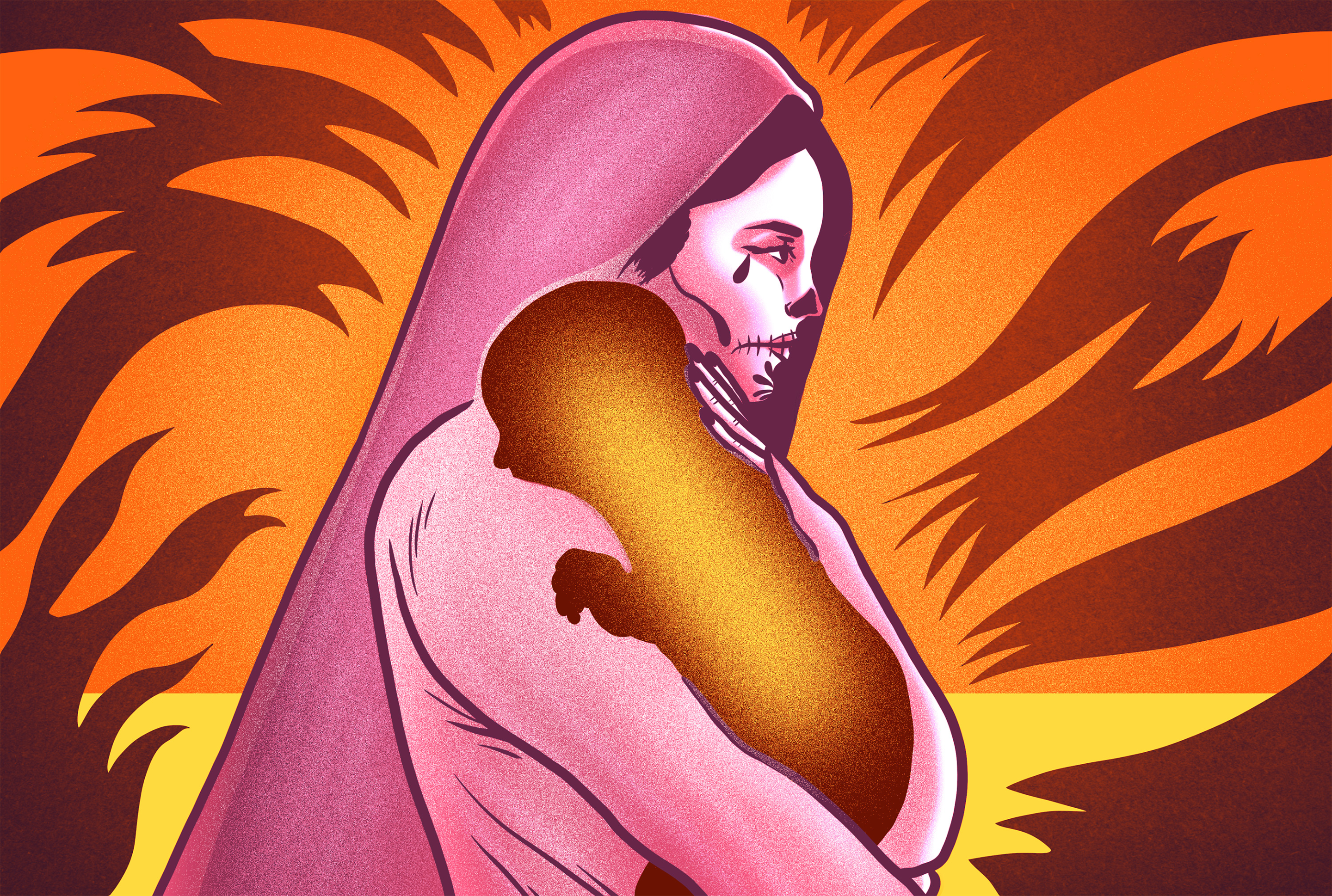
“A long time ago, there was a sad woman who lived in a Mexican pueblo,” he said. “Her husband treated her and their children badly, and no matter how hard she tried to please him, the man continued his wicked ways. When the suffering wife discovered her husband’s infidelity, she went mad with jealousy.
‘Come with me to the river,’ she told her children. ‘We’re going to bathe.’
Once in the water, the mother drowned her kids, including the baby. Then, she joined them.
The evil mother’s spirit became cursed; she’s doomed never to rest. At night, she wails for the children she slew, looking for new ones to replace them with."
This is the tale of La Llorona, the first ghost story many Mexican kids hear. It’s been on my mind lately with Lindsay Clancy’s triple-murder trial currently underway. Clancy isn’t Mexican, but the crimes she’s accused of eerily resemble La Llorona’s.
On January 23, 2023, in Duxbury, Massachusetts, Clancy fatally strangled her three children: five-year-old Cora, three-year-old Dawson, and eight-month-old Callan. Their father, Clancy’s ex-husband Patrick, found their remains in the basement. One detail that sets Clancy apart from La Llorona is her failed suicide attempt. Partially paralyzed, she now uses a wheelchair.
Clancy admits that she killed her kids. She also says that she took their lives after going mad.
Her defense attorney argues that at the time of the killings, Clancy was experiencing postpartum psychosis, a severe mental illness that can follow childbirth. People experiencing psychosis may hold beliefs that are untrue and that often seem quite strange. They might also hear voices that no one else can. These voices can be distracting, critical, and cruel. They often terrorize.
My uncle, Henry, a Vietnam veteran, experienced psychosis after returning from combat. When I was little, Henry’s condition scared me. He would tell me that he’d gone to the moon.
He’d also ask, “Can you hear that?”
Then, he’d say that the people he’d killed were screaming at him and weeping. In the weeks before Clancy killed her children, the new mom had a similar experience. During her trial, a psychologist testified that Clancy had heard a male voice tell her that she had no choice but to kill her kids and then kill herself.
My uncle stubbornly refused help for his condition. Clancy had struggled hard to get help for hers. Doctors prescribed her antipsychotic medications that worsened her symptoms. She’d been confined to a locked-ward psychiatric facility and told Patrick that she was thinking about hurting their kids. He risked leaving them alone with her anyway.
She’d been confined to a locked-ward psychiatric facility and told Patrick that she was thinking about hurting their kids. He risked leaving them alone with her anyway.
Mothers who kill their children are often represented as the evilest women, and I’ve known people who reserve their harshest judgment for them. I don’t. After my dad told me the story of La Llorona, I stayed up for hours thinking about it.
Throughout my childhood, I heard others repeat her legend, often adding their own twists. What always stayed the same was the storyteller’s scorn for the killer and sympathy for the husband who’d supposedly driven her to kill. It just didn’t make sense to me.
Henry had shown me that people under extreme pressure can go mad. Maybe that had happened to La Llorona. Also, the ghost’s mean husband sounded awful. Why wasn’t Mr. Llorona the story’s monster?
I didn’t share any of these thoughts with the adults who were using La Llorona to scare me. I kept my criticism secret and made a promise to myself—if I ever came across this weeping ghost, I wouldn’t shun her. Instead, I’d invite her to have a seat. She sounded like she really needed someone to talk to, and I wanted to hear her side of the story.
La Llorona didn’t respond to my request for an interview, despite my repeated attempts to reach her. Instead, I spoke with Lauren, a former Los Angeles Unified School District teacher and married mother of two. Lauren had her daughter at the beginning of the COVID pandemic, when she was sheltering in place with her husband and mother-in-law. Having caring adults present to share the intense labor of parenting a newborn eased Lauren’s stress.
Having her son was a different experience. Lauren was often alone and isolated with him, which triggered depression.
“Things can get really weird when hormones are going crazy,” she says. “Then you add sleep deprivation. Postpartum is a liminal state. It leaves you vulnerable to some spooky shit.”
Lauren experienced disturbing visions in the months after her son was born. She also knows another mother who heard a voice coming through a sound machine that instructed her to hurt her baby.
The relationship between psychosis, anxiety, depression, and sleep deprivation is well-documented. Researchers have found that sleep deprivation can trigger psychosis, anxiety, and depression in as few as 24 sleepless hours.
Lauren’s ability to get more sleep in the months after her daughter’s birth likely prevented her from developing these conditions.
“The wealthier women I know who hire night nurses have a completely different experience,” she says. “You can count a few nights a week when you’re going to get up to four hours of solid sleep. But night nurses are fifty dollars an hour.”
She adds that postpartum doulas are also very helpful.
“They come and do meal prep,” she says. “They’re not a friend you’re hanging out with. They come to work.”
What new moms need is people to share the arduous task of parenting a newborn, and fathers often refuse to do this job. When moms reach out for help with postpartum mental health issues, they’re told to go to talk therapy or to find a support group.
Too many dads idly watch moms deteriorate. As long as they’re not the ones burdened with child-rearing, they’ll leave the job to women, even as it endangers their own kids and breaks a new mom’s sanity.
“What the fuck is a therapist gonna say?” Lauren says. “Therapy isn’t what we need.”
Media sensationalizes cases like Clancy’s, but the size and intensity of the spotlight cast over moms who kill their kids is misleading.
Fathers kill their kids more often than mothers do, and yet killer dads receive less media attention. Their cases also spark less general outrage.
This difference begs a question: Why are killer dads normalized?
When Carol Coronado fatally stabbed her three daughters in 2014, the unusual tragedy made the front page of the Los Angeles Times. Headlines announced: “Mother’s mental state is focus in girls’ death: Carol Coronado was found on a bed next to her daughters’ bodies, officials say.”
Carol’s weeping husband, Rudy, appeared in a picture above the headline. Another picture showed a collage of the slain girls, two-year-old Sophia, 16-month-old Yazmine, and two-month-old Xenia. The article paints a vivid and gruesome picture of the killings. It also depicts the tragedy as a surprise.
As reporters dug deeper into the case, they found warning signs that Carol’s family had ignored or dismissed. Rudy later admitted that he knew Carol was unwell. She’d spent the morning of the killing calling her mom, flooding her voicemail system with desperate pleas for help. Rudy had stepped outside to work on a pick-up truck parked across the street, and when he came back inside, he found Carol lying on the bed. Poop coated the carpet, bed, bedroom walls, and Carol herself was coated in it.
Instead of comforting Carol, helping her, or getting his kids to safety, Rudy screamed at the struggling mom and left the house, heading back to the truck. He didn’t return to his home until after he heard someone scream, “She killed the babies!”
Too many dads idly watch moms deteriorate. As long as they’re not the ones burdened with child-rearing, they’ll leave the job to women, even as it endangers their own kids and breaks a new mom’s sanity.
One easy way of lessening the chances that a mom will develop postpartum anxiety, depression, or psychosis is through family planning. Many doctors advise that parents wait at least 18 months between births before trying to conceive again.
Carol had little time to recover from delivering Yazmine before taking on the added responsibility of Xenia. Consider how nerve-wracking it is to have one crying, screaming, and burping baby who needs to be fed at all hours and isn’t toilet trained. Now multiply that by two. Now add an unhelpful or abusive dad. My blood pressure spikes just thinking about it.
Media portrayals of killer dads rarely turn them into monsters. Instead, these men are often cast in a sympathetic or nostalgic light even though they’ve perpetrated what many say is the ultimate crime, the slaying of their own children.
Cheerful portrayals of killer dads are so clichéd that they’ve generated the jet-ski murder meme, a satirical reference to the family photos used in news articles about family annihilators, men who slay their children, partners, and sometimes pets.
When looking at their photos, you wouldn’t think that these dads had killed anyone. You’d assume that they were being honored for taking their families on an excellent summer vacation. One reason why we tend not to see mugshots of killer dads is suicide. Unlike killer moms, they’re more likely to end their lives after they annihilate.
Gabriel Chavez was a killer dad who took his own life at a birthday party in Canoga Park. On June 7, he fatally shot his twin sons, ten-year-olds Joseph and Greysen. Next, he fired at their mom and missed before fatally shooting himself.
Asked about Gabriel, one neighbor said, “He looked completely normal . . . never would have expected that from him.”
While police say that a motive behind the killings was not immediately clear, experts who study family annihilators know that these slayings differ from those perpetrated by new moms like Lindsay Clancy and Carol Coronado. It’s obvious that both women were in the throes of postpartum psychosis when they killed their kids. Both said they felt unwell and wanted help. Neither woman received the support that she so desperately begged for.
It’s obvious that both women were in the throes of postpartum psychosis when they killed their kids. Both said they felt unwell and wanted help. Neither woman received the support that she so desperately begged for.
Family annihilators and killer dads act according to a different set of motives. They aren’t sleep-deprived parents who’ve been up all night nursing newborns. Strange voices or disturbing visions don’t command their behavior.
Instead, these men have a low tolerance for shame, humiliation, and embarrassment, and they refuse the burden of carrying their own emotional baggage. They would rather kill than face the possibility of being harshly and deservedly judged by the women and children they’ve let down.
Family annihilators behave like entitled children, and in the U.S., their numbers are on the rise. The Washington Post reported that in the first two days of June, three dads killed their kids and the moms who raised them, the death toll totaling 13.
The U.S. doesn’t have an epidemic of killer moms. Instead, this country withholds labor support from new moms and normalizes male violence. Lindsay Clancy deserved the help that she asked for, and for La Llorona, I have nothing but compassion.