

Every year, we get a full day to celebrate and honor our loved ones who have passed on, but for many, the month leading up to Dia de Muertos is also pan de muerto season.
In Los Angeles, many have started baking, eating, and filling their ofrendas (altars) with family portraits, aromatic cempasúchil blossoms, personal items, and of course, pan de muerto.
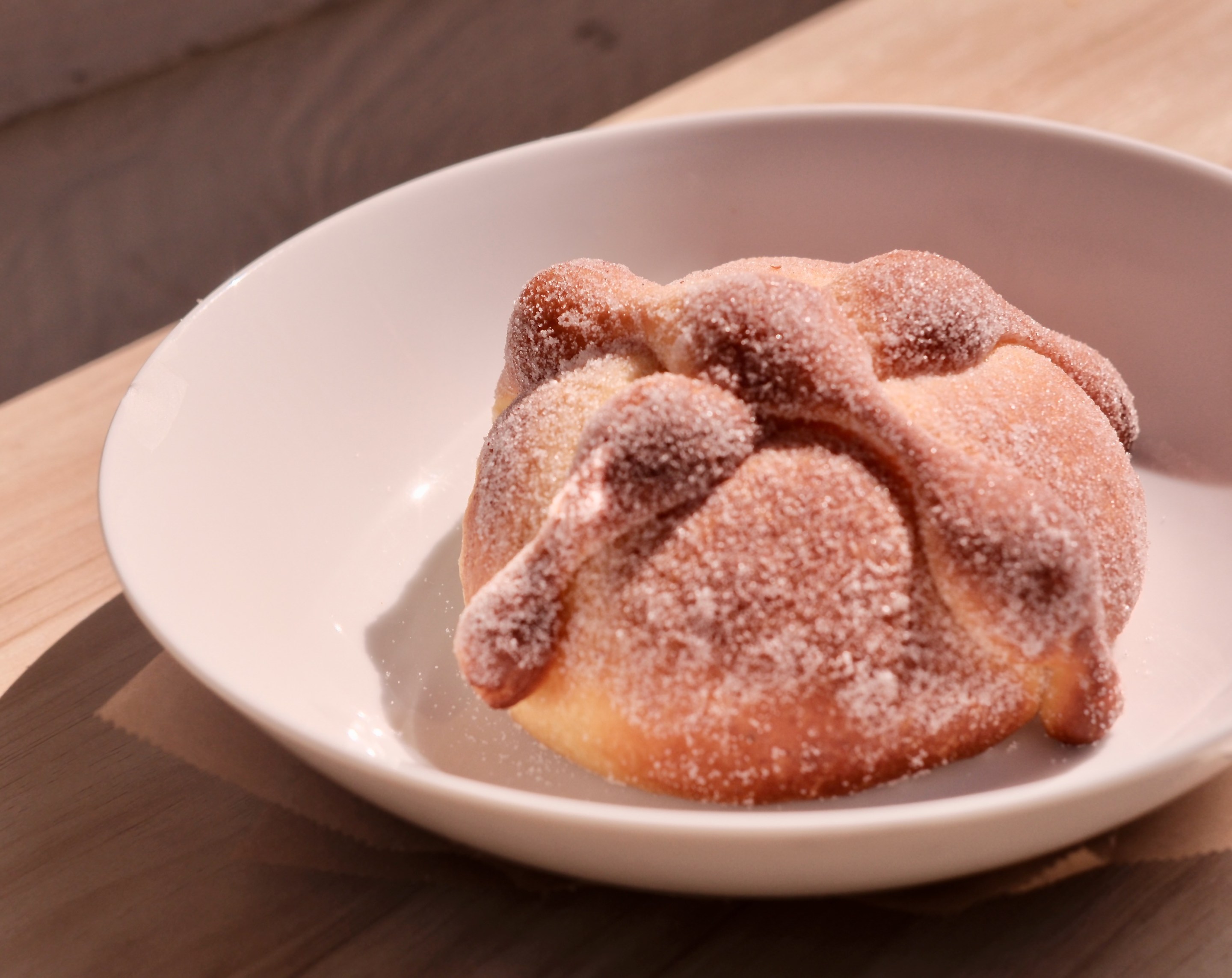
It’s a tradition to provide your ancestors with specific offerings, usually things they enjoyed when they were alive. For example, a can of Modelo or tequila, mole, and traditional pan de muerto, the sweet and tender bread covered in sugar or sesame seeds.
It’s called pan de muerto (bread of the dead) because of the skeleton-like shape of the pieces of dough that get gently draped over the bread. The original pan de muerto goes back to pre-Conquest times (before the 1500s), when the earliest forms were made from native amaranth grains, masa, and maguey syrup.
The bread was believed to be in the shape of a butterfly, so it was originally called papalotlaxcalli, originally offered to Cihuapipiltin, a goddess known for looking after the souls of women who died in childbirth. The symbolic, yeast-leavened, corpse-shaped form of the bread that we know now didn't come until after the conquest in 1521.
Bakeries around Los Angeles and Mexico make different variations, flavors, and sizes. Some come shaped in perfect circles, and others are more oval in shape, and they are decorated with fun colors and sugar. Others have created their own versions by turning them into cookies or cupcakes.