


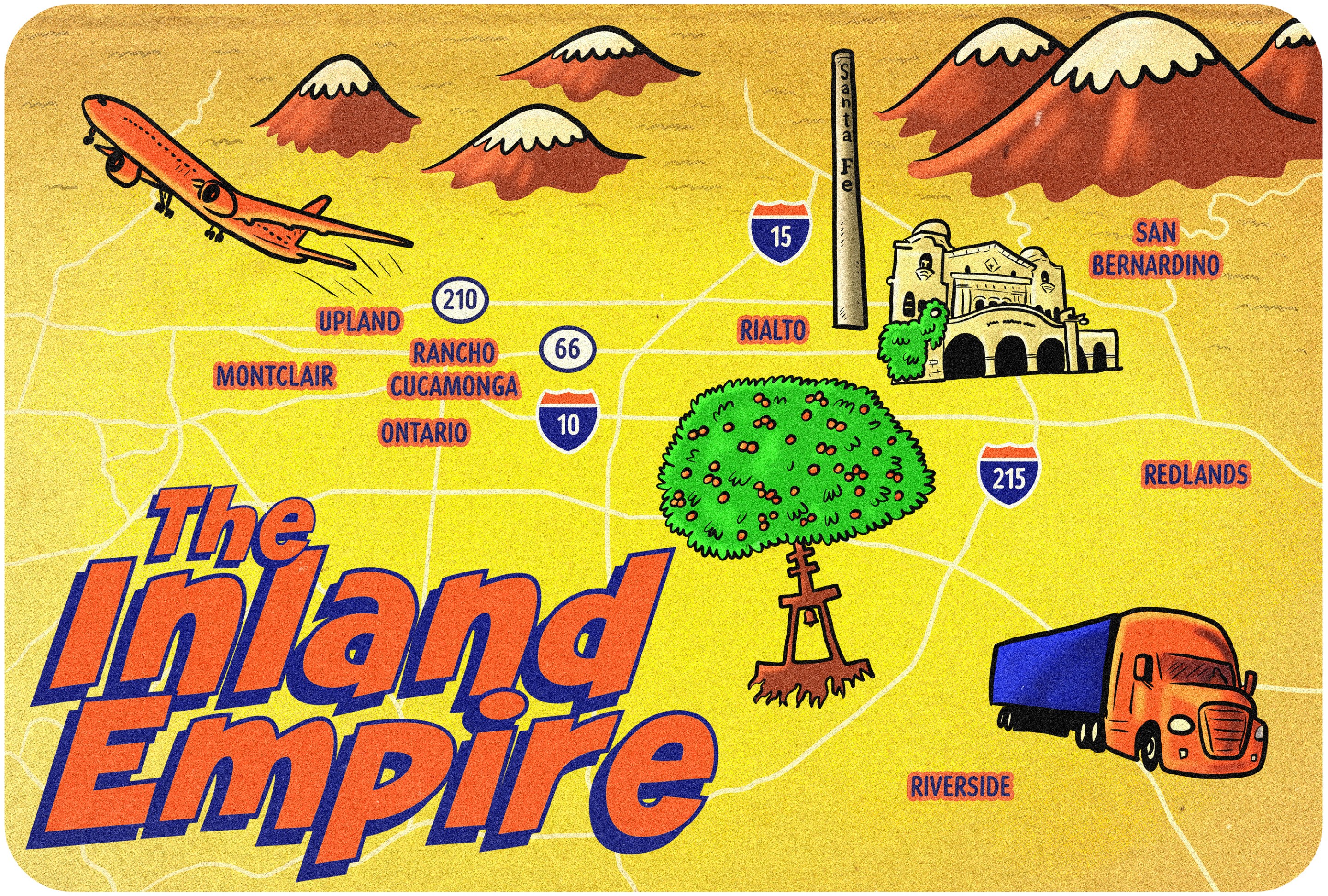
The connections between Los Angeles and the Inland Empire, from San Bernardino and Riverside counties, extend beyond state and interstate highways. Plenty of us in L.A. have family and friends in the region whom we always feel bad about not seeing as often. The region has grown exponentially, by all accounts, especially since the turn of the millennium. According to data from the US Census, there are nearly five million people living in Riverside and San Bernardino counties combined.
Many of the Inland Empire’s cities are pre-suburban. As Los Angeles crept east, it engulfed established communities with real histories. Some were destroyed. Some survived: cities with 175 years of history, extraordinary architecture in homes, churches, and public buildings constructed during California’s golden era. In 1900, Riverside was the wealthiest city per capita in the nation.
None of that is visible from the freeway, which is why the perception persists: the IE is tract homes, strip malls, and a goat in the yard. The affordable automobile made suburban expansion possible, and the world that grew up around the car’s early dominance was built for driving. The Inland Empire is where that culture was invented. It’s the birthplace of McDonald’s, Taco Bell, and much of the fast food infrastructure Americans use without thinking about where it came from.
Fine dining destinations are scarce, but it's also the birthplace of Mamá Por Dios, so that makes up for that! That’s not to say that you can’t eat well. What the IE has instead are restaurants that may lack the polish or panache of Los Angeles and Orange County fine dining but function as durable cultural and community institutions, deeply embedded in the region's identity. They survived not because critics found them, but because the people who live here never stopped going.