

Skip to Content
Politics

Tom Steyer Paid Influencers Up To Six Figures For Undisclosed Political Ads Critics Say Are Violating Election Rules

Critics insist that influencers and creators, including Carlos Espina and Foos Gone Wild, must disclose payments linked to paid political content for the Steyer campaign.

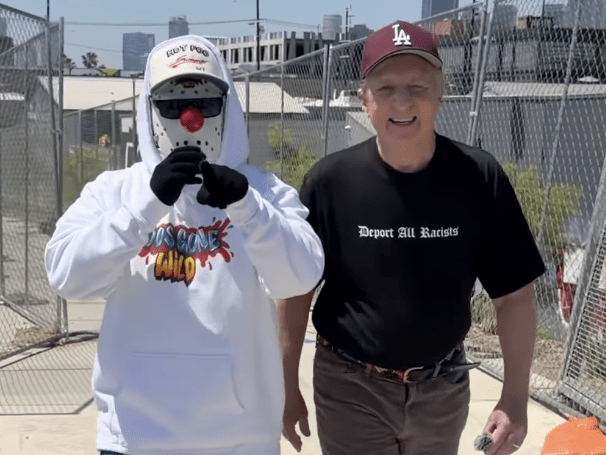
a man in a mask and hoodie walks beside a man in a LA cap

Mr. E takes a stroll with Tom Steyer. Screenshot via foosgonewild/Instagram.

As the closely contested California gubernatorial primary comes to a close, a new controversy has emerged involving one of the front-runners.

Environmentalist billionaire Tom Steyer has been accused by several political content creators of paying other influencers to promote his campaign without the expected disclosures that the videos are advertisements.

Many of these influencers have been paid to share videos in support of Steyer, and many of these accounts have also been criticizing the opposing candidate, Xavier Beccera. 

At the center of the investigation are content creators Kaitlin Hennessy and Beatrice Gomberg, who say they have spent the last two weeks documenting what they describe as a coordinated influencer network promoting Steyer’s campaign.

The pair filed a formal complaint with California’s Fair Political Practices Commission (FPPC) to further  review the alleged failure of paid political influencers and meme accounts to properly disclose campaign-related content in accordance with state election law.

Is it illegal to pay influencers for branded content? No. 

But is it ethical to promote paid political content without clearly disclosing it as an advertisement?

That’s the question that has driven these content creators to a fully fleshed-out investigation into Steyer’s expenditures. 

“The issue is not that creators are being paid,” Hennessy tells L.A. TACO. “It’s that they are not disclosing.”

In the most recent expenditures, released after Hennessy and Gomberg submitted their complaint to the state of California, Steyer’s campaign continued reporting significant spending on digital outreach and influencer partnerships. The filings come amidst heightened scrutiny over whether paid political content was consistently and clearly disclosed as advertising under California election law.

According to SB 678: Elections: disclosures, passed by Governor Newsom in 2023, California law requires paid political content online to be clearly labeled. Anyone paid by a campaign to support or oppose a candidate or ballot measure must disclose that the post is paid for, and campaigns must inform creators of this rule.

If a disclosure is missing, regulators can seek a court order to force it, though it does not automatically trigger fines. 

a man in a blue collared shirt speaking
Photo via tomsteyer.com.

At the center of the controversy are allegedly incorrectly disclosed paid political posts by creators, including Carlos Espina, Foos Gone Wild, The Shade Room, and many others.

Texas-based content creator Carlos Espina reportedly received around $400,000 from the Steyer campaign, according to the most recent expenditure report, covering spending from April 19 to May 16.

Espina has over 14 million followers on TikTok and is the primary online source of Spanish-language news for many Latinos. Despite being based outside California, Espina has been producing content tied to the state’s primaries, sharing several videos in support of Steyer and “interviews” with the gubernatorial candidate himself. 

Espina has since uploaded a Substack article clearing up how much money he received from the Steyer campaign and defending his stance on California politics. 

The beloved “down-ass-foo” meme account, Foos Gone Wild, was also paid approximately $50,000 during the same reporting period, according to newly released campaign expenditures.

The Shade Room, another widely known influencer news account with over 28 million followers, received roughly $25,000 in payments from the Steyer campaign, according to the latest expenditure filings, covering April 19 to May 16. 

As of now, only some of these accounts and social media personalities have come forward and to be more transparent in disclosing paid political content as advertising.

According to Hennessy, the investigation began after she and Gomberg noticed multiple TikTok accounts posting nearly identical pro-Steyer videos attacking Becerra. 

“A lot of us were making jokes about it because we kept seeing the same kinds of videos over and over again,” Hennessy says.

Many of the accounts, she said, appeared to have been recently created and contained little content beyond California gubernatorial posts, and with a majority of the accounts not from California.

“We realized the accounts were made only days earlier,” Hennessy says. “They all had no other content except pro-Steyer content and anti-Xavier Becerra posts.”

Hennessy said the pair then created a fake political consulting email account to contact several creators listed in the accounts’ bios. Posing as representatives for a fictional lieutenant governor candidate, they asked whether the influencers were available for paid political work.

According to Hennessy, many responded within minutes.

“These people had no interest in California politics,” Hennessy says. “They were hired guns.”

The controversy comes as Steyer’s self-funded campaign continues to break spending records in California politics. The billionaire environmental activist has poured nearly $200 million of his own fortune into the race, making it one of the most expensive gubernatorial primaries in state history.

a screenshot of a social media strategy

The memo allegedly used by the Steyer campaign was given to L.A. TACO by these content creators, outlining talking points and demographic-targeting instructions for creators working with the campaign.

The memo includes highlighted bullet points on who the Steyer campaign’s target audiences are. According to the screenshots, Steyer wants to create momentum among California women, Latinos, and African American voters.

a screenshot of a social media strategy

The note also includes lines criticizing the Democratic front-runner, Xavier Becerra.

California Latinos: Becerra is surging with Latinos, which is to be expected but we'd like to make a dent here. California African Americans: This is a winnable target for Tom, he can make a lot of inroads here so want to double down there,” the memo to the content creators reads. 

“Tom isn't taking money from corporate interests and billionaires, isn't scared of them, and doesn't owe them shit. Meanwhile, Xavier Becerra has accepted a max-out donation from Chevron during a campaign cycle that saw the price of oil hit record highs during an energy crisis caused by the war in Iran,” the memo reads. 

In a statement to L.A. TACO, the Becerra campaign said they have not paid influencers for content: 

“We absolutely believe creators deserve to be paid for their work and the audiences they’ve built, but there’s one non-negotiable caveat: any financial relationship between creators and candidates must be publicly disclosed. Transparency matters, especially during an election.”

The campaign argues that disclosure is what distinguishes legitimate partnerships from coordinated political influence campaigns.

“At the end of the day, there’s a real difference between spending millions to manipulate the digital conversation and building the kind of authentic, people-powered grassroots support Xavier Becerra has earned across California,” read the statement.

Critics of the Steyer campaign argue that many of the posts failed to include legally required disclaimers, such as “Paid for by Steyer for Governor,” alongside the committee identification number.

One of the biggest talking points surrounding this controversy has been his partnership with Foos Gone Wild. In a video published May 5, Mr. E, the beloved Los Angeles foo-persona, walked and talked with Steyer while asking questions about his candidacy for governor. 

The only indicator that the post may have been a paid promotion was a hashtag at the bottom of the caption reading #FlightHousepartner.

Political content creator Jose Torres flagged the post, arguing the label did not meet California’s disclosure requirements for political advertising. 

“By saying ‘FlightHouse partner,’ that does not tell me that it’s a political ad or that Tom Steyer funded this,” he says. 

After backlash and Torres’ public posts, Foos Gone Wild updated the caption two days later to include a paid advertisement disclosure naming Flight House Media and adding the committee identification number required under FPPC guidelines for political content.

“And I clarified with them, look, this is not the extent of it, you actually need to do more,” Torres says, referring to his exchange with the agency on Threads. “And they never responded.”

While some creators have since updated posts with proper disclosures, he adds, the timing still matters.

“The fact that they’re retroactively updating these posts, the damage is already done,” Torres says. “People aren’t going to go back now and check on a post from two weeks ago.”

Despite a sock check from Mr. E and an invitation to the carne asada, Steyer is still not leading the California Governor’s Race, according to recent polls.

Hennessy and Gomberg have since filed complaints with California regulators alleging widespread disclosure violations connected to influencer posts and reposted meme content tied to the campaign. Hennessy said a second complaint has now been filed as their investigation continues.

In response to the allegations, the Steyer campaign published a Substack post titled, “A Note on How Our Campaign is Working with Content Creators,” that defends its use of paid influencers and emphasizes transparency in its spending practices. 

Posted on May 19, 2026, and authored by Tom Steyer, the statement argues that compensating creators is a standard part of modern campaigning and says that all payments are publicly disclosed as required by law.

“Our campaign believes in transparency; it’s central to how we’ve operated since day one,” Steyer writes, adding that “every dollar spent by this campaign is publicly disclosed and available for anyone to see.”

In this article, Steyer also alleges that the Becerra campaign has been paying influencers for political content as well.

a man in a white collared shirt smiling
Xavier Becerra. Photo via xavierbecerra2026.com.

“Paying creators for their work is not some radical idea. Our opponents, like Xavier Becerra, certainly do. The difference is that while we’re operating openly and transparently, they’re doing it indirectly, through consultants and shadowy groups that voters never get to see clearly,” Steyer writes.

Steyer argues that content creators deserve to be compensated for their work and says that paying them reflects the realities of influencers functioning as media partners.

“We compensate them for their work and their time, just like campaigns pay staff, consultants, media firms, strategists, and vendors across every part of politics,” he adds.

However, Hennessy and many other political content creators reject that explanation.

“If he was just paying for their time, then it wouldn’t matter what they said,” she says. “He’s paying them to say nice things about him.”

Stay in touch

Sign up for our free newsletter

More from L.A. TACO

Demonstrators Hold 24-Hour Fast in Solidarity with Hunger Strike in Adelanto ICE Facilities 

The hunger strike inside the Adelanto ICE facilities is one of at least five hunger strikes that have occurred at detention centers across the nation.

The Ultimate Guide To 2026 World Cup Watch Parties And Fútbol Events In L.A.

From small, community events to gatherings at pubs to bombastic, expensive events, we’ve got you covered for this year's World Cup.

May 30, 2026

Weekend Eats: Think You Could Handle L.A.’s New Five-Pound Burger?

If not, there are always the purse-shaped flatbreads from the streets of Lebanon, Indonesian ribs and espresso in Hollywood, and Armenian smashburgers in our weekly roundup of killer food finds.

May 29, 2026

Daily Memo: ICE Is Detaining People Who Show The “Know Your Rights” Red Cards

It appears that ICE sees "Know Your Rights" cards and makes the immediate assumption that people trying to use the cards are undocumented. They have essentially become little red targets.

The 19 Best Moles in L.A., from SFV to South L.A., Ranked

This is L.A. TACO's guide to the best motherf*cking moles paying homage to centuries-old recipes and sticking the landing in L.A. County.

Investigations Newsletter: The Restaurants Feeding L.A’s ‘Most Wanted’ Journalist

A tasty meal and cold beer hits differently when you’ve just narrowly avoided arrest, even if you’re covered from head to toe in a chemical substance banned in warfare.

May 28, 2026
See all posts