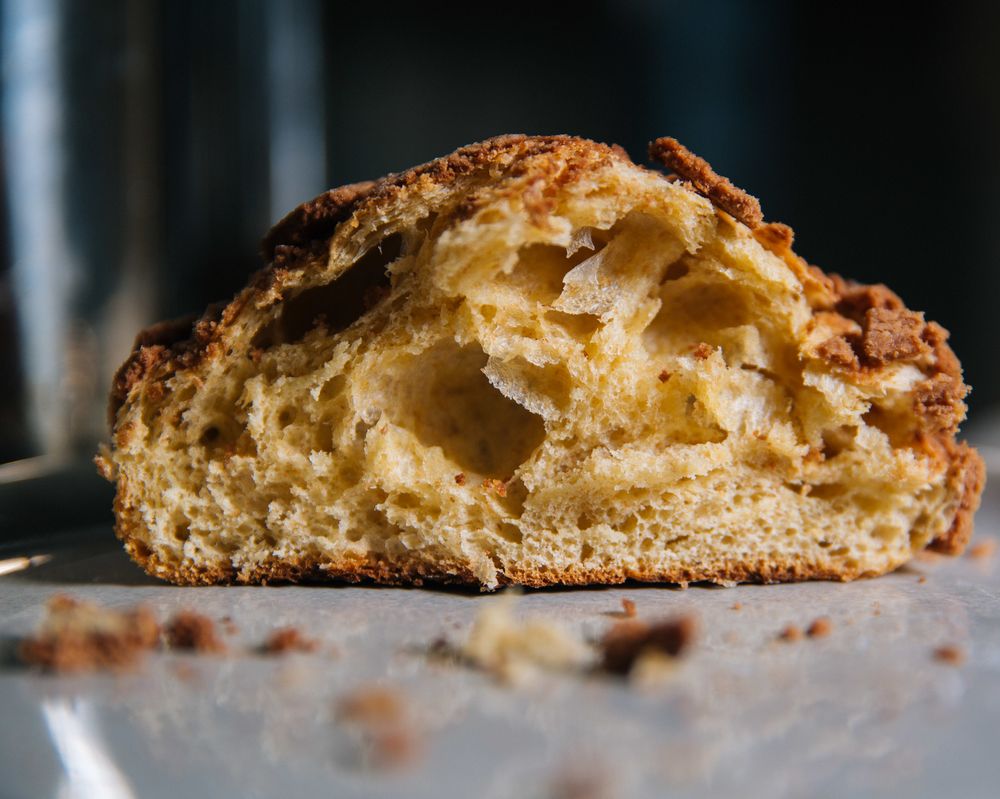
Fallen baking hero Richard Hart’s passionfruit chocolate bar, found at his Hart Bageri in Frederiksberg, Copenhagen’s “city within a city,” looks better than it tastes.
It’s dense, cloyingly sweet, and somehow tastes one-note, despite featuring one of the tartest and brightest tasting fruits on the planet. The bakery also exemplifies peak European privilege: luxe and the kind of place where “artisan” means paying six-figure rents so people can post about it on Instagram. All as part of the business plan. I visited his bakery on June 27th of this year, while I was in Copenhagen to finally try Noma.
Mexico’s “ugly and industrialized” bread culture, to quote Hart about it, on the other hand is crafted in the fire of survival and grit, made with the precious local wheat that Americans call more tender “Sonoran wheat,” but just named wheat in Mexico, that makes it to those tens of thousands of remote pueblos scattered across one of North America’s wildest landscapes.
Richard Hart is the latest person who has painted a target on his back to an entire republic, after giving a response to a question about Mexico’s bread culture. One born out of hubris and lack of understanding his privilege.
He thought he could dunk on the workhorse of Mexican bread: bolillos. Like they’re yesterday’s crumbs.
Bread is up there with tortillas as the backbone of how Mexicans (and anyone who enjoys Mexican food) eat, fight, and keep showing up. In L.A, we are lucky to claim Long Beach’s Gusto Bread’s famous sourdough conchas that take three days to make, La Monarca Bakery's tender cuernitos de cajeta, which have been made from scratch since 2006, and Santa Canela’s modern pan dulce adaptations in Highland Park as our own.
Panaderías, also called panificadoras in Mexico, exist under the Sonoran Desert’s blistering sun, where temps hit 122 F° (50°C) and the only shade is from a two-story tall saguaro; are crafted by Tarahumara families high up in the Sierra Madre’s bone-dry peaks who knead dough by lantern light after hauling water miles from a spring. Down in the sticky Pacific Coast fishing communities, where the humidity is so thick it’s like kneading in a steam bath, people turnout salty empanadas stuffed with homemade guava marmalade before the tide pulls back.
Bread is a lifeline in Mexico. It's traded at bustling mercados, where someone's kid hauls a sack of flour over their shoulder—hours from home, dodging the usual suspects like pissed-off farmers blocking highways, shortchanged by floods of cheap American GMO corn. Hungry-ass weevils burrowing in for the ride. All just to get that flour back safe.
The bread is likely and proudly dense and rustic, meant to be dunked into thick chocolate caliente where the froth peaks from a high content of cacao butter, adhering to the bread. It’s not too different from slathering butter on dense smørrebrød.
It’s intentionally not some polished pastry made on a €12,000 sheeter.
L.A’s own Nancy Silverton as “one of the best in the world” and even if he is. But damn, with a superiority complex this baked-in, even a slip of the tongue hits harder than an overbaked boule.
Just weeks ago, on a podcast spotlighting his Mexico pivot with his bakery, Green Rhino, Hart let loose: Mexican tortas? Those fluffy bolillos cradling carnitas and avocado in street stalls? Nah, he sneered—they're just "white ugly rolls," churned out in "cheap industrial mass-produced" ovens. And Mexico's bread culture? "They don't really have much of one," he shrugged, as if centuries of pan dulce, conchas, and telera—woven into the fabric of everyday life, from Oaxacan clay ovens to Sonora's wheat fields—were some quaint footnote to his European gospel. The backlash was swift and scorching: Food bloggers branded him a modern Columbus, stomping on sacred ground; Instagram erupted with cries of cultural erasure from a gringo transplant who isn't even Mexican. Hart backpedaled with an apology, but the damage lingered—like a loaf left too long in the proofing box, all puffed up and deflated.
His words were not a clever critique. They were the slurs of a modern colonizer in an apron forgetting he’s a guest.
At least two dozen people sent me the clip, including my Mexican wife, when it first showed up on the popular “anti-abuse” restaurant watchdog Instagram account @TerrorRestauranteMX on December 6th.
I had no idea it would keep blowing up the way it has. But the anger is justified, activating the pride of 500 years of panadería tradition and provoking the societal trauma from tens of millions of Mexicans etched into their DNA since Cortés first arrived hauling wheat across the Atlantic to convents.
Hart’s apology hit Instagram Monday—with the comments shut off. By then, he was humbled, and the guest-in-Mexico vibes kicked in—but by then, the engagement tally was north of 50K.
Like Hart, Chavarría backpedaled and apologized. But the damage was done.
This overproofed mess picks up where Willy Chavarría’s Adidas huaraches flopped last summer when: the American-Mexican designer dropped the “Oaxaca Slip-On,” ripping off Zapotec huaraches “inspired” by Villa Hidalgo Yalalag’s Indigenous weavers—without a whisper of credit.
Made in China, and sold at high-fashion prices, zero royalties loopied back to the communities keeping that craft alive. President Sheinbaum straight-up called it out at a presser, holding up a pic and saying, “This? Usurping our people’s creativity.”
Like Hart, Chavarría backpedaled and apologized. But the damage was done. Artisans in Oaxaca didn’t just tweet—they tagged the weavers and demanded real collabs with Indigenous huaracheros. It was pure Mexican pushback and a turning point, showing that Mexican heritage is not just an inspiration point on your mood board.
Mexico is over being the global exotic—the “colorful” destination of the month for privilege.
This year, local communities are forcing out Canadian companies mining Mexico’s precious metals, Hollywood is starting to move on from painting Mexicans as just narco props, cocineras tradicionales have more views on Youtube videos than influencers “exploring” the local food scene, and celebrity-backed tequila and mezcal is being recognized for what it is: the latest vessel of colonization, ripe for exploitation.
There is a clear difference between cultural colonization and cultural appreciation and it’s not that hard to get right if you come with an open heart and unbounded humility.
What Hart fumbled on that bolillo he called ugly? It’s the vessel for legendary tecolotes, a street food bomb of totopos bathed in salsa that fuels millions of workers throughout the day. It's also a remedy as a traditional food to eat after something scares you. The concha? A living and breathing Mexican adaptation of colonialism transformed into comfort. They’re carbohydrates of resistance, rising from the same soil that birthed the Zapatista movement and power foods like corn, tomatoes, vanilla, and the chia seeds that make you feel healthier than thou before a workout.
If you’re plotting a pivot into Mexico—be it buns, footwear, or to live there—get it right or get gone.
There is a clear difference between cultural colonization and cultural appreciation and it’s not that hard to get right if you come with an open heart and unbounded humility. Just ask the millions of American, Canadian, and European immigrants who have moved to Mexico and opened businesses that don’t alienate Mexican nationals. It is possible.
It’s also not realistic to expect people from European countries to stop moving to Mexico.
Don’t exploit the remote producers sourcing agaves or the tropical co-ops growing coffee. Appreciate the maestros who’ve guarded these recipes for generations. Split your profits and be transparent about wages that let a corn growing family send their kid to university.
Hart could’ve launched Green Rhino by blending his Danish precision in collaboration with a Mexico City panadería and slow-fermenting a birote, and maybe naming at least one Mexican-inspired pastry after one of his Mexican workers who run his kitchen in one way or another.
Business in Mexico means mutual respect, not a monologue.
Say that you’re going to “build ‘insert business here’ that Mexico has never seen before and you’re likely to get roasted faster than a barbacoa pit at the crack of dawn.
But show up humble, hungry to learn, give credit, and share your wealth? Pull up a stool—we’ll rip tortillas together, laugh, and build something that sticks.
Welcome to the table. Just don’t talk with your mouth full [of yourself.]