

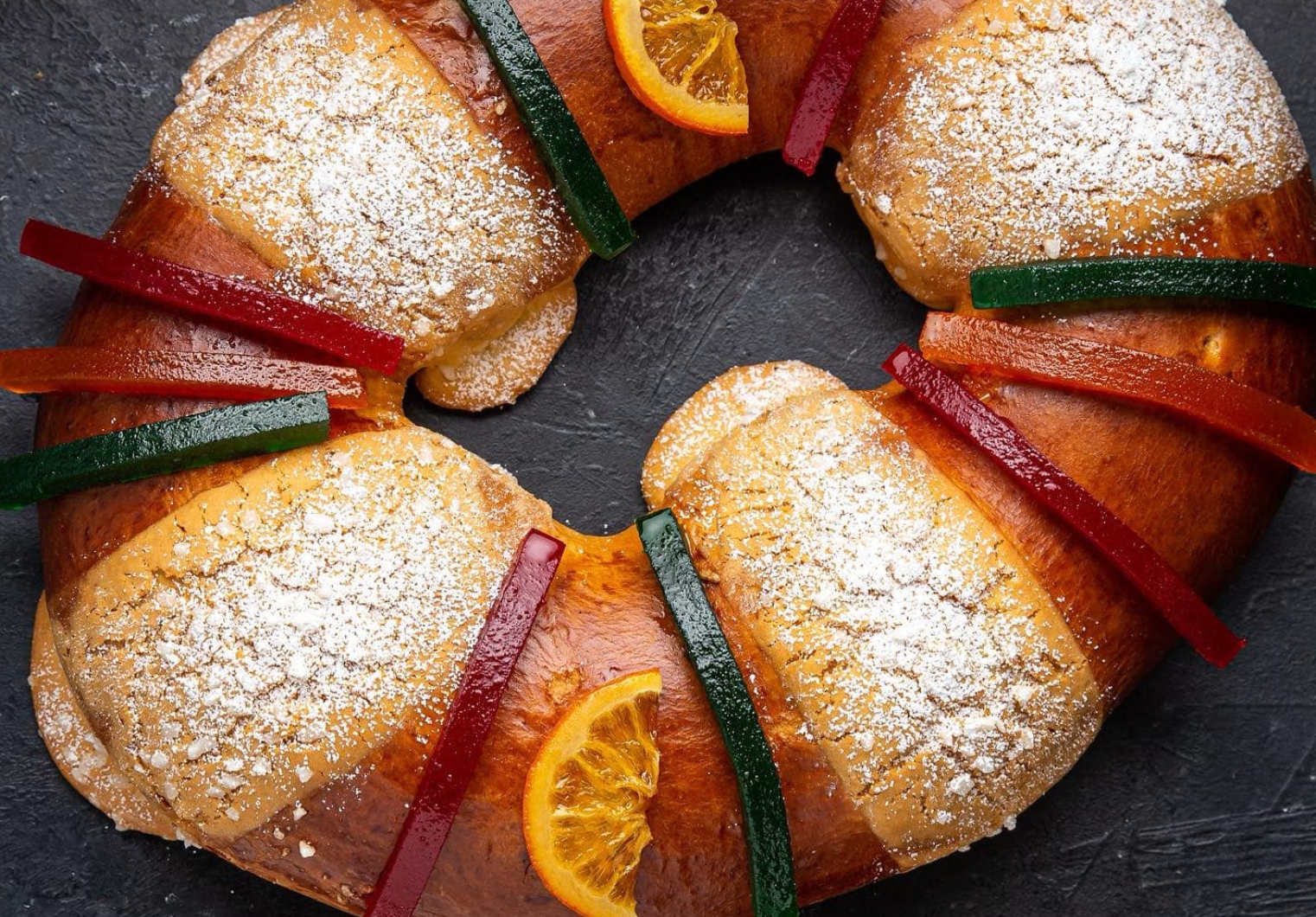
A rosca de reyes is traditionally a crown of yeast and flour, usually decorated with chopped nuts of sugary powder and jewel-like strips made of multicolored candied fruit peels and figs, guavas, and cherries. Inside one of the slices of this circular loaf of bread is a bite-size plastic toy baby meant to represent Jesus. The person who gets the slice with the inedible toy will owe his family or friends a tamales party on Dia de la Candelaría on February 2nd.
This old-school tradition is the center of El Día de Los Reyes Magos (Three Kings Day), which follows the tradition of eating tamales during Christmas. In many ways, it is an extension of the holiday season into the new year in many homes across Los Angeles.
The holiday's origin is a wild biblical story that involves the murder of infants. But the short version is that three magic reyes (kings) visit baby Jesus because the stars told them the babe was the new king on the block. The hidden figurine represents when lil’ baby J hid from a grumpy old king who was trying to kill all the babies. But he lived! Until he didn’t… until he did again!
So now we get king bread and tamales.
Even if you aren’t religious, anyone is willing to believe that the baby Jesus would have wanted more tamales and more parties for you in the future. La Rosca, as it is commonly called, is part of a tradition that, for many more of us, becomes an excellent excuse to eat more dense sweet bread, with steaming champurrado and maybe a generous pour of mezcal for good measure.
In Mexico’s traditionalist culture, “the holidays” extend from December 12 (the Virgen de Guadalupe feast day) to February 2, Dia de la Candelaría (Candlemas). And in between, you get Nochebuena (Christmas Eve), Christmas Day, and Three Kings Day (January 6), when kids usually get toys or other gifts—a key distinction to the American tradition of presents for kids on Christmas Day.