The name Rey Mysterio is an iconic one in the world of professional wrestling and lucha libre for two reasons. The first is for the current wrestler by that name who, as an active veteran with nearly four decades of experience in the ring, will compete in next weekend’s Wrestlemania 42 event in a ladder match for the World Wrestling Entertainment Intercontinental Championship belt.
The second, and most important, reason for this story is the original Rey Mysterio from Tijuana, Mexico. Uncle to the current Mysterio, the late and original Rey Mysterio (aka Rey Mysterio Sr.) grew into an icon in Mexico and the United States thanks to his work as a wrestler, and also as a coach and trainer to a generation of luchadores and wrestlers in California and Baja California. His life and legacy in these two regions are the subject of “Legends of Lucha Libre” on PBS.
The documentary provides a quick and easy introduction to the world of lucha libre and also positions Tijuana as one of the key sites of the sport’s recent evolution. Much of the story of lucha libre takes place in the country’s capital, Mexico City. The two largest lucha libre companies in Mexico today, Lucha Libre AAA Worldwide (AAA) and Consejo Mundial de Lucha Libre (CMLL), are headquartered there, and both host the majority of their events there as well.
“My experience and perspective on lucha libre has always centered on Tijuana,” said Omar Foglio, one of the producers and directors of the documentary. Foglio knew Mysterio personally, having worked with him for years when Foglio was a member of BULBO, a multimedia art collective and production company based in Tijuana. They met when Mysterio was a member of La Familia de Tijuana, alongside Damian 666 and Halloween.
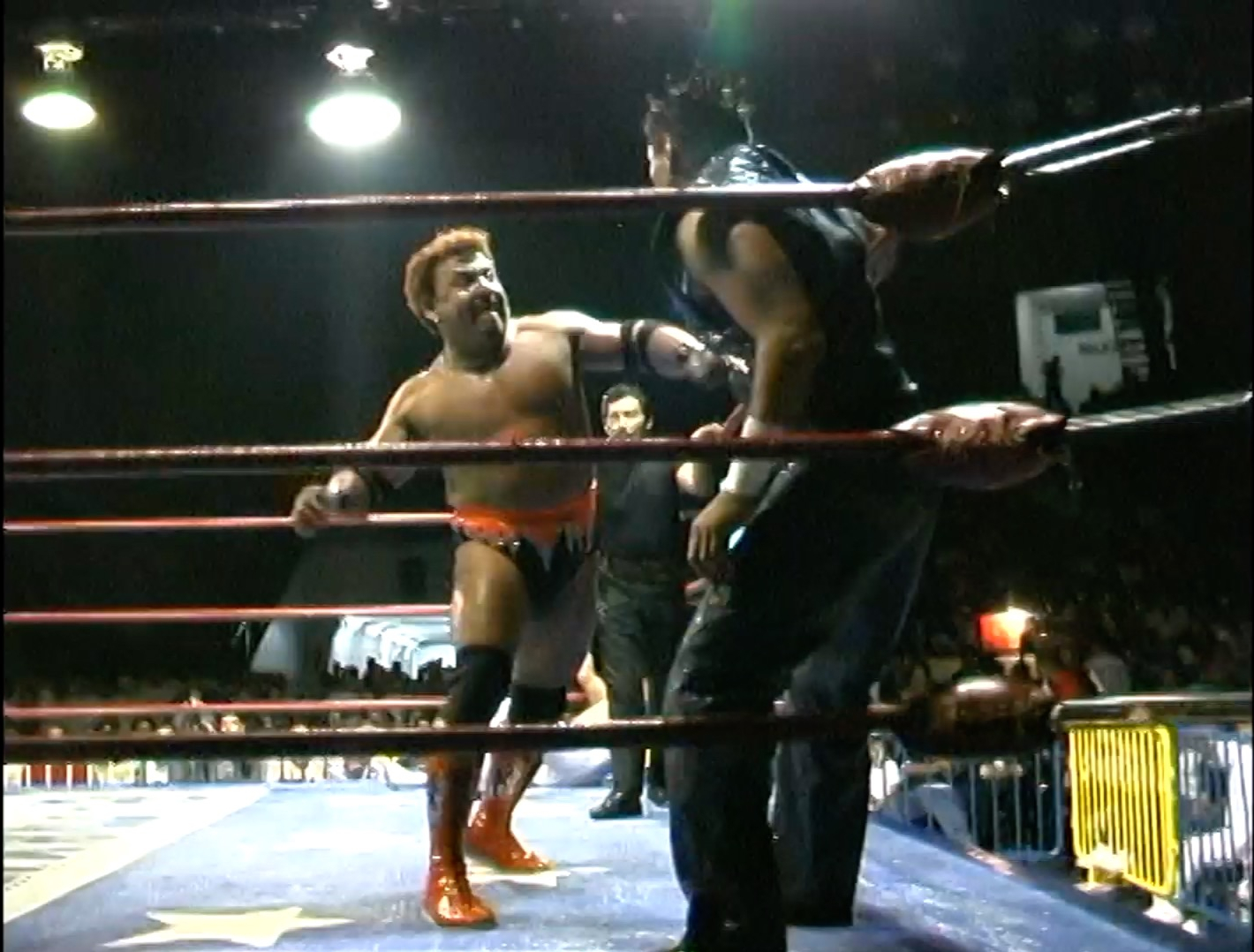
Tijuana has long had its own independent and thriving wrestling scene. The late Mysterio, as the documentary shows, was a fundamental figure in Tijuana’s wrestling scene as a wrestler in the 1970s and 1980s, well-known for combining Mexican lucha libre and American wrestling styles throughout his career.
“Something that makes Tijuana an important place for lucha libre is its connection with the United States, due to its location on the border,” said Foglio. “There’s an exchange in what luchadores that come to Tijuana and cross into the US, or the wrestlers that go to southern California and cross into Tijuana, learn.”
Nowadays, it’s entirely common to see wrestlers from all over the world combine different styles of wrestling for their personal style or to compete their specific style, be it lucha libre, Japanese style wrestling, etc., against another specific style of wrestling. The wrestling itself has become the language that competitors speak in, and Mysterio was at the forefront of it.
“For us, that’s a beautiful metaphor of how lucha libre can transcend borders,” said Foglio. “You see this in Tijuana too, but I think lucha in Los Angeles is marked by these fluid transitions between English and Spanish. Some people may not understand parts of it, but ultimately, it doesn’t matter if you do or don’t. There’s a sense of brotherhood at these events that I think is a beautiful metaphor, especially during these difficult times.”
After Mysterio retired from wrestling, his legacy grew outside of the ring as a coach and trainer who worked on both sides of the border.
“Mysterio had various businesses to provide his luchadores with in-ring experience,” said Lady Lee, one of Mysterio’s former students. “He would always take a group of students to Los Angeles to gain experience up there, and to show off their skills despite not being professional wrestlers, because in Mexico, you need a license to become a professional wrestler.”
Lee grew up in a family that loved lucha libre, especially her sister, but she wasn’t a fan of it because she found it too scary as a kid. By the time she was around eight or nine years old, not only had she fallen in love with lucha libre, she had begun training it. She eventually caught the eye of Mysterio, who decided to train her, and also gave her the name she has wrestled in for over 20 years.
“He’s the one who helped me take that extra step out of my comfort zone, and trained me a little harder, and more professionally,” said Lee.
In 2024, Lee founded her own wrestling school, the Escuela de Lucha Libre Lady Lee, in Tijuana, where she trains the next generations of luchadores. She’s the first, and currently only, officially recognized luchadora who is also the founder of an official lucha libre academy.
“Legends of Lucha Libre” is available as a four-part series and as a single 30-minute special.