Deaf, out of breath, and terrified, Javier Diaz tried grabbing his Real ID out of his wallet to show the migra. But they snatched his wallet and his phone before sending him away to an El Paso detention center where he couldn’t communicate with his family or lawyer for weeks.
Pomona gardener Jose Luis Zavala was eating lunch on a landscaping job in La Mirada when ICE agents pulled up in masks and threw him into an SUV. No warrant. No warning. Just gone. His family didn't even know where he was for a while.
Narciso Barranco, an undocumented father of three active-duty U.S. Marines, was detained while doing landscaping work near an IHOP in Santa Ana. Video footage from the incident shows agents in “U.S. Border Patrol Police” vests forcefully pinning Barranco to the ground and punching him.
Believe it or not, these are three stories that gave me a modicum of hope in a deluge of harrowing news that seems to chase me all day long, as I try my best to keep my head down, be a good working writer, eat tacos (only if they have decent tortillas), eat a stupid amount protein, and make my wife laugh more times than I make her cringe.
But it feels like fascism meets me the moment I wake up.
Like this morning … I wake up and watch the latest Daily Memo video about this poor guy in Fontana who is living through a bootleg version of Sinners, where he can’t leave his house or the vampires will get him.
Then I come home from the gym and my father-in-law is blasting a news report about people killed—I’m pretty sure personally by Netanyahu (just kidding?)—while waiting for food aid in Gaza. By the time breakfast was over, my wife had replaced me with a generative AI that was way faster and more succinct at arriving at the conclusion, “You’re right. I’m wrong. I’m sorry.”
The point is, it can feel all bad. Then I read this story by Ryan Carter in the Whittier Daily News about Zavala, the La Mirada gardener.
“The tears flowed as the sun rose on Wednesday in Pomona. It was a family reunited, joyous in a moment of freedom,” Carter wrote.
Zavala is out on bond, telling Carter, “I can’t believe I’m with my family again.”
It was a rare moment of joy and hope that the system still worked.
But how?
What did Zavala and his family do to get him home again? I studied the story and broke it down into the simplest beats.
His family:
- Hired a lawyer fast.
- Got a judge to rule he wasn’t a danger.
- Paid a $5,000 bond.
- Waited out ICE’s 10-day appeal window.
- Filed again and won his release.
Now he’s home sharing a meal with his daughters, still shaken, still waiting on a final ruling. But home.
I was hooked. I decided to look into Javier Diaz’s case.
“He has DACA. Surely he must be out,” I thought to myself.
Boom.
Diaz was released July 8, according to a story by L.A. Times reporter Brittny Mejia, who wrote, “His experience raises serious questions, beyond whether people who are in this country with legal protection should be seized and detained by immigration agents. If ICE is going to apprehend people with disabilities, shouldn’t agents follow federal law and make the required accommodations available?”
I looked up the case of Narciso Barranco. He, too, was released under a bond, according to a report by Nathan Solis, also of the L.A. Times.
Solis writes, “Barranco declined to speak to the media following his release from Adelanto. He applied for parole in place, which allows certain undocumented immigrants to remain in the country pending a change in their immigration status.”
Don’t get me wrong. None of these cases is a clear victory, but again, it shows the system works. These stories show that even amid 2025’s harsh crackdowns, there are ways to push back. Legal tactics, visibility, family support, and timing matter. And often, standing up to one unjust arrest can help prevent the next.
But I was also left wondering, what makes a difference in cases like these? Why are some people being held in detention for six months, some for a few days, some immediately deported? Why are some able to get a bond?
I decided to talk to immigration attorney Mercedes V. Castillo about it, and she basically said the answer to all those questions is simple, “It’s the luck of the draw. Some judges are actually doing the work. But a lot of them are just towing the company line.”
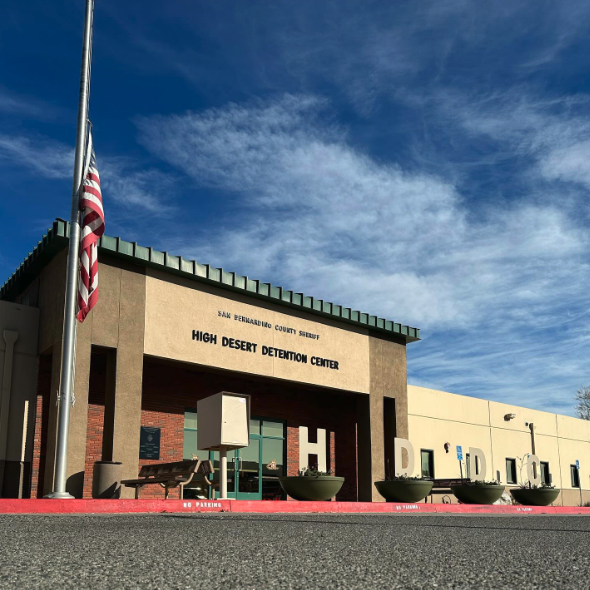
We spoke over the phone as Mercedes drove back from the Adelanto detention center, where a judge denied her client a bond hearing outright. Why? A new aggressive interpretation of INA section 235(b)—a rule originally meant for people caught with fake documents at the border—is now being used against anyone who entered the country without inspection. That means: No bond hearing. No arguments. Just lock up.
According to Mercedes, her guess is that the vast majority of people will voluntarily self-deport rather than face these conditions. This is what happened in her most recent case.
“My client was so distressed by the conditions in Adelanto, he decided to give up and take voluntary departure,” she told me. “He had serious health concerns and decided he couldn’t stay another moment longer.”
She said the stories I shared with her—Diaz, Zavala, Barranco—were “basically miracles.”
“Most of the people I’m talking to are detained for months without bond. And if they’re lucky enough to be in California, there might be a class-action ruling down the line. But for now? It’s chaos. It’s random. People are being sent to Texas, New Mexico, and even Washington, D.C., with no notice. Pregnant women. Disabled kids. Doesn’t matter. There’s no logic. Just numbers.”
I asked Mercedes why some people are detained for months, others deported immediately, and why some, like those with DACA or TPS, seem to stand a better chance.
“We have about six or seven judges out in Adelanto, and it really depends on who you get,” she told me.
In cases where people have pending deportation orders, they don’t even get a chance to ask for a trial or a lawyer. Those are usually the ones who get deported the fastest. But ultimately, it’s up to the judge.
Some judges, she explained, try to hear the full case. Others won’t even let her make an argument.
“Today, even though there were other issues at play, I didn’t even get to make those arguments,” she said. “It felt like both the government attorney and the judge already knew what was gonna take place before I got there.”
That’s because more and more judges are applying INA section 235(b)—a legal provision originally meant for people denied entry at the border. Now it’s being used to deny bond hearings for anyone who entered the country without inspection, even years ago.
“The Department of Homeland Security and ICE are taking a position that whoever entered without inspection ... they are gonna be considered under INA section 235(b), so they won’t be eligible for bond.”
So why do some people with DACA or TPS sometimes win release?
“The argument right now for people with TPS, DACA, a visa, some kind of work permit,” she explained, “is that they have protected status. They’re here, they’ve sought some sort of legal status. The whole term of TPS is that they are protected from removal. So they are supposed to be released basically right away and without having to pay bond.”
But even they’re not safe. Mercedes described a client with a valid work permit and an ongoing court case—who was arrested anyway.
“He has a work permit...He was basically doing everything that they told him to do. Now he has to do more.”
Mercedes told me ICE will often move people from one holding facility to another before they become eligible for a Rodriguez hearing to argue for release. That’s where, after six months in a detention facility, the government must prove that you are a flight risk or a danger to the community, or grant you release on parole.
“In my opinion, absolutely … Someone's making up to $150 per day,” she said.
And yes, I asked: Is this whole system—delays, random transfers, prolonged detention—a kind of business?
According to this KQED report by Tyche Hendricks, “The Department of Homeland Security estimates that each detention bed at standard ICE facilities costs about $165 per day. At that rate, holding 87 people for a month in the U.S. would total about $430,000—a fraction of the $40 million spent at Guantanamo.”
So what feels like a broken system is working precisely as intended, just not in the way we think justice should work. But there are some things you can do if you or your loved one is undocumented, to be ready to take on this broken system.
And here are a few tips from Mercedes on that front.
A Practical Guide (for when it’s not your turn to be lucky)
Here’s what Mercedes recommends:
1. Plan before detention happens.
- Do a legal consultation while you're still free. Know your status. Know your risks.
- If you have a citizen child over 21, or any pathway to legal status, get the paperwork moving now.
- Have someone you trust who knows your case. If you get moved out of state, they’re your lifeline.
2. Create a deportation contingency plan.
- Assign power of attorney, especially financial power of attorney.
- If you’re a homeowner, don’t just sell your house at a loss, put it on the market and have your power of attorney be in charge of that.
- Prepare a “go bag” with copies of key documents.
- Make a decision now: If detained, will you fight or accept voluntary departure?
3. Understand that bond is not guaranteed.
- Judges are inconsistent. Some deny bond before even hearing your case.
- If you're under 235(b), you might not get a bond hearing at all.
- After six months, you may qualify for a Rodriguez hearing — but ICE is now intentionally transferring people out of jurisdiction just before that six-month mark to avoid it.
4. Find a lawyer you trust.
- Mercedes offers $25 consultations to help people understand their options. Others do pro bono work.
- Ask your lawyer what they’ll do if you’re transferred out of state.
- Build a relationship before you need one.
The truth is, the system isn’t designed to help you. But you can still beat it with timing, knowledge, and yeah—a little luck.
Because in 2025, survival is a strategy. Freedom is a coin toss. And hope is a lawyer with a full tank of gas driving to a detention center in Adelanto.
And if you’re in a position where you don’t have to worry about getting deported, count yourself among the luckiest. I know I do.