


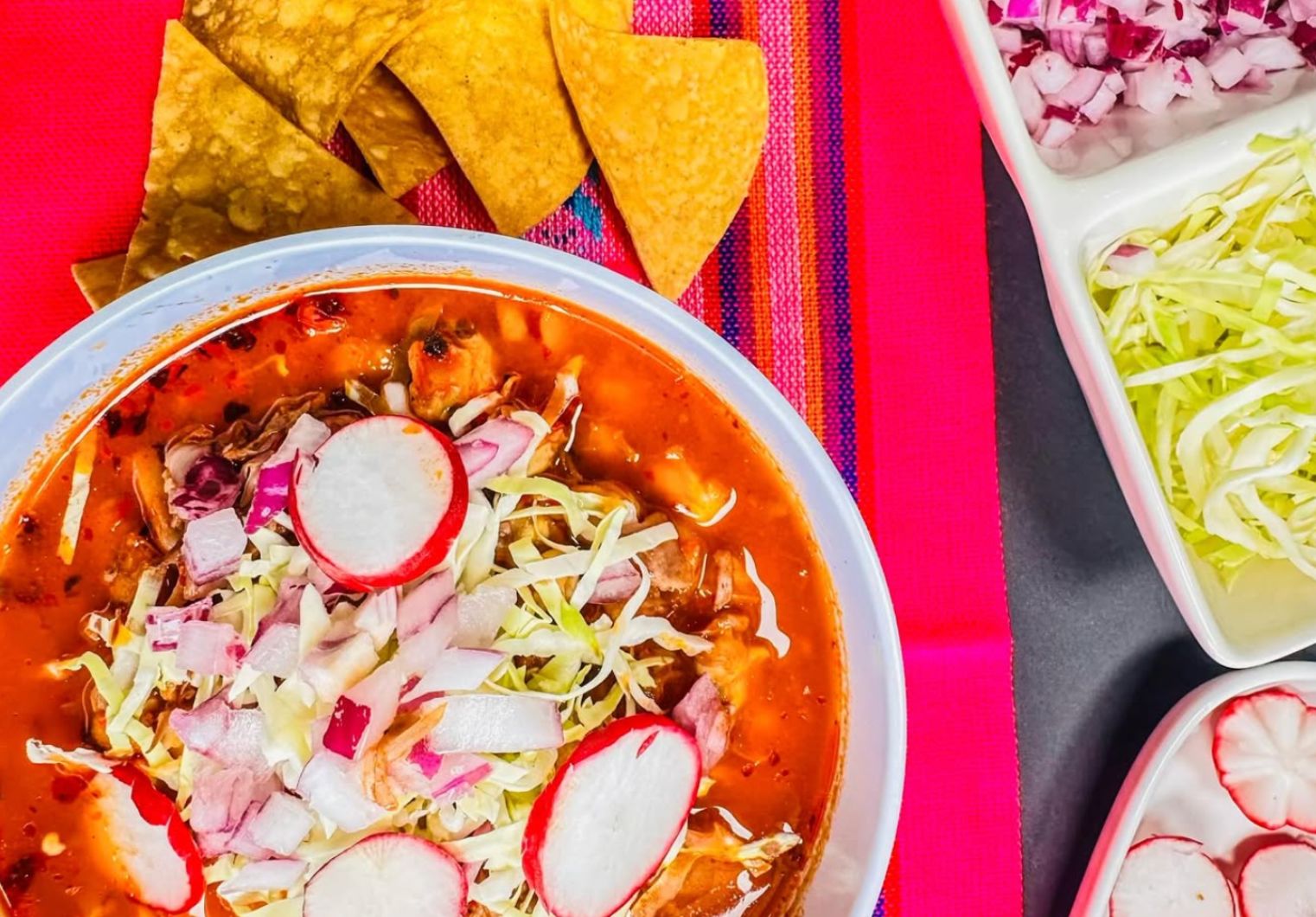
Pozole season is nigh!
Studies show that fridges in Mexican households are a game of chance around this time of year. Is this margarine in the margarine container? No. It’s pozole. Sour cream here? Nope. You ran out three weeks ago. It’s pozole, again.
Pozole is a dish associated with celebrations, gatherings, and holidays. Considering that the dish's origins called for four portions of human meat, consider it an improvement (depending on who you ask) that we now prepare it with pork, and occasionally different proteins like shrimp and chicken.
Pozole comes from the Nahuatl word pozolli, which translates to “frothy” or “boiled,” and was used as a ceremonial dish. According to Fray Bernardino de Sahagún, he saw the human meat stew (then known as tlapozonalli) offered to Moctezuma at a festival honoring the sun god in the 1500's. However, the protein eventually changed to pork because it is rumored to taste similar and the colonists didn't get down like that, eventually destroying the human meat economy.
The prehispanic dish, minus the human flesh part, remains one of the most popular dishes in Mexican gastronomy. There are three common iterations throughout Mexico: red, green, and white. The differences are seen regionally, with their variants in proteins, spices, and chiles.
Lucky for L.A., we have long a list of some of the best pozoles that the city offers, with each pozole on the list showing its own distinct identity. ~ Cesar Hernandez