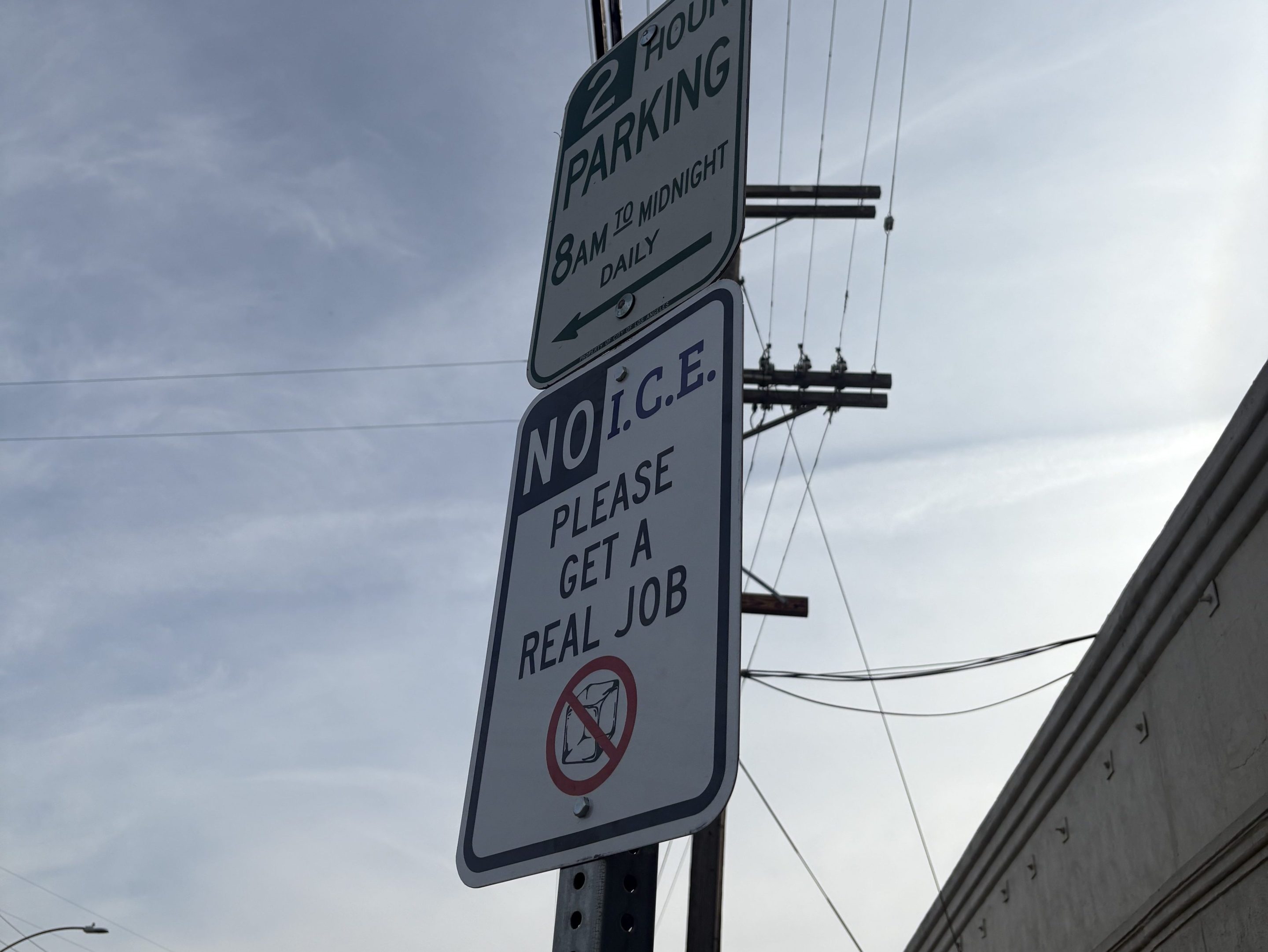
Last week, as I stepped into my shift at Solarc Brewing in Glassell Park, the sunset glinted off something unusual bolted to the post outside. It wasn’t the typical neighborhood clutter of fading concert flyers or frantic "lost dog" posters. It was a sharp, sterile rectangle of metal that commanded immediate, civic authority.
"No I.C.E. Please get a real job," the sign read.
At first glance, my brain registered it as "official." The sign is heavy gauge, reflective, and precision-cut, perfectly mimicking the visual dialect of a Department of Transportation posting.
The font is utilitarian; the layout, clinical. It exists in that uncanny valley between municipal and radical protest, forcing a double-take that feels like a glitch in the matrix.
It felt too deliberate to be random, but way too bold to be institutional. I said to myself, “Did Bub and Grandma's put this up? The Grant? Dunsmoor? Solarc? That would be sick, but who would have the guts?”
Through the tight-knit grapevine of the L.A. creative scene, the breadcrumbs led back to an artist who has spent years perfecting the art of the "guerrilla public service announcement."
These PSAs were most famously carried out by Richard Ankrom in 2001, when he installed a fake freeway sign to address a traffic issue that was obvious to commuters but ignored by the city. The art installation was up for nine months before Caltrans officials noticed.
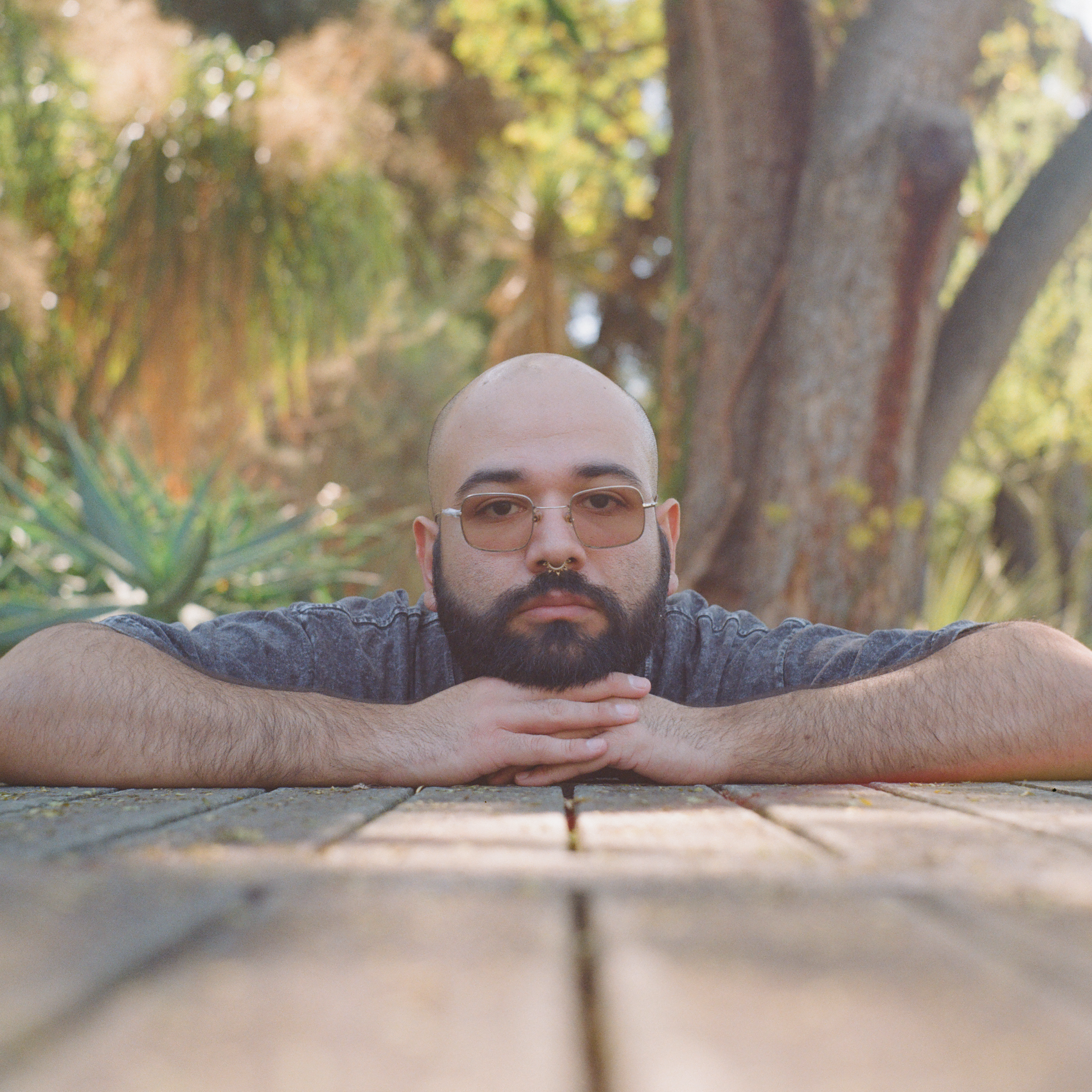
This artist, however, wished to remain anonymous.
Long before he was targeting federal agencies, he was the neighborhood trickster of Echo Park. During the peak of Dodger Stadium's game-day gridlock, he installed "How to Maximize Parking" signs that looked nearly identical to official parking notices. The signs were tongue-in-cheek instructions for out-of-towners on how to navigate the side streets without ruining locals' lives.
"I’ve lived in Echo Park for 13 years," he tells L.A. TACO. "Locals have long had to get creative when game day turns their streets into gridlock."
He took to the streets in 2020, similarly to the Black Lives Matter protests, when he posted signs expressing his support for his neighbors. What started as neighborhood-level commentary expanded into something citywide, using the familiar language of signage to carry messages people couldn’t ignore.
His approach hasn’t changed much since.
This sign-maker isn't the only one using the city’s own "uniform" to fix what he sees as a broken system. In a city where bureaucracy moves at a glacial pace, a new wave of activists has decided that if the government won't act, the citizens will.
Just this past December in 2025, Los Angeles saw another high-profile clash between "unauthorized" safety and the law. Activist Jonathan Hale, an organizer with People’s Vision Zero, was arrested in Westwood while dressed in a neon safety vest, mid-stroke, repainting a crosswalk.
Hale’s crime? Trying to make a dangerous intersection at Wilkins Avenue and Kelton Avenue visible to drivers. Like the sign-maker, Hale used professional-grade materials and code-compliant stencils. He wasn’t "tagging" the street; he was performing a city service that the city had ignored, until they showed up to handcuff him for it.
While Hale fights for the safety of the pavement, the Glassell Park sign-maker fights for the soul of the neighborhood.
When I asked the artist behind the “go back to Idaho” signs why he did it, the answer was quite simple. “It feels like my small contribution to a bigger issue,” he said. “It just sorta brings me joy.”
"I usually start on the Eastside and work my way toward federal buildings," the artist explains. "I keep them at eye level in hopes that feds will see them."
And maybe that’s the power of it. In a city filled with billboards, banners, and endless noise, his work slips into the visual language we’re trained to trust. These aren’t posters you can ignore or peel away—they look permanent, like they belong. A message that acts as a megaphone for the hushed frustrations of the city.
The next time you’re walking through Glassell Park or Downtown, look closer at the poles. You might find a message staring back at you like it has always been there, waiting for you to notice.