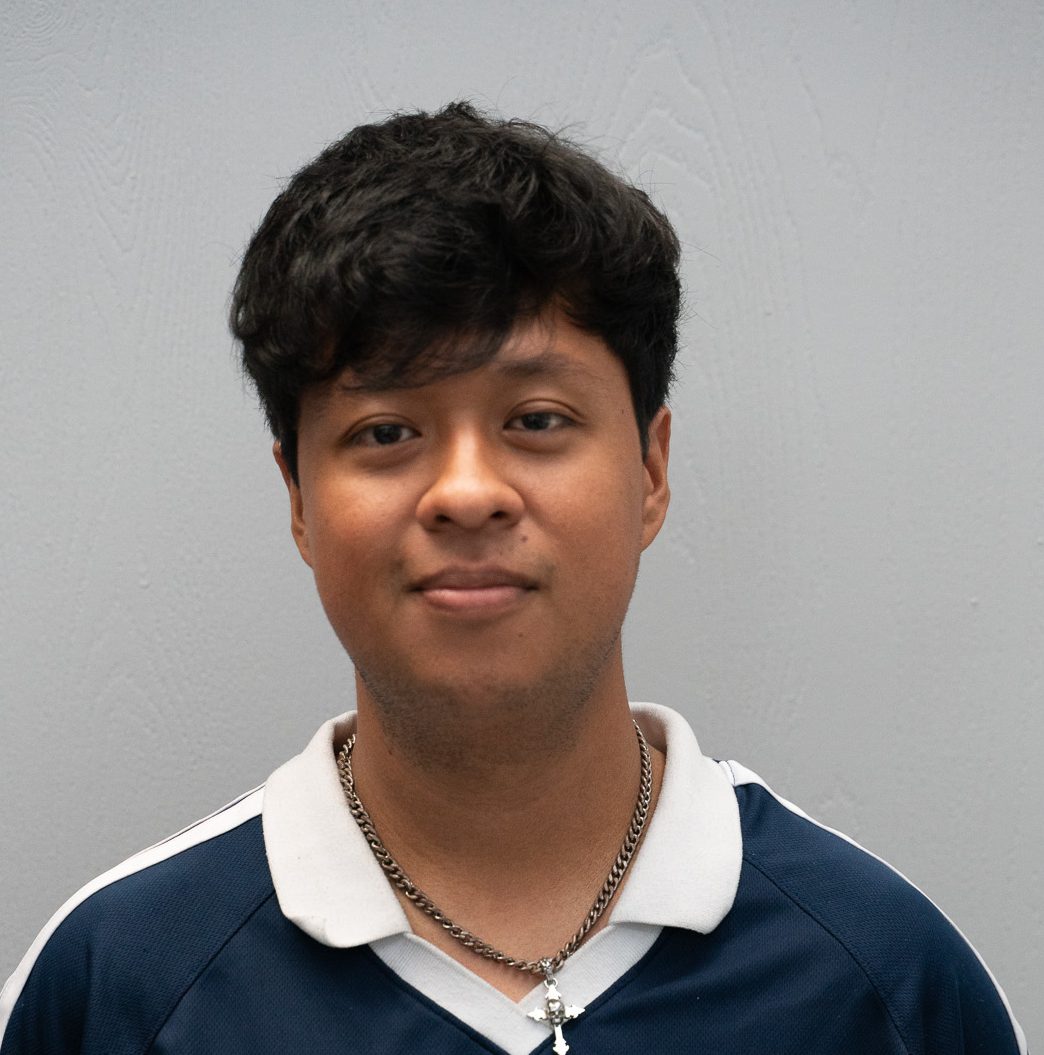
During the birth of L.A.’s craft cocktail movement in 2009, Matthew Biancaniello was the crazy guy foraging in L.A.’s local forests for wild ingredients so he could put “candy cap” mushrooms reminiscent of cotton candy into Cynar, macerating seasonal guavas from the farmers market into tequila, or making egg nog with white truffles.
His cocktails threw people off because they were so outside the scope of foundational cocktails. Many still crave perhaps his most famous cocktail: the Roquette, his variation of a gimlet with muddled arugula that tastes more like a cold-pressed green juice than something that is going to get you fucked up.
Matt was the bartender at The Roosevelt Hotel from 2008 to 2012, where he grew most of his cult following. His cocktail book “Eat Your Drink: Culinary Cocktails” cemented his culinary approach to cocktails.
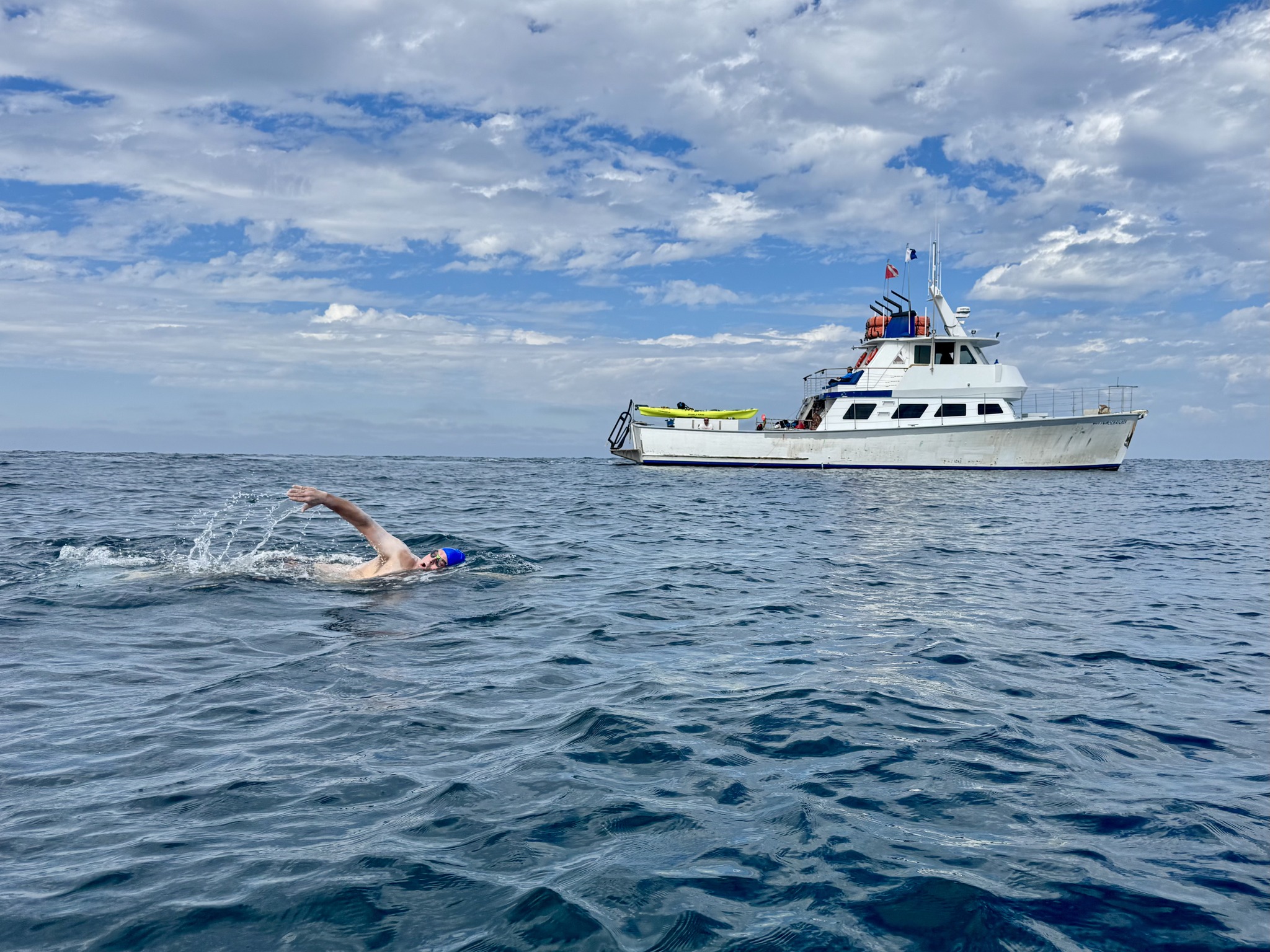
And while he still occasionally offers underground cocktail tasting dinners out of a back yard in Ladera Heights for his die-hard fans, the 57-year-old father of two has taken on a new obsession: marathon swimming.
Last week, Biancaniello completed an 18-hour and 19-minute swim from Catalina Island to Los Angeles, which measures out to 21 miles. More than half of which he swam in the middle of the Pacific at night, in pitch black conditions … in a part of the ocean that has been measured to be at least 3,000 feet deep (ten football fields), and yes, sharks were most definitely lurking nearby as he freestyled across.
L.A. TACO caught up with Matthew Biancaniello to share what the hell was going through his mind, being in salty water for nearly a day, nearly naked because he is team-no-wetsuit, and both the mental and physical challenges he overcame to do it all.
L.A. TACO: So did your swim happen before or after that other marathon swimmer from the U.K. was bitten by a shark?
Matthew Biancaniello: I swam one week before him. Can you believe that? During my swim though, at 3 a.m., I saw something moving that looked like an eel below me. But I didn't think it was a shark, because I could see kind of like a white skeleton. And I was like, ‘Oh, that can't be a shark, because I wouldn't be able to see that.’ But it was moving like that. It was enough for me to kind of move closer to the kayak for the next hour, because it was like three in the morning and pitch dark.
I tell people if you ever want to have a coach, make sure that they’re doing more than you. She just did a double crossing of Catalina in July! So I always feel—yeah, double crossing took her 28 hours. So that went there and back in the same—in this like, without stopping.
L.A. TACO: So did you get stung by jellyfish?
I saw small, little jellyfish. Nothing hit me. Really, really small, micro jellyfish. It was pretty calm for the most part, in terms of my experience. You know, I heard dolphins at 3 a.m. too. I didn't see them—I could hear them squeaking. And then someone said they saw a minke whale, which is pretty rare, but I didn't get to see that either. I was really cruising for the first 10 miles. I was really on track. I really was doing well, and then I started to get tired. I did Anacapa Island and that was a 13-and-a-half-mile swim, and I did great on that. I did it in six hours and 55 minutes. But doing a swim that is longer than 14 miles starts to really wear you down. My technique started to break down, and then I fought the current and wind for about the last six or seven miles. And then once I hit the Palos Verdes area, the last two hours, the water temperature dropped into the 50s. And you know, for me obviously, I trained in that. But after 16 hours of being in the water, I got cold, for sure.
What inspired you to push yourself like this after being a bartender?
Well I'm 57 years old. I had major back surgery about two years ago. I had to have a fusion, a compression. I still have four screws in me, and I remember being wheelchaired out of the hospital. I could see my kids looking at me, and while I wasn’t permanently wheelchair-bound, I could see the look on their faces; it was like the first time they saw me kind of in a vulnerable situation like that. And I just said to myself, I can either take a left right now, or I could take a right. So I took the right in terms of rehabilitating myself.
I was a swimmer when I was younger. Yeah, I swam in high school. I played water polo, but I never swam long distances, and I always wanted to be an ocean swimmer. After the surgery which will be three years ago this January, I started training for Alcatraz. I finally swam Alcatraz last June. I was like, "You know what? What else can I do? I got over my biggest fear, which was getting over sharks. You know, talking about the sharks—that's why I didn't swim in the ocean. I always felt vulnerable on the surface. I worked for Jacques Cousteau's original producer years ago in Santa Barbara. I saw so many shark films; I couldn't get that out of my head.
But for the Alcatraz swim, I thought, ‘Oh, well, here's a group that's been doing it for 20 years. Obviously, they're okay. They're around my age. I can do it.’ So I did that. And I also trained with Tower 26 in the pool, which was great—which is at the old Palisades pool that burned during the fire recently, and before the fire, of course. It was a mile and a half, and it was tough. And that was my gateway drug to... you know what I wanted? I've been wanting to do Catalina for 27 years when I lived in Santa Barbara. During that time, I did a lot of scuba diving at Catalina and Anacapa, and I dreamed of being a swimmer. And I got this book by Penny Lee Dean, and she still holds the record, which is unfathomable. I think it's seven hours and 15 minutes or something crazy to swim across it. Not even a man has beat her, and she wrote this book on training and stuff like that. I still have that; that's one of the few books I've carried through the years.
But once I started bartending, it was—forget it, it was over, because I was going to bed at three at night, waking up at seven in the morning. There was no way I could maintain that.
What’s interesting is that I felt pretty good at 40, but now swimming at 57? I feel better than how I felt at 40. I got a coach, and I started. I got my boat after Alcatraz, which you have to book at least a year in advance. My coach really helped. I tell people if you ever want to have a coach, make sure that they’re doing more than you. She just did a double crossing of Catalina in July! So I always feel—yeah, double crossing took her 28 hours. So that went there and back in the same—in this like, without stopping.
Without stopping? Yeah?
Yeah, without stopping. That's a great mentor. Like, I try to tell people, if you ever want to have a coach in anything in life. I ended up swimming to Coronado Island in March last year. That water was 57 degrees. That took me five hours and 22 minutes. It was 11 and a half miles. So I did that. And that—and that was a very emotional swim, because it was around Coronado Island. You end at the Naval base where my father was back in the '60s. He was stationed. And my father passed away four years ago.
And then I went and did Anacapa on August 7, which was 13 and a half miles. Supposed to be 12, but, you know, we—the current pushed north for about—for all day. So we ended up swimming a little bit longer. And that was fantastic. You know, I felt great. But, you know, Catalina is this—I can point to a million things that happened there why it took me so long to swim it. But I just say, I just feel a little bit like a fighter who wants a rematch. You know what I mean?
Do you want to try swimming it again?
I'm not gonna swim Catalina again, because I have Molokai Channel booked for May of 2027, so that's 26 miles. It's one of the roughest oceans in the world, and that—I'll start my training in a year for that. But right now, it's all about recovery, getting myself strong and getting my speed down as well.
I swim too, and you burn a stupid amount of calories. You had to eat while swimming right?
Yeah, most people do gels but they are not really good, because when you're in the water for that long, the gels start to build up and you'll start to feel bloated. I just drank this beverage that was high in carbohydrates called Precision and it really worked for me. Before my swim, I had a huge sweet potato with maple syrup and butter and then fed on these while swimming every 30 minutes. I would stop and have, you know, eight ounces of water mixed with this Precision carbohydrate. Each feed slowed me down by about 20 seconds where I had to stop and drink it, but that’s much faster than stopping eight minutes to eat an energy bar.
Any moments of fear at all?
I had a couple of fearful moments, especially when I saw that thing moving underneath me. It was probably about four feet, but that’s about how big the shark that bit the guy one week later was! But I still don't think it was a shark for some reason, but I've never seen a shark. The only shark I've ever seen in the water are blue sharks. I've never seen a great white, but a lot of people have.
The other major fear that happened is that at 5 a.m., my kayaker was trying to teach me a lesson because I wasn't paying attention and he hit me with my water bottle. He did it on purpose, which is not cool. The Federation is going to deal with him in. I thought it was a shark coming up and grabbing me. That's how scared I was, because it hit my head. I had some support swimmers come swim with me 30 minutes after that which makes me feel safer, but that water bottle hitting my head in pitch black darkness scared the shit out of me.
How much does a swim like this cost to do?
$6,000, and my boss paid for it, but more on that later. I raised $18,000 for a scholarship fund for Indivisible Arts that helps kids who are in the foster care program or who have parents with terminal cancer get them the money to be able to go to that program. I'd still love to raise some more money.
Swimming is a very solitary physical activity, it’s just you and yourself in a womb-like state actually if you think about it, immersed in salt water. What kind of reflections did you have?
For the first two miles, you are thinking about your life. Then you're thinking about your kids. All kinds of things enter your mind. Once that time gets over, what's really fascinating about it is you really are just going from feed to feed. So every 30 minutes I know I'm going to feed, right? So I get excited about the feed, or you just work on being present—my stroke, my breath, you know, feeling—just like focusing on what you're doing. And that's what I love about this. It's the most present I've ever been in my life. Because how can 18 hours go by so fast for me? You know, it can only go by when you're present, only, right? So the first 16 hours were great. The last two hours were tough, because my team was not telling me where—what beach I was swimming to, and it was really, really frustrating.
She's like, ‘just put your head down. Be present.’ Like, ‘Listen, man, I've been present for 16 hours. It's not going to throw me if you tell me what beach,’ I responded! But they just didn't do that. And I don't know if they were worried about me not finishing. The wind and the current, the boat was going parallel to shore, which seemed for hours. I was like, ‘When are we going into the shore?’ So that was the only time I got really frustrated. I kept thinking about how I'm going to feel when you get on that shore. Not what accolades you're going to get, not what people are going to say—think about how you're going to feel.
What's next?
Molokai! It’s a 26-mile swim, but I'm gonna take a year off. I still have major neck issues. I have deterioration between my C6 and C8—that's maybe another surgery. When I had an MRI during this—I had major neck problems. When I did my first 10K swim with my coach in January down in La Jolla, I couldn't move my neck. And she's like, ‘You better get this checked out.’ I remember one doctor's like, ‘I don't even know how you're swimming.’ But I went to physical therapy, and I worked on all these exercises I had to do every day to get it straight, and I worked on my technique, and I worked on not moving my neck at all to be able to swim.
In the beginning of 2027 in January, I want to swim an ice mile. That's one mile without a wetsuit, in 38 degrees. I don't know where that's going to be yet, or when—or where. But that's my goal. And then Molokai is May of 2027, so the whole plan is—this whole year is really about getting myself healed and into shape and into a starting point that I can do this for the next 20 years. That's my goal.
I don't want to be—I like how one guy put this. I think it might have been David Goggins. I love how he said this. He goes, ‘You know, a lot of people will do these big things, you know, big Ironman or whatever, and then they're kind of done—it's like they become a prisoner of that war they faced only then. You know, that's just a POW. They're just like, ‘Oh, I did that.’ And it's like, ‘I don't need to do that again.’
And I don't want to feel that way. I took a five-day break from swimming after Catalina but the following week, I’m back in the water four to five days a week.