


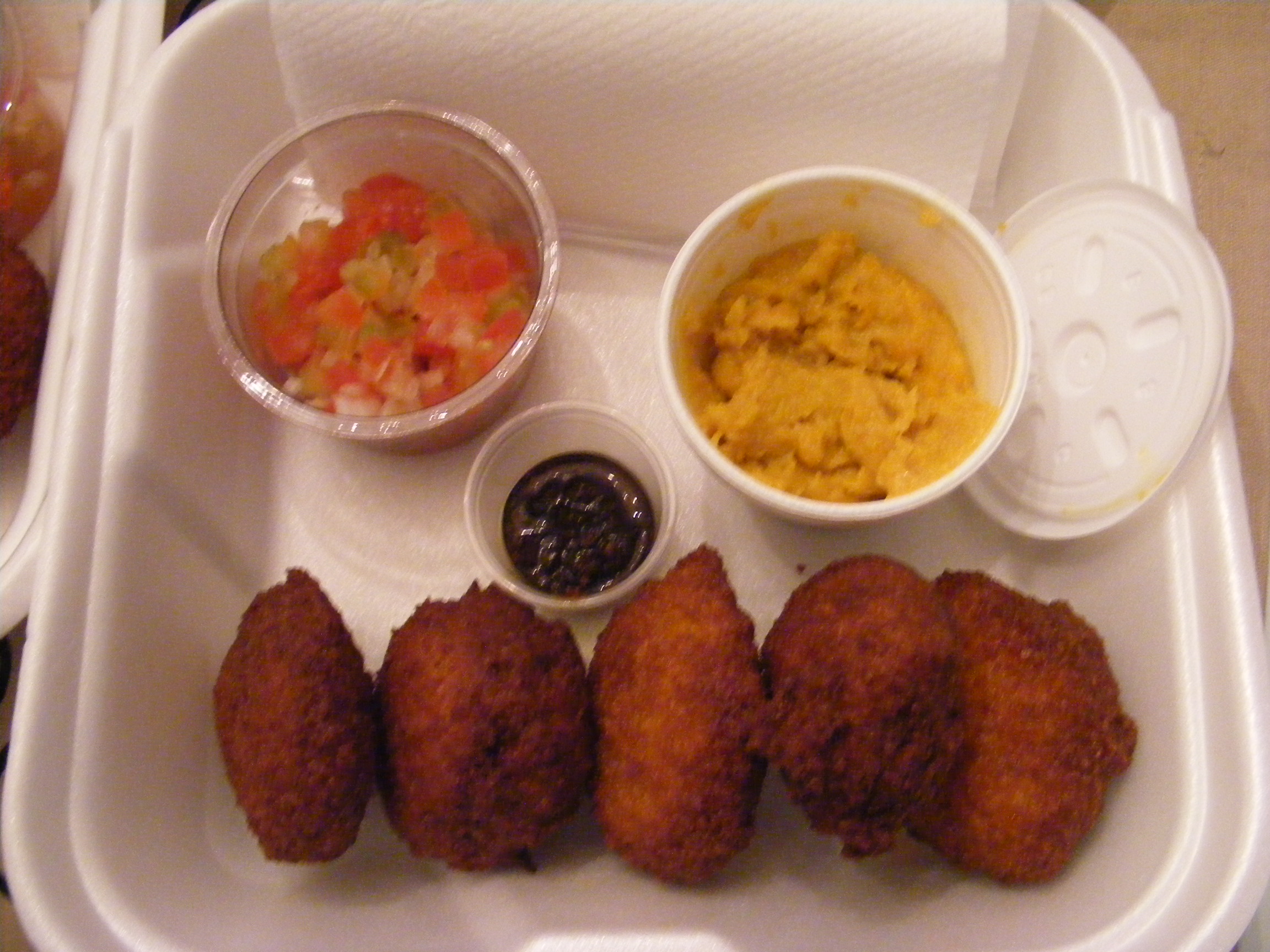
The state of Bahia located in the North-East of Brasil is has the most distinctive african culture in the country. From capoeira (afro-brasilian martial arts dance), african derived music forms such as samba and axe (aah-shay), the west-african derived religion called candomble, to its cuisine with strong links to Africa, Bahia is a treasure. Dende oil (palm oil), extracted from the West African palm tree that was brought by slaves to Brasil is a defining ingredient in Bahia cuisine.
After missing eachother for the past month and a half due to my busy schedule, I finally hooked up with Reni(hay-ne) and Ilma(Eel-ma) of Sabor da Bahia catering for some acaraje(a-cah-rah-jay) today. Acaraje is like a Brazilian version of falafel. A black eyed pea fritter which is deep fried in dende oil then shaped into ball, split open when cooked, and then stuffed with vatapa.Vatapa is a creamy paste made of bread crumbs, shrimp, coconut milk, and dende.Malagueta peppers, Brazil's chiles, are ground into a sauce to put in the acaraje, and a tomato salad adds to the party, but not without some dried shrimp thrown in.In Brasil, acaraje can be the size of a softball, quite a filling meal. This is street food, the most common item you will find in the colonial part of Salvador da Bahia called Pelourinho. The baianas(bahia women) wear traditional white clothes with a head wrap.Baianas are so cool that every samba school in Rio and Sao Paulo has a procession of baianas in traditional costumes.
Reni and Ilma make party size acaraje, the same size of falafel. And friend and I stopped over to watch them make it to order. This is a labor intensive food.Their are baianas in kitchens at our Brazilian restaurants here in LA, but they don't have acaraje. Too much work.