With years of incarceration behind him, ties tethering him back to his old gang, and trapped by drugs in a lifestyle he wished to escape, it took a scarce $300 to bring Los Angeles artist David Cavazos a second shot at life, in the form of a tattoo gun.
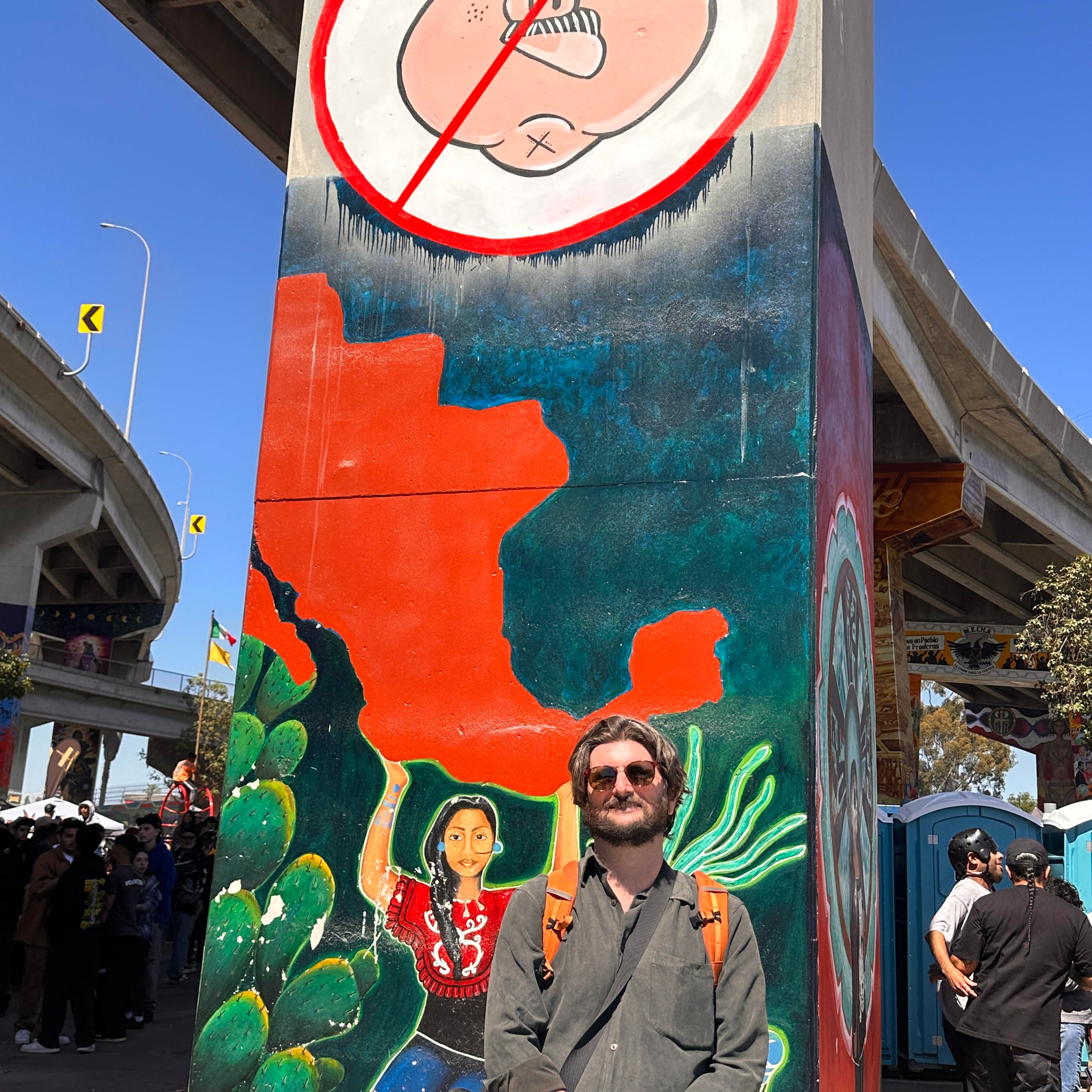
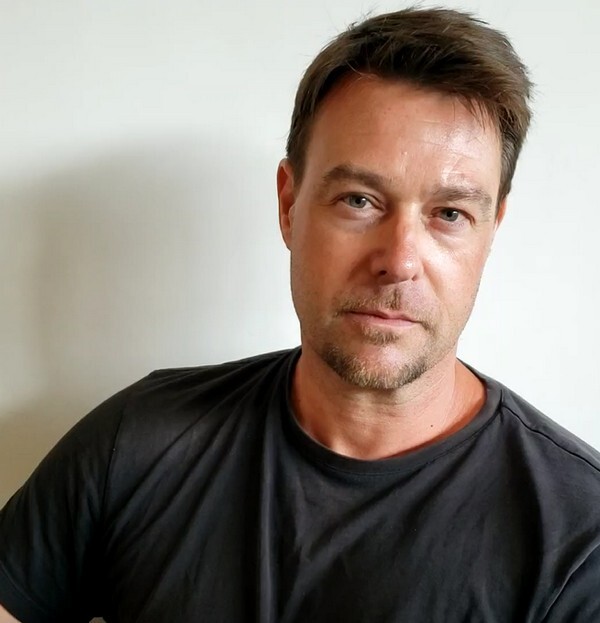
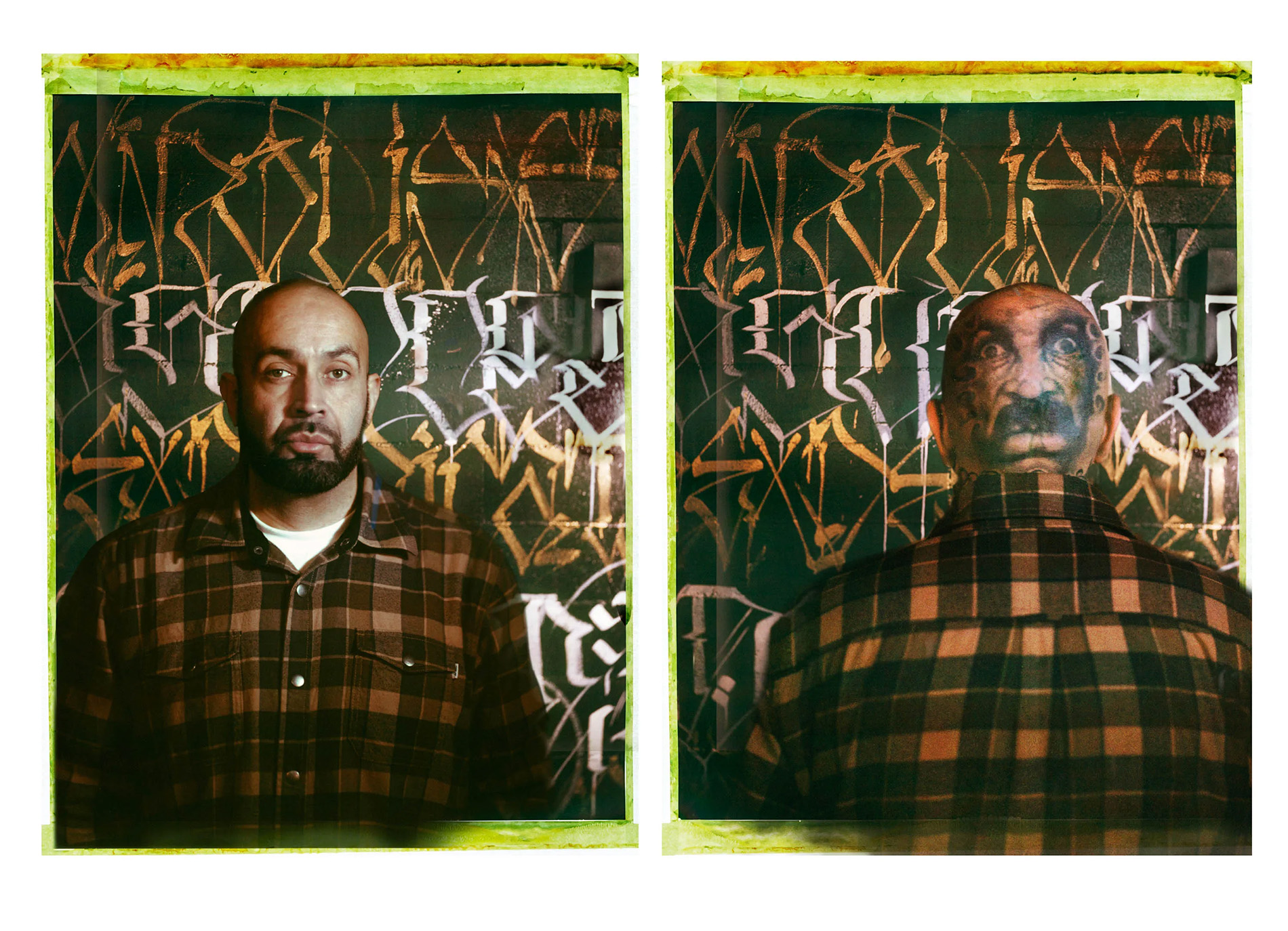
Reaching above six-feet, with tattoos poking out of his t-shirt sleeves, running along his neck, and an illustrated eyes, nose, and mouth with a thick handlebar mustache peering at you from the back of his head, Cavazos’ stern look masks his soft-spoken words and vulnerability.
Tracing the shadow of his confident walk and gangster front is a 51-year-old living off a dialysis machine. From mobbing the streets as a young gangster, to traveling the world as an artist, Cavazos now prides himself on the days he finds strength to get out of bed—a new reality where the silent wins have turned into answered prayers.
For Cavazos, otherwise known as BIG SLEEPS—"Sleeps" being the name given to him by his homies around the age of 13 and "Big," a self-appointed addition that came years later—gang affiliation was a rite of passage.
Growing up in Pico Union, Cavazos was exposed to the dangers of street violence at an early age, as were all of the children in the neighborhood. The frequent shootouts, drug-handling, and gangster crews posted up on each block filled in nothing short of an average day.
“We were so used to the violence there ... we were able to breakdance, do graffiti, do normal things even though there were shootings on the regular,” Cavazos tells L.A. TACO. “We kind of got used to that lifestyle.”
Moving out of Pico-Union was never an option for Cavazos, his single mother, two brothers, and grandmother. While conscious of the rapid decline in the neighborhood’s safety, the family couldn’t afford to leave.
“We were planted there,” he says.
As the neighborhood lacked resources to help youth steer clear of the street life surrounding them, the community resorted to creating its own socializing outlets—spaces for belonging.
What began as sports teams seeped into street gangs. At 14-years-old and already “very involved” in gang life, Cavazos was faced with his first near-death experience when he took a gunshot to the femoral artery.
“It was kind of normal,” Cavazos says. “You just shake it off.”
With his older brother away at college and younger brother looking for guidance, Cavazos used his experiences to try and stop the cycle he’d begun. Escaping street life felt out of his control, but he did everything in his power to turn his brother away from gangs.
“I protected [my younger brother] and made sure that there was no way he was ever going to join a gang,” he says.
In what he calls his “roller coaster of trials and tribulations,” starting with his gang affiliation—cycling in and out of juvenile halls, youth authority camp, and jail, fighting, and getting shot a second time—drawing remained one of his stable virtues.
Since he was a young boy, Cavazos had always gravitated to the Chicano Placaso-styled lettering that was tattooed on the skin of those he saw in his community and tagged on the walls of the neighborhood, tracing the rhythm of each letter when he came across it.
That same practice followed him behind the cell bars, where he worked to perfect the style by practicing calligraphy in the letters he sent to his mom and by drawing on envelopes, both his own and those of other convicts, as the artist told L.A. in a Minute last year.
The cycles of street life and drugs kept Cavazos from nurturing the talent he knew could turn his life around. Born and raised in an environment with limited opportunities, each time he was locked up, he had no choice but to return to a place entrenched in street violence.
In 2005, he battled both losses and gains that drew him into foreign territory. Following the death of his mother, he was diagnosed with diabetes, which led later to high blood pressure. Cavazos didn’t grow up with health literacy, nor did he come from a family or community with access to consistent nutrition.
“It takes a lot of discipline to cut out junk food when you’ve been used to it your whole life,” he says.
His bad eating habits didn’t stray too far from the meals he was raised on. He wasn’t educated about the different diseases that can creep into one’s system if the body is not properly cared for. Despite receiving the diagnosis, Cavazos was still unable to fully grasp what it meant to be diabetic.
“I know I can’t see right now and all these things feel bad, but I still didn’t understand it,” he says about the day he was diagnosed. “I didn’t know how to make a diet change ... I didn’t know how to change the way I was already programmed.”
Lost in the midst of death, diseases, and the danger still stemming from his ongoing gang involvement, Cavazos crawled into one of the darkest times of his life, desperate for a sign of hope.
A familiar face found her way back to Cavazos when he needed it most, bringing him a burning new system of support. Cavazos and his ex-girlfriend, Monica, were lovers in the past, having each endured their own paths of struggle that would later reunite them for future chapters to come. Their reunion gave him a new hope to fight for a better tomorrow.
She embraced Cavazos for his troubles and accountability, and emboldened his passions. She saw him for who he could become if the right support were provided, taking a leap of faith by investing her last $300 in a tattoo gun that would jump-start David's career.
“I’ve always told him that I see parts of him that people don’t get to see in detail,” Monica, now his wife, tells us.
That same tattoo gun became a gateway to the BIG SLEEPS empire, opening numerous doors to success for the artist. From owning his own tattoo studio to seeing his artwork displayed at the Getty Museum, Monica has stood right beside Cavazos, through all the ups and downs.
“I don’t think she knows how powerful her role has been,” Cavazos says about his wife. “We built this whole thing together, everything, the whole empire, the BIG SLEEPS brand and everything.”
“It’s been us staying up late at night for days and months, learning as we go,” he continues. “We didn’t know anything about business, nothing about anything, but here we are venturing into things we don’t know anything about again.”
After years of tattooing, both in and outside the U.S., and building a stable business, Cavazos and his wife were fortunate enough to buy their first home in Lakewood in 2022, a long-awaited triumph.
The same day they acquired the keys, Cavazos was diagnosed with kidney disease.
Their celebration was accompanied by the inevitable worry over Cavazos’ diagnosis, a disease that would change the trajectory of their lives. His mind instantly clouded with contending thoughts.
“I’m on a good path in my life where I’m happy that I made this huge accomplishment, and that [diagnosis] hit hard ... I was like, ‘This can’t be happening,'” he says of that day. "How am I going to pay off my house if I get sick?”
In the following months, Cavazos would lose sleep. When it did come, he experienced nightmares.
“It was scary just trying to process and trying to understand what exactly was going to happen and if it was going to happen tomorrow,” he says.
With anxiety only further debilitating him, he and Monica made the decision to store faith in God’s hands and refuse to stress over things that are out of their control.
“I don’t want to spend any second of any of the time I have left worrying,” he says, “If this goes bad, I want to enjoy every second of it.”
Upon first receiving the news, Monica quickly asserted herself on the frontlines of her husband’s battle with kidney disease, ready to fight as if the battle were her own.
Despite her growing concern over Cavazos, she jumped at hiring a chef that cooked plant-based meals to help him avoid dialysis, a move that succeeded for nearly two years. She also co-ministered the process of interviewing potential candidates for a kidney transplant and planned health fairs to inform others about health justice—offering optometry, dental, and blood pressure checks through UCLA services—on his behalf.
“If I didn’t have my wife, battling this would be really hard because we started as a team,” Cavazos says. “I feel like we both have it.”
Cavazos’ harder days impose the same weight on her own.
“To see him sick to the point where he’s living right now because of the machine ... life really hits you at that point, it just makes you see it a whole different way,” Monica says, telling us that David's battle revealed the shortness of life to her.
Monica’s loyalty to him is rooted in the extended care David has provided for her own four children, sealing a foundation of trust and companionship.
“When we got back together, since day one, he’s always been a father figure to the kids ... he never made it difficult,” she says. “I’m forever going to be grateful for that.”
Cavazos and his wife blindly entered the fight against kidney disease, unprepared for what was to come. Receiving diagnoses and test results from doctors, without any explanation of what it meant, left him with unanswered questions on how to overcome the disease.
“We were trained that whatever the cops say, whatever the doctors say, you do, you trust, and you don’t question it,” says Monica. “It stopped us from asking questions, advocating for ourselves, or defending ourselves.”
It wasn’t until Marc Coronel, a kidney disease advocate who overcame a rare form of the illness himself, reached out to the couple and offered the information and guidance that doctors failed to provide, that they changed their approach to the fight.
“I went in and knew what to ask and knew what I needed to work on and how to get my labs better,” says Cavazos.
From his experiences with health and medical negligence, he and Monica grew passionate about health advocacy and justice. Together, they’ve hosted health fairs with elements of art to engage younger crowds, while showing full transparency about the artist’s medical journey via social media. In Instagram posts, Cavazos updates followers with vulnerable photos of his surgeries and a recent teary-eyed video, in which he bravely asks for a living kidney donor.
The Cavazoses take advantage of the platform David has created as an artist to share his continuing battle with kidney disease.
“It all came full circle,” Cavazos says.
Through this day, art remains an escape for Cavazos, offering him a world where shape and color tune out all the noise from his day-to-day reality. At Cedars Hospital, he took the time to walk up and down the hallways, admiring the various works on display. He plans to build on this passion by creating a youth center dedicated to educating children on health awareness through art.
While anticipating the future, Cavazos and his wife cherish the blessings they still share today, of being able to breathe and walk.
“Living day by day, I think, has just been the best thing for us,” Monica says. “We’re not worried about tomorrow. We’re not concerned about yesterday. We’re just today.”