This book review is brought to you by Viva La Books Review.
“I took surface streets on the drive downtown. I find it less distracting than the sixty-mile-an-hour route,” declares the protagonist of "Gray Dawn," Ezekiel “Easy” Rawlins.
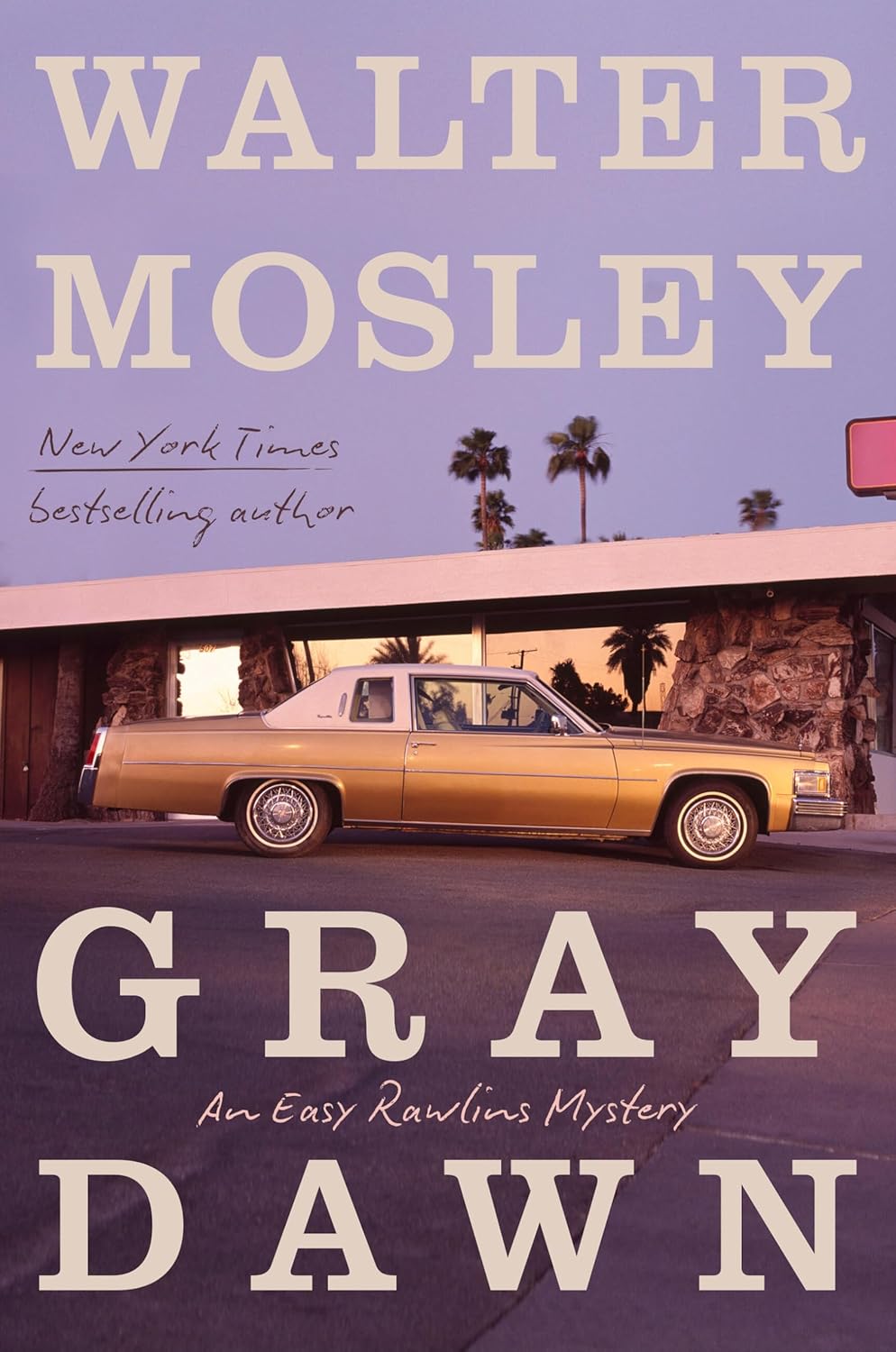
"Gray Dawn" is the 17th book of Walter Mosley’s Easy Rawlins novel series. Set in 1972, the narrative continues Mosley’s tradition of mapping Los Angeles through a continuum of murders, unexpected twists, and seductive trysts. Hardly a corner of Southern California is missed by Rawlins as he travels between Watts, Downtown, East Los Angeles, Hollywood, West Covina, Bellflower, Santa Monica, and the San Gabriel Mountains.
Mosley’s mastery of crafting hard-boiled detective stories is why he’s one of America's most revered living writers. The Easy Rawlins saga began with "Devil In A Blue Dress" in 1990. Since then, Mosley has followed up with a new Rawlins book every few years.
“Easy, and his friends exist to testify about a volatile time in Black, and therefore American, history," Mosley states in this installment's author note.
Longtime readers of the Rawlins’ books recall that–whether it’s the Great Migration, McCarthyism, the Watts Riots, or Vietnam War protests–Mosley’s historical fiction captures American and Los Angeles history in captivating episodes that dovetail political and personal turmoil.
As in his other books, Mosley weaves social commentary into "Gray Dawn" seamlessly. On top of that, some of the passages read like poetry:
“County jail, the only official place worse than the California penal system," writes Mosley. "County jail, where they stack prisoners one on top of the other and then leave them to figure out the pecking order. The same county jail that welcomes drunk drivers, those who fail to pay child support, and unemployed parents who shoplift milk; it also sequesters murderers, perverts, and gang members, especially gang members.”
Mosley’s prose is masterful, loaded with insight-laced, cadenced sentences. It’s rhythmic and insightful simultaneously.
In "Gray Dawn," Easy Rawlins is now 52, but his swag remains formidable. He is still a man’s man, with the savoir faire to navigate any situation, whether it is getting pressed in an L.A. County jail or being interrogated by FBI agents. Yet, Rawlins is a father and a kind individual with the capacity to win people over while solving crime.
“Easy is a passionate soul,” Mosley states. “He identifies with the underdog because he has been that man, because his children (by blood and by choice) are in danger of inheriting this unwanted mantle. He speaks for the voiceless and tries his best to come up with problems that seem unanswerable.”
The cast of characters who appear in each Rawlins book are once again on hand, namely Fearless Jones and Raymond “Mouse” Alexander.
“They are heroes,” Mosley writes, “whose purpose is to undermine enemies who often do not recognize their culpability. Their history is almost from another dimension, a place, a series of events that have not happened for the keepers of the official history of this country, this world.”
Rawlins and his cadre are everyday people who represent a generous range of humanity. This private investigator has a friend in every neighborhood.
The reader is guided by Rawlins' involving interior monologue, which clearly communicates his ethical values and the strict code he lives by.
“Most often,” Rawlins confesses in Chapter 6, “when it comes to the detecting profession, I prefer to work alone. I don’t want or expect assistance, but on the other hand, I try to give help where and whenever it might truly be needed.”
No spoilers in this review. "Gray Dawn" involves Rawlins searching for a feared femme fatale known for her illicit enterprises. In the process, he discovers a son he didn’t know he had. Rawlins is placed at the center of a tangled narrative—during the era of the Black Power movement and the rise of feminism–propelled by the activities of an evolving criminal underground.
Along the way, our protagonist makes a pit stop in L.A. County Jail where he encounters an East L.A. ringleader named Carlos Ortega. They manage to become friends when Rawlins helps Ortega find the shot caller’s dementia-plagued father. Rawlins is also popular with women without acting sleazy:
“Back in the long aisle of operators, the Knockout was waiting for me. She seemed impressed that I made it out unscathed.”
Rawlins' ability to make his way through any tricky situation has always hooked readers into his tumultuous world. "Gray Dawn" is another successful installment–it cements Mosley’s reputation as one of the best noir writers alive, deeply skilled in writing evocative dialogue and coming up with surprising plot reversals.
Easy Rawlins is not just a P.I., but a truth seeker who “has learned how to open any door, either physical or conceptual. He gleans your secrets, secrets you might not even know that you have.”