

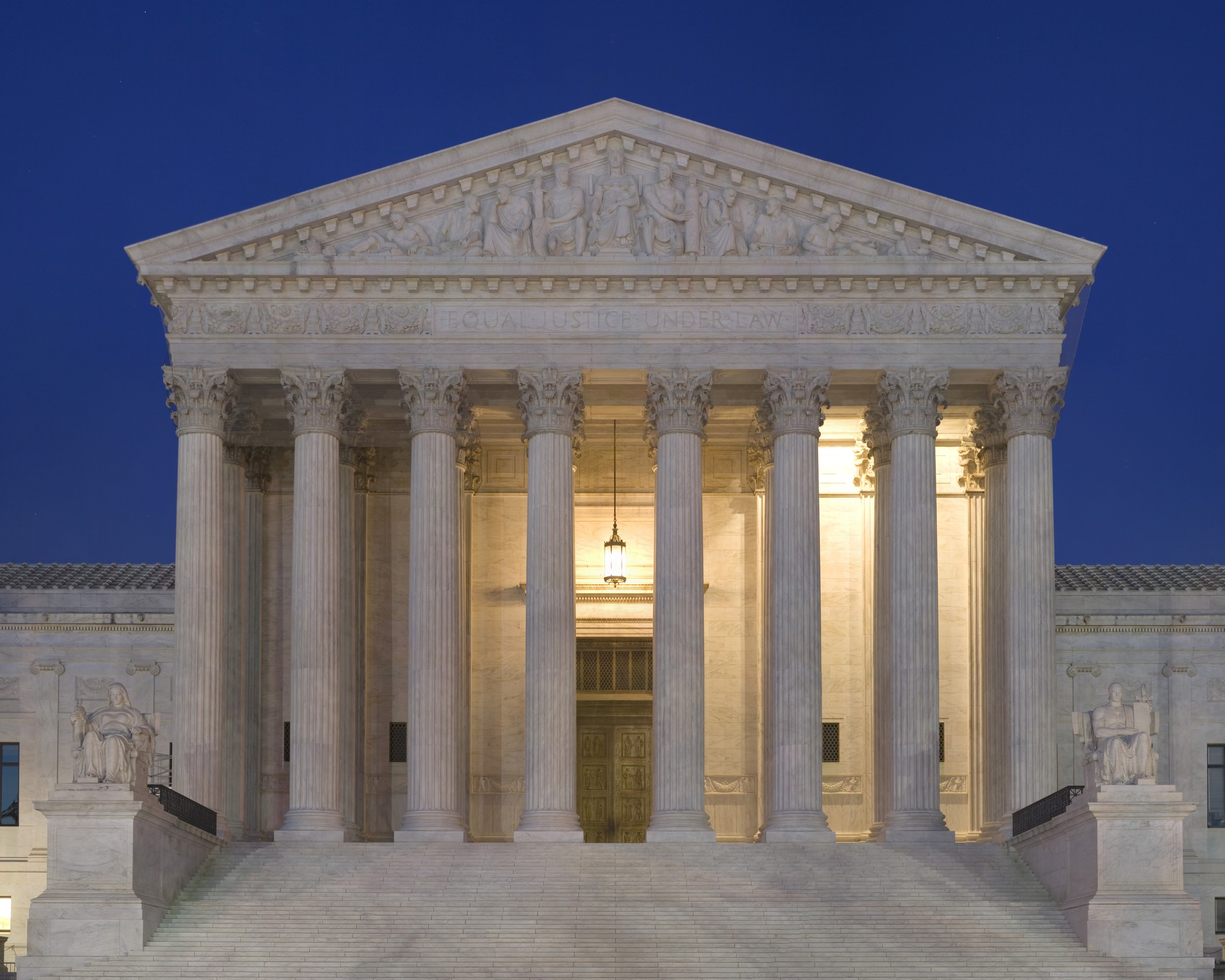
On Monday, Sept. 8, the U.S. Supreme Court did the unthinkable: it gave the Trump administration the power to use race as a “relevant factor” in stopping and detaining people in Los Angeles. To be clear, as Supreme Court Justice Brett Kavanaugh likes to say, ethnicity—especially of the “Mexico and Central America” variety—is fair game for roundups, detentions, brutal takedowns, and arrests. But no need to worry, the good justice assures us: ICE is legally bound to target only the “bad guys.” If you are legal, everything is fine. But this pie-in-the-sky assurance couldn’t be farther from the truth.
For years, conservatives on the court have claimed to be “colorblind.” They struck down affirmative action, insisting that race has no place in education or public policy. Yet when it comes to criminalizing our communities, suddenly race matters. This is the contradiction at the heart of the Roberts Court: no race in college admissions, but race is admissible in immigration stops.
The real problem in this Sept. 8 decision is that the Supreme Court justices are now saying the quiet part aloud: Brown skin is a problem to be policed. And that leaves us with a dangerous question—can a country built on such contradictions hold together when its highest court openly sanctions racism against millions of its own people?
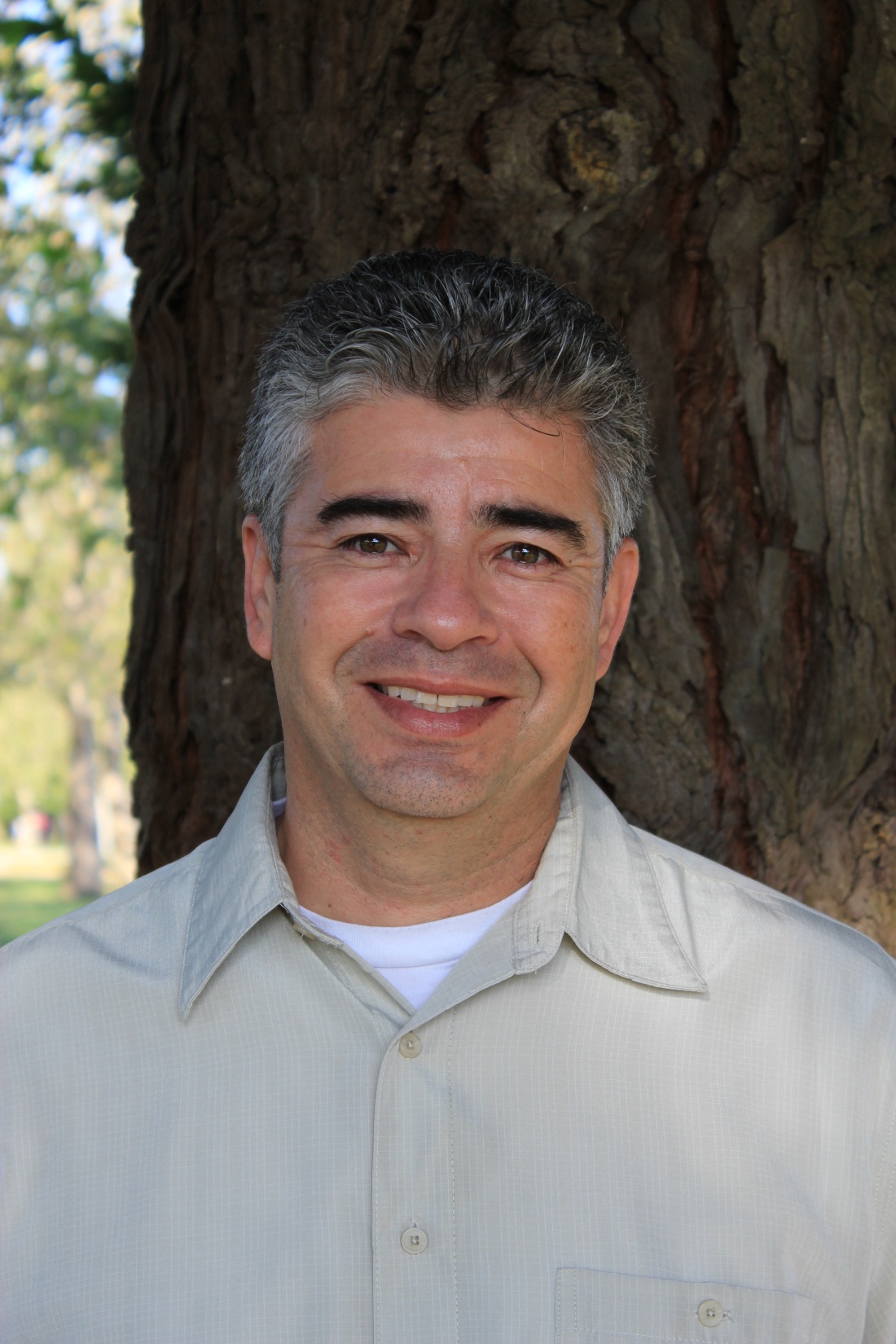
We write this from Los Angeles, a city where nearly half the population is Mexican, Chicano or Central American. That means almost every family here has someone—citizen or not—who could now be targeted under this ruling. Families who could be harmed physically, emotionally, and financially. We know what it means to be pulled over because you “look like” someone who does not belong. And now the Roberts Court has made that legal again.
As Chicanos working in law and academia, we know the score. This decision ignores both history and plain facts on the ground. Selective amnesia seems to be the illness of choice. Native-Americans, African-Americans, Asian-Americans, and Mexicans have all felt the sting of second-class status. And our memories are quite intact. Think of Plessy v. Ferguson, every broken treaty and legislative act denying Native Americans citizenship, Japanese internment, Chinese exclusion, and the failed promises of the Treaty of Guadalupe Hidalgo. And this is just the tip of the historic iceberg. The story is always the same: the law used as a weapon to keep communities in their place. And now again, the Supreme Court has done it again.
This decision is galling in its scope and dangerously disconnected from the sheer terror that such a scheme will unleash. Kavanaugh’s concurrence stands as the centerpiece of the ruling. He writes that ICE officers may take into account the fact that many immigrants in Los Angeles gather at bus stops, day-labor corners, and car washes; that they work in landscaping, agriculture, or construction; that they speak Spanish or accented English; and that they come from Mexico or Central America. But, careful to burnish his civil-rights credentials, he adds: “To be clear, apparent ethnicity alone cannot furnish reasonable suspicion…” At first glance, he sounds like a reasonable man. Yet just eight words later, he reveals his true colors: “however, it can be a
‘relevant factor’ when considered along with other salient factors.” The doublespeak is thick; his arrogance unmistakable.
Justice Sonia Sotomayor, the Supreme Court’s only Latina ever, issued a fiery dissent: “We should not have to live in a country where the Government can seize anyone who looks Latino, speaks Spanish, and appears to work a low-wage job.” She warned that this ruling makes all Latinos “fair game” for detention. But even her powerful words did not go far enough. What the majority embraced was not only a deep-seated anti-immigrant sentiment—it was a reaffirmation of this nation’s long history of anti-Mexicanism. In practical terms, it means anyone who is Brown carries a target on their back, just as it was in the so-called good old days.
When we went to college, one of the first films we were introduced to laid out the historical context and lived experiences of Chicanos in America. The film was "The Ballad of Gregorio Cortez." It was a beautiful work that addressed many of the core issues underlying the second-class status of Chicanos/Mexicans during that time period. But it also did something more: it revealed the ease with which a segregated and violent system operated.
In one chilling scene, the film showed how anti-Mexicanism could be weaponized to unleash the full force of the “law” on these communities. The scene opens with a group of Texas Rangers hunting down a “gang” of Mexicans for the crime of killing a local sheriff (read: a white man). The rallying cry comes when one among the posse screams, “Mexican!”—a word that mobilized the others to shoot first and ask questions later. Mexican-American lives simply did not matter. What mattered was control over them.
History tells us this story never ends well. But history also tells us that communities fight back. Plessy v. Ferguson lasted almost 60 years before it was overturned by Mendez v. Westminster and Brown v. Board of Education. We cannot afford to wait that long this time.
This ruling is not just about immigration enforcement. It is about who belongs in America. And the court has answered: if you’re Brown, if you’re “Mexican” or “Central American”, if you speak Spanish—you don’t. That is why this moment demands not silence, but clarity. As Justice Sotomayor wrote: “Rather than stand idly by while our constitutional freedoms are lost, I dissent.” So do we.
Here is what we know for sure: dissent is not enough. A judge's dissent are words on paper, not law. The court holds legitimacy only if we the people recognize its decisions. When the court declares that “apparent ethnicity” is grounds for reasonable suspicion, we are not required to bow our heads. We can reject this ruling and demand its reversal. And we can demand accountability—up to and including the censure of Justice Brett Kavanaugh. What Kavanaugh and the majority are saying is “We know a Mexican when we see a Mexican.” Good to know Supreme Court. Good to know!

For decades, Republicans have weaponized “race-neutral” arguments to dismantle affirmative action in schools and workplaces. Now, their new talking point is “common sense”: if you look “Mexican” and speak Spanish, you should prove your right to be in this country. It is interesting the majority did not define “apparent authority” as looking “Latino”; they defined the ruling around looking “Mexican and Central Americans” or Brown. Let us be clear—this is not common sense. Its white supremacy repackaged for the 21st century. And our answer must be just as clear: Hell no.
This decision should also serve as a wake-up call. Latino “national organizations” and much of our political representation are weak, fragmented, and largely ineffective. The court’s six votes in favor of singling out an ethnic group for targeted assaults illustrate the degree to which anti-Mexicanism remains a salient and galvanizing force in the United States. It shows how deeply it runs, how easily it can cloud judgment. For those leaders in our communities who have not understood the centrality of race in shaping
policy and power, we hope you understand the time for denial is over. Our elected and organizational leaders must confront it directly—organize, build coalitions, and speak with urgency—because ignoring it only invites more of the same.
The political right has been patient and strategic. They chipped away at abortion rights for decades until Roe v. Wade was gone. Now they are coming for immigration rights, voting rights, and yes, birthright citizenship itself. If they can normalize “apparent ethnicity” today, overturning the 14th Amendment tomorrow is not unthinkable. Which means our response must be equally ambitious. That means fighting for Supreme Court term limits, demanding a constitutional amendment to enshrine birthright citizenship beyond question, and—if necessary—pushing for a constitutional convention to redefine the promises of this country for the 21st century.
This ruling does more than weaken the Court’s credibility—it puts its very legitimacy in doubt. Each of you reading this have a moral and ethical duty to read it. The decision is sloppy, highly inflammatory, immoral and frankly amateurish. When the highest court endorses open racism in writing, the question is no longer whether we agree with its reasoning—it is whether we recognize its authority at all. That is a dangerous place for any democracy. But the danger does not come from our refusal to accept injustice. The danger comes from silence. While disagreements on policy are legitimate, once an
authority legitimizes racial discrimination after the Civil War and the Civil Rights movements, the problem is not with us as citizens, it is now squarely with the United States Supreme Court.
So let us be honest: the next few years will be politically, economically, and emotionally brutal. Calling this decision racist is not enough—that is obvious. What we lack is a plan. Our elected officials and national organizations must step up, or they should be replaced. But more importantly, we must step up. Dissent must become action. Action means organizing your specific organizations, using your voice on social media, voting, litigating, marching, and refusing to let our communities be treated like the enemy.
The story of Gregorio Cortez was no fantasy revision of American history—it was fact. His case was real, and the manhunt that followed was the largest of its kind in the United States at the time. Mexican-Americans were terrorized, rounded up, imprisoned, and murdered in pursuit of a warped notion of justice. News of the manhunt went national. Mexicans were cast as foreigners and outsiders, undeserving of protection or mercy, despite generations of presence on this land. But facts hold little power in a world clouded by ignorance and hate.
We need to step up now. The slippery slope is already here. What remains is whether we have the imagination and courage to act—to organize, to resist, and to speak with clarity about justice, dignity, and equal protection for all. Yes, this is a dark moment, but history will judge each of us by what we did when the Supreme Court openly sanctioned racism and looking “apparently Mexican” or “apparently Central American”. Did you push your organization to take a stand? Did you make that stand public? Did you use your voice on social media, in your family, and in your community to make sure the MAGA virus spreads no further? Silence is complicity, and time is not on our side.
We must also remember this: we are the generation of Chicanos and Latinos with the most resources, education, and influence our people have ever had. Previous generations fought back with far less and still achieved victories that reshaped this nation. Their sacrifices leave us no excuse. If we fail, it will not be because we lacked power—it will be because we lacked the will to imagine and execute a strategy. Our duty is clear: to protect the next generation, to honor those who came before us, and to make sure we do not fail them.


