This story was written in collaboration with L.A. TACO’s Media Lab class at USC, an incubator for emerging journalists aimed at forging a new path for the future of journalism. Keep a look out for our ongoing series of stories from L.A. TACO Media Lab students.
You won’t find it on Google Maps. There’s no glowing sign pointing the way, no crowd spilling onto the sidewalk, cocktails in hand. On a quiet stretch of Downtown L.A., behind an unmarked warehouse door, a low hum of conversation rises over the bubbling of boiling water.
Inside, people are blissfully buzzed—not on booze, but on tea, with varieties strong enough to lift your mood, hangover-free. Soft lantern light dances across the concrete walls, drawing you into Bu Tea Den, which opened its doors in May 2025, quietly carving out a hidden third space for the city’s tea lovers and the sober-curious alike.
It’s not a bar and it’s not your standard teahouse. Visitors RSVP online and follow secret directions into the speakeasy, making a deliberate choice to be here and be present.
“I think the concept of third spaces, as someone that doesn't drink, is just fantastic, and I love that it's become a more of a focus recently,” customer Ingrid Liu said. “People are really talking about it. Rather than hanging out at a bar, having something like this.”
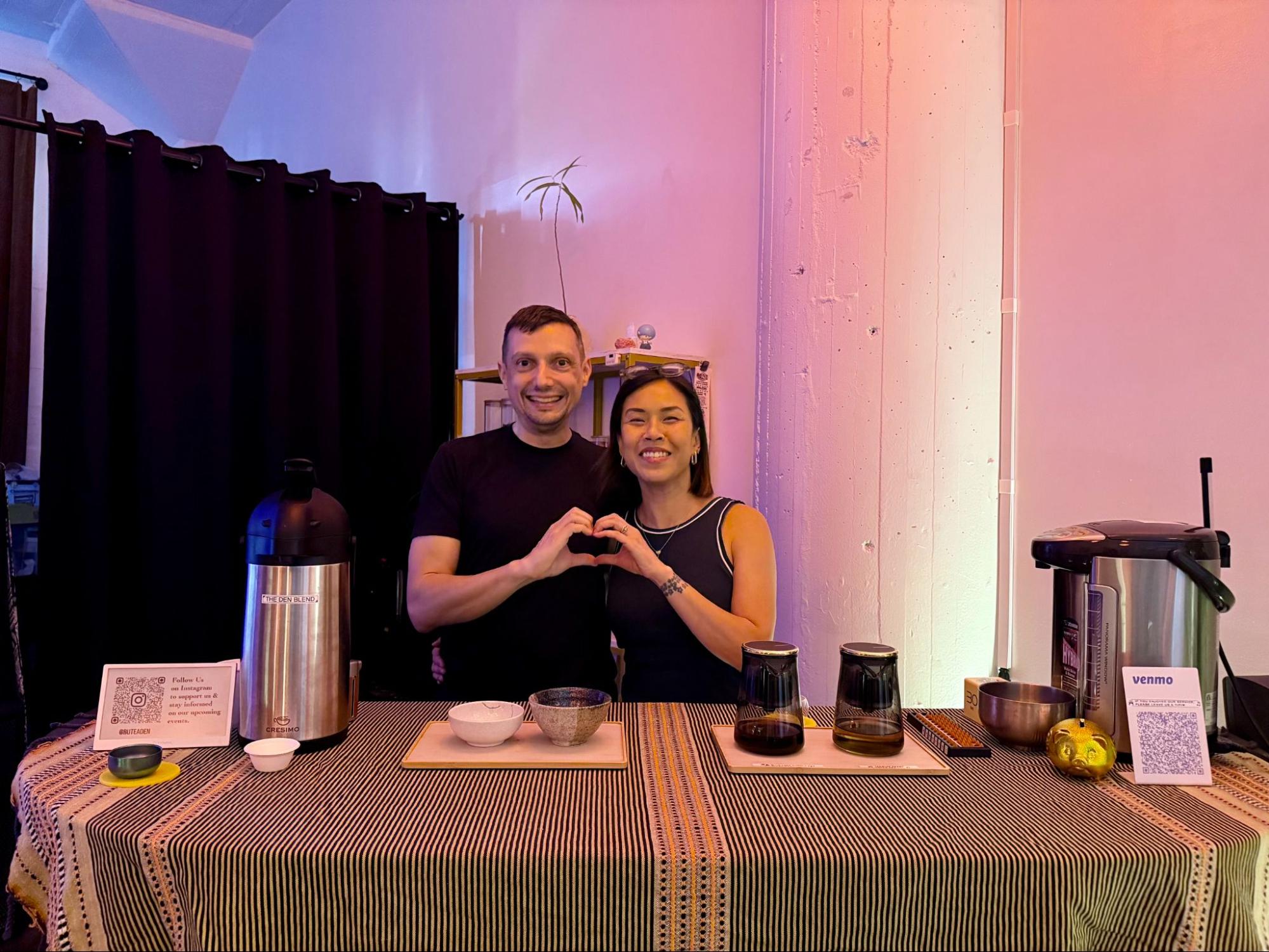
There’s no giant menu board, no cashier, and no laptops. Instead, guests trade the keyboard clatter of work-culture cafés for the vintage buttons of the Automated Fortune Telling Machines, or AFTMSs for short. Husband and wife Severin Sauliere and Natalie Tran built this space out of a desire to fuse tea, art, and tech.
“This installation started as something we brought to festivals, where people were doing all kinds of things, maybe even tons of drugs.” Sauliere said. “We wanted a place where people could really sit with it. The moment to combine tea and the installation came to us last January during ‘Dry January.’ We had just rediscovered tea in Portland and learned about gong fu style brewing. The installation is more like spiritual light, and the tea would allow people to sit down and kind of steep in this kind of different view of themselves.”
That installation he speaks of is called the Paisley ID. Guests begin by answering reflective questions about their energy and priorities, and the AFTM spits out a fortune receipt and generates a colorful Paisley, a digital portrait of the visitor’s energy, on a large screen at the center of the tea den, in what Sauliere calls an “aquarium.”
“The aquarium, all of the Paisleys, they interact with each other, and they swim,” Sauliere said. “This is kind of a reflection of how we meet people, how we hang out with people, and whether we stay with them, or not. “I will conquer the world at one point and Zoltar is my nemesis. Through my machines, I will take over Zoltar and replace him.”
Tran curates the tea and snack selections with the same intentionality. To honor the Mid-Autumn Festival, she paired mooncakes with jasmine green tea, one of her favorites, and lotus green tea, which is popular in Vietnam. Each quarter, the offerings rotate, spotlighting teas that reflect her Chinese-Vietnamese heritage.
“Having Bu Tea Den is an avenue for me to tell my story, connect with my mom,” Tran said. “We had a dysfunctional family growing up, so I kind of pushed myself away. Now I'm coming back to that and getting more in touch with my roots.”
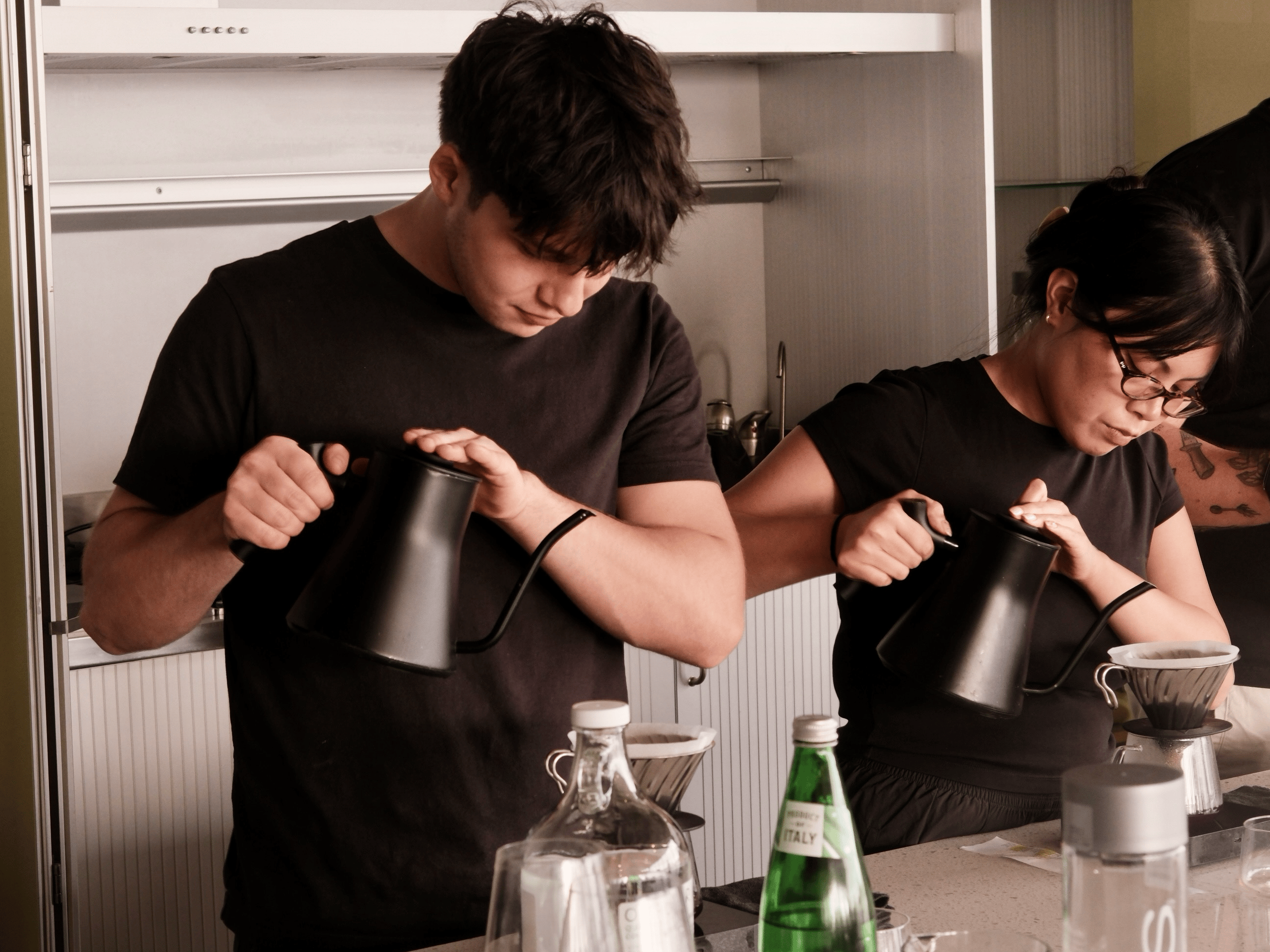
Tran created her own “lazy gong fu” style ceremony for Bu Tea Den, adapting traditional Chinese brewing methods into an approachable, simplified ritual. She weighs out five grams of loose leaf tea and gives it a 10-second rinse to awaken the leaves.
From there, the tea is brewed through multiple short steeps, each lasting around 10 seconds and gradually increasing in duration. Depending on the tea, the ceremony can stretch across five to eight infusions over the course of an hour and a half, encouraging guests to slow down and savor the evolving flavors with each pour.
“I feel like I'm always trying to go, go, go,” customer Jonathan Walton said. “Being able to come in, relax, chill, drink tea, talk, eat snacks. I think that was real cool to do.”
For visitors, Bu Tea Den isn’t just about tea or their fortune — it’s about slowing down in a city that rarely does.
As of 2024, 160 million people in the U.S. (nearly half the population) drink tea daily, and Peter Goggi, president of the Tea Association of the USA, says that number is expected to climb even higher in the coming years.
“Tea houses are going to be one of the stepping stones for bringing more and more people into the tea category,” Goggi said. “It's a friendly way for people to introduce their friends into tea, and it's also a way for the social aspect to take over. This is especially true for millennials and Gen Z, so many are turning to tea as a substitute for alcohol.”
For Sauliere and Tran, the growing interest in tea created an opportunity to carve out their own niche. Finding the San Francisco scene limiting, they moved to Los Angeles, and embraced the city’s slasher culture. The pair still have full-time tech jobs and run Bu Tea Den, Friday through Sunday from 5 p.m. to 10 p.m, as a passion project rather than a source of income.
“We’ve learned that it takes constant, open communication to make this work,” Tran said. “When we’re not in alignment, things feel off, but when we are in sync, everything flows. Since we decided not to have a baby, Paisley ID is his baby, and so now we have my first baby, his second baby, which is Bu Tea Den. Now we share this project together, and it gives us both a sense of purpose.”
And their project is growing, one tea-laden RSVP at a time. Bu Tea Den has expanded its hub for community and creativity through a series of thoughtfully curated events, such as Friday Happy Hour 2-for-1 specials and afternoon Mahjong gatherings.
Looking ahead, Sauliere and Tran plan to host projection mapping, sound baths, and other immersive experiences. All upcoming events will be listed on Bu Tea Den’s Instagram and website.
Address revealed after booking.