

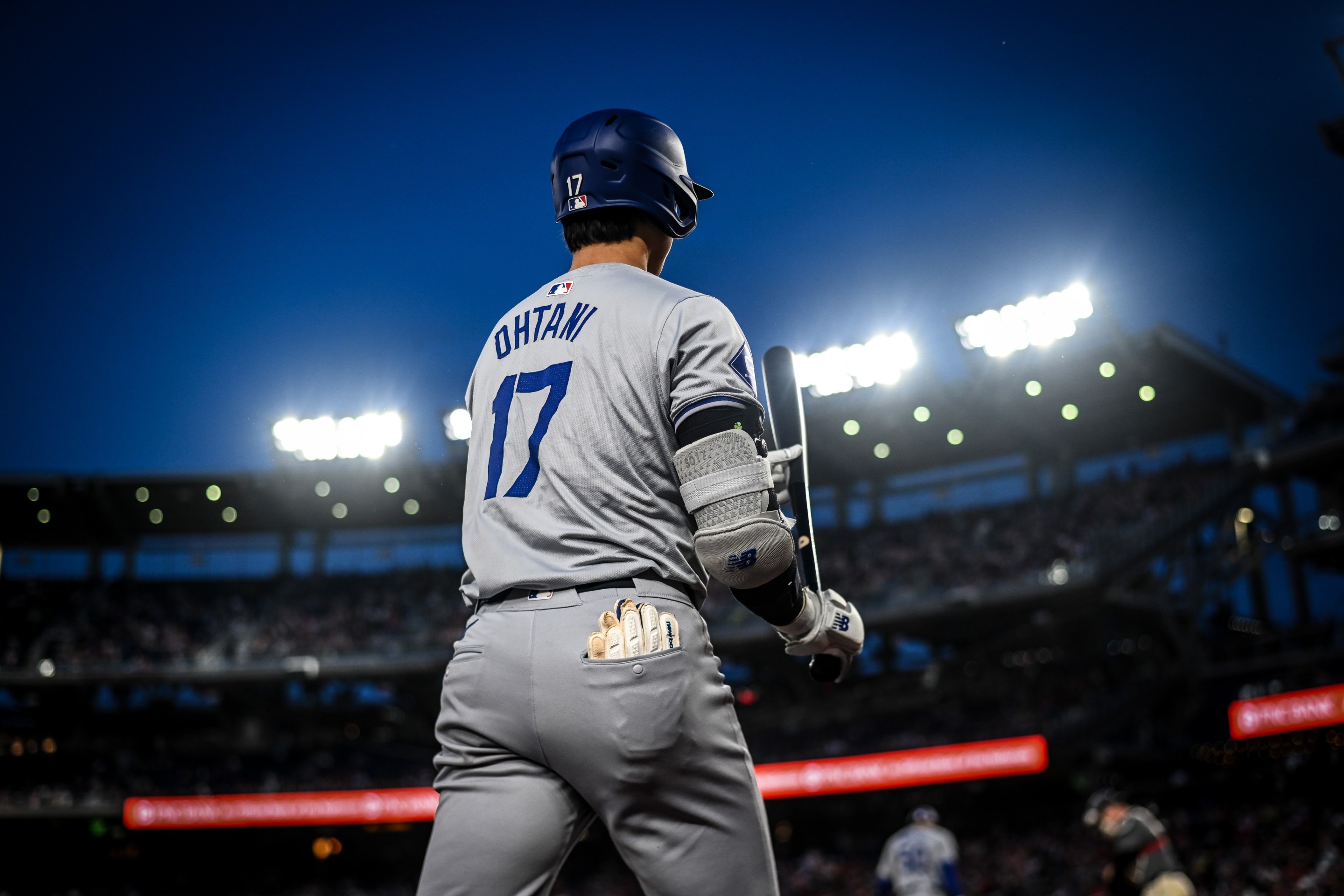
I’m sitting at Mercado La Paloma watching Shohei Ohtani deliver the greatest playoff performance in the history of America’s pastime.
Ohtani The Great! Three home runs, including one that flew out of Dodger Stadium in a game in where he pitched six shutout innings, striking out 10 players, on the way to leading the Los Angeles Dodgers to their second consecutive World Series.
And as I’m hearing “and the Dodgers win The Pennant,” it’s not lost on me that this immigrant from Japan is exemplifying both the greatness of immigrants and the enduring promise of the American Dream.
I’m also worried about this guy who is hanging around asking questions about all the puestos at this hawker center. He’s probably just a curious first-timer here but I can’t help but wonder if he’s an ICE spy. Paranoid, I know. But this is what life is right now in the United States—a gift from my parents that I’m proud to call my home.
Not gonna lie, I’m so excited to see the Dodgers compete at a high level—even if there are complicated feelings about their response to the ICE siege of LA. Ohtani on his own is giving me reason to believe in the purity of sports as a uniter.
I’m just wondering what a World Series parade would look like in a city that’s nearly 50% Latino.
Would it run down Broadway past mariachi suits and discount quince dresses? Or would ICE agents keep people home? Would it swing by Chavez Ravine, formerly known as La Loma, Palo Verde and Bishop, where families once lived before the bulldozers made way for baseball? Would the Constitution be upheld for one day? Would the paraders stop at a corner stand where someone’s still selling tacos under a blue tarp hoping tonight isn’t the night they are kidnapped for simply looking Mexican?
Because for so many of us, this team isn’t just a ball club: it is Los Angeles. Its billion-dollar payrolls and ten-dollar parking hustles, immigrant heroes and corporate sponsors, heartbreak and hope all rolled into one nine-inning respite from reality.
But if there’s a parade, I know there’ll be tension. There always is now. You can feel it humming under the cheers—the quiet fear that ICE might turn celebration into surveillance, that joy might get policed. That’s the shadow we live with even when the sun’s out.
Still, I hope this beautiful, messy team of Americans—Black, Brown and White, kids from the Midwest, South, the Caribe, Latin America’s finest, Japanese phenoms, the whole world in Dodger Blue—can do what it did last year: bring everyone together, at least for a few days. Dodgers caps on heads that voted red and blue, strangers hugging in traffic on Sunset, a city divided by politics and pain finding a rhythm again, if only until the final celebration ends.
Because that’s what baseball can still do. It can make us forget ourselves long enough to remember each other.
Ohtani’s brilliance on this Friday night feels like a reset button for all of it. A reminder that greatness can come from anywhere, and that Los Angeles, for all its faults, still has room for someone to arrive from across the ocean and become the heartbeat of the city.
So I sit here, in this marketplace of smells and languages and dreams, surrounded by people who look like my family, cheering for a man who speaks none of our tongues but somehow speaks to all of us. The Dodgers are going back to the World Series. And for one night, that feels like proof that we still belong here; that maybe, just maybe, the American Dream isn’t dead yet, even for us.





.jpg)