


Skip to Content
Art

This Winery In Los Olivos Holds One of the Biggest Mexican Folk Art Collections

You'll find stirring displays of Oaxaca's barro negro pottery and vibrant, Tonala-burnished white clay bowls, ceremonial costumes from Guerrerense processions, beaded Nativity scenes, carved and gilded gourds, ceramic fruit vendors and smiling demons from Ocumicho, plus chilled sauv blanc from some of the first vines from that grape planted in Santa Ynez Valley.

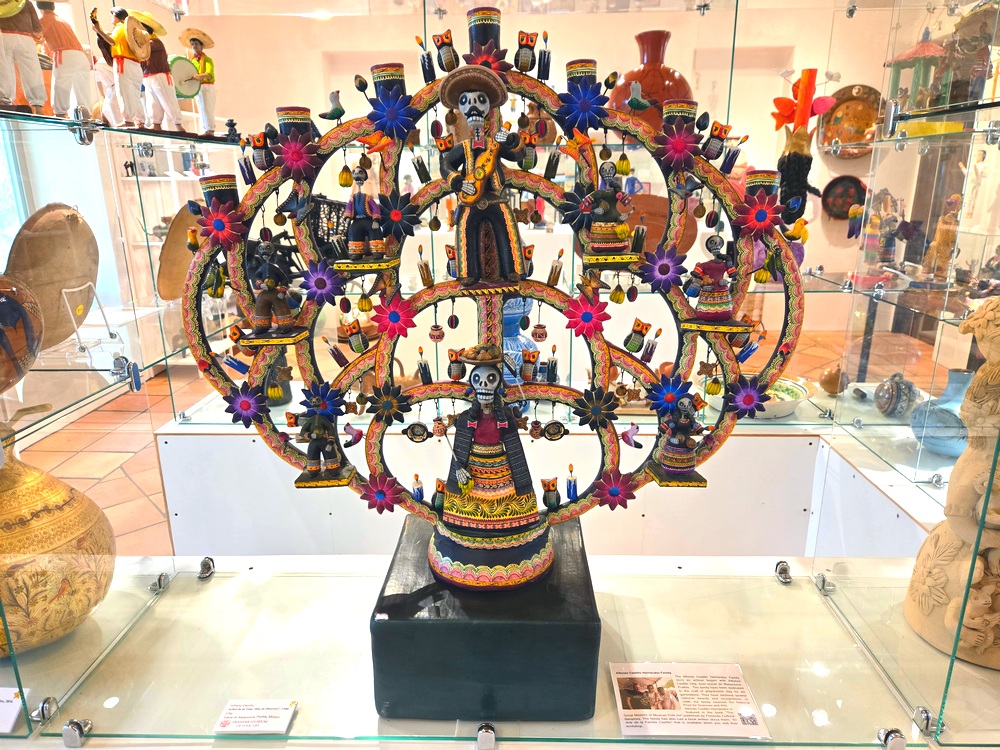
Arbol de la Vida “Dia de los Muertos,” by Puebla’s Alfonso Castillo Hernandez Family. Photo by Hadley Tomicki for L.A. TACO.

Santa Barbara Wine Country keeps its secrets close to its assless chaps vest.

By now, you probably know the tri-tip sandwiches tucked into a Hobbity-hillbilly holler off the 154 at Cold Springs Tavern—fleeting glimpses of flightless avian dinosaurs spurring mirages of the sub-Saharan savanna along the Solvang-Buellton divide. The after-dinner digestifs, renowned wineries are dedicated to on the sly, when breaking from their Châteauneuf-du-Pape-style blends.

But esoteric treasures still remain hidden within these valleys. As long as you know where to look.

At Los Olivos' Brander Vineyard, legendary for introducing Sauvignon Blanc to the region, there's a mind-blowing treasure trove of folk art from all corners of Mexico tucked among the vineyards. Like the sweeping and venerated 50-year-old winery itself, you could easily miss it when blowing past on Refugio Road.

Brander has both a subterranean gallery below the central chateau that houses is tasting room, where the flags of Argentina, Sweden, and the U.S. fly, representing the heritage of winemaker Fred Brander.

Up the hill, there's a jaw-dropping stand-alone museum packed with master artists, the beaded glories of famous Huichol clans, and scenes of nearly Biblical disaster hand-shaped in red clay, highlighting just a handful of the 1,200 folk art pieces collected by 74-year-old Brander over many decades.

Museum tours are only available by reservation, while the tasting room gallery is still yet to publicly debut, despite an ongoing exhibit dedicated to the "Treasures of Jalisco."

You'll find stirring displays of Oaxaca's barro negro pottery and vibrant, Tonala-burnished white clay bowls, ceremonial costumes from Guerrerense processions, beaded Nativity scenes, carved and gilded gourds, ceramic fruit vendors and smiling demons from Ocumicho, and more.

Encountering this cache of culturally vital, breathtaking Mexican and Indigenous craftsmanship in a region best known for its fleets of weekend visitors endlessly circling sleepy, small town blocks in search of the next hit of Sideways nostalgia feels like a stumbling over a cultural wellspring in a baking desert.

Not to mention, there's a chilled Brander Sauv Blanc, or a Cabernet Sauvignon grown in soil from the deadly Montecito mudslides, always at hand.

Here's a brief look at some of the works found within Brander Museum of Folk Art in Los Olivos. For tour reservations next time you're visiting wine country, email the winery here. The winery also has two houses on property, available to rent and similarly festooned with highlights of Brander's collection.

Brander Vineyards ~ 2401 N. Refugio Rd. Santa Ynez, CA 93460

Costumbe de Carnival from unknown artist, next to a metal rooster, part of the museum's "Tesoros de Jalisco" exhibit. Photo by Hadley Tomicki for L.A. TACO.

"Guaje Decorado Hoja de Oro," by Francisco Coronel of Guerrero. Photo by Hadley Tomicki for L.A. TACO.
"Huichol Mini Vocho" by H. Lopez, and "Nacimiento Huichol," both from Jalisco. Photo by Hadley Tomicki for L.A. TACO.
"Corn with Skulls" by barro negro artist Carlomagno Pedro, of San Bartolo Coyotepec, Oaxaca. Photo by Hadley Tomicki.
Ken Edwards Studio, Tlaquepaque. Photo by Hadley Tomicki for L.A. TACO.

Photo by Hadley Tomicki for L.A. TACO.
Ceramic works at the Brander Museum of Folk Art. Photo by Hadley Tomicki for L.A. TACO.
"Temporada de Pitayas," by Amilia Galan Preciado of Jalisco. Photo by Hadley Tomicki for L.A. TACO.
Ceramic Plaza de Toros Guadalajara. Photo by Hadley Tomicki for L.A. TACO.
Ceramic vases, including "Pina Verde Con Tapa Nopal" (left), by unknown artists, from Michoacan. Photo by Hadley Tomicki for L.A. TACO.
"Pollo Loco" by Zenaida Rafael Julian, of Ocumicho, Michoacan. Photo by Hadley Tomicki for L.A. TACO.
Photo by Hadley Tomicki for L.A. TACO.
"Craneo con Mariposas," by Alfonso Castillo Hernandez Family, of Matamoros, Puebla. Photo by Hadley Tomicki for L.A. TACO.
"Cantina," by Horacio Gavito, of Mexico City. Photo by Hadley Tomicki for L.A. TACO.
The parting of the Red Sea in clay. Photo by Hadley Tomicki for L.A. TACO.

Stay in touch

Sign up for our free newsletter

More from L.A. TACO

Flock License Plate Readers Spark Privacy Concerns at L.A. State Historic Park in Chinatown

“For many the state park [and] Yaanga, has been a place of convening and arrival since before this country. The irony of these cameras disrupting that legacy is upsetting," said Joel Garcia of Meztli Projects.

February 24, 2026

He Built a Camera From Firearms To Photograph U.S. Gun Owners For ‘Thoughts & Prayers’ At La Luz de Jesus Gallery

"I hope the exhibit leaves people unsettled in a productive way, says artist Wayne Martin Belger. "I don’t tell viewers what side to stand on. I create a space where they have to sit with what they’re seeing."

February 24, 2026

How Photographer Alanna Airitam Got In With Black Outlaw Motorcycle Clubs For Her Show ‘Black Diamonds’ at La Luz De Jesus Gallery

"When an OG told me, ‘We just wanted to ride,’ I kept thinking about that. The open road. Wind in your face. Pulling over wherever you want. It’s the American freedom myth we’ve seen in films like Easy Rider. But what did that actually look like for Black men in the late 1950s, navigating sundown towns, police harassment, and the necessity of the Green Book?"

February 24, 2026

Daily Memo: Several ICE Agents Seen Meeting With Bell PD This Evening

The Bell Police Department, who has previously interfered with and arrested community watchers on behalf of ICE, was once again seen cooperating and meeting with about a little over half a dozen Federal Immigration Agents in the late evening raising concerns again about SB54 violations.

February 23, 2026

Waking Up In Puerto Vallarta The Morning After Cartel Attacks

L.A. TACO's editor-in-chief reports from the ground the day after El Mencho's death.

February 23, 2026

Update: At Least 20 States Burn In Mexico as Cartel Retaliates Against U.S.-Assisted Federal Killing of ‘El Mencho’

El Mencho was the last of the old guard—the final mass-trafficking titan standing alongside El Chapo and El Mayo—now fallen, marking the end of an era in Mexican organized crime. The era, typified by fame and big names splashed across books, TV shows, and international arrest warrants, began around 1990, the time in which El Chapo rose to prominence.  

February 22, 2026
See all posts