If you watched the Milano Cortina Winter Olympics, you know the instinctual urge one gets to gloss over the waves of sponsorships and advertisements and get to the good stuff: the insane athletic feats accomplished by people who continue to stretch our ideas of what humans are physically capable of.
But sports do not exist within a bubble, despite however many fans and athletes wish that their fantasies of an Olympic utopia were real. That’s why we root for the underdogs: the athlete of color, the youngest player on the field, and the one repping a country still waiting to win its first medal.
This sports season marked a poignant, bittersweet time as we recognized the achievements of “firsts” to occur, such as when Laila Edwards, a 22-year-old from Ohio, became the first Black woman to play for the U.S. hockey team, which won gold.
But beyond viral clips and flashy ads showing athletes achieving their biggest dreams, the stories of painful injuries, training sessions that border on masochism, and the surrender of normalcy give us a deeper glimpse into what worldwide athletic stardom entails.
Here are the stories of four Olympic champions belonging to various eras of professional sports in Los Angeles. According to them, advertising isn't the only thing that has changed since 1984.
In a society that runs on dollar bills, even athletic stars have to play the game of sponsorships and marketing. Edwards and her hockey teammates were featured in partnership content with Downy. This relationship between brands and players is customary and expected of today’s athletes, to the point that it’s difficult to comprehend a time when athletes were banned from being formally associated with consumer products.
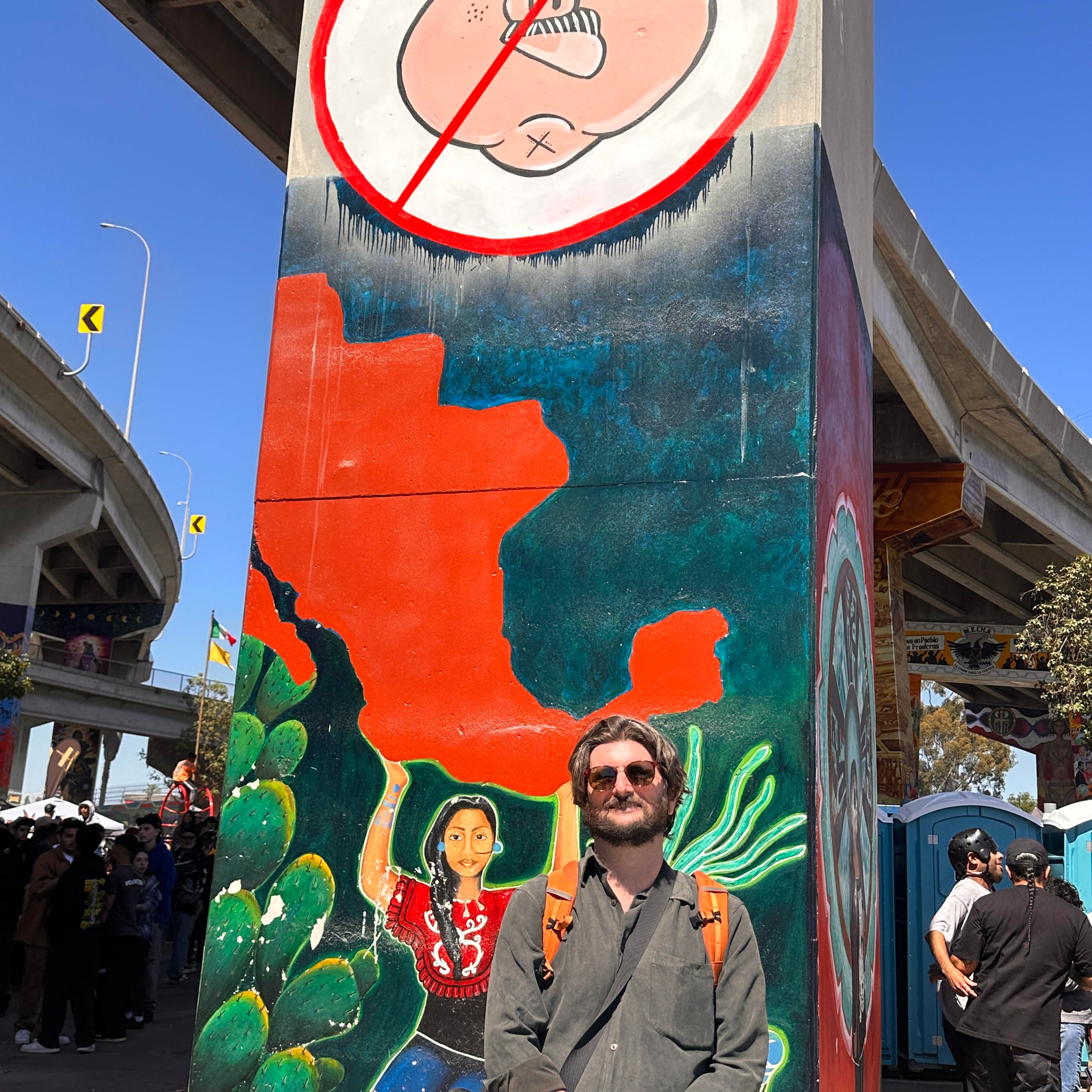
“In 1981, for example, the IOC [International Olympic Committee] made it legal for track-and-field athletes to accept money from track mates, shoe companies, sponsors, and I was one of the first ones to really be able to take advantage of it,” Dr. Edwin C. Moses, a former Olympic hurdler and bobsledder, tells L.A. TACO. “In fact, in 1979 I did what would be considered the first NIL [name, image, likeness], found a sponsor, got clearance to use their logo.”
As an undergraduate attending Morehouse College, Moses had to climb fences and sneak into stadiums to train on a track. At the time, Morehouse, a historically Black men’s college, did not have a home track.
Moses’ reign in the world of track is representative of a period in sports where change was palpable, thanks to athletes who were bold enough to catapult themselves into uncharted territory.
Considered the “Bionic Man” by many, Moses set four unique world records between 1976 and 1992. One of those medals was earned at the 1984 Olympics in Los Angeles.
“I think I lived in the golden ages of Los Angeles in the 80s and 90s,” Moses says. “It was a very, very different place. Everything was positive, upscale, upbeat. Lots was going on. It was absolutely the place to be. Everyone wanted to be in L.A.”
Moses first moved to Pomona in 1982 to pursue a job at General Dynamics. While working as an engineer, he trained at Mt. San Antonio College’s track which he considered a “top-notch facility.” He would later move to Orange County as he completed his MBA at Pepperdine, before finally settling in Atlanta where he now resides.
“Track and field is what has allowed me to do all these other things that I would have never had the opportunity to do: travel all over the world, become involved with some of these foundations and think tanks and the Laureus Sport for Good Foundation, doing our global work like that, and becoming chairman of these companies and chairman of USADA, the drug testing agency, because of my background and academia,” Moses says.
According to Moses, track and field stars were the first athletes to financially profit through the games. He was signed under the same agent as basketball players Kareem Abdul-Jabbar, James Worthy, and Norm Nixon.
“Not only did I have to run, but I had to manage the business aspect of running marketing, interviews, photoshoots, video shoots, all of that,” Moses says.
He points out the shift in how the Olympics were managed in 1984 when Peter Ueberroth, former chairman of L.A.’s Olympic Organizing Committee, and his team decided to include athletes as a key component in marketing and sponsorships–eventually culminating in a 250-million-dollar profit.
“Athletes were finally kind of freed up from the old amateurism standards,” Moses says. “Most athletes in swimming, gymnastics, they didn't have any choice. They couldn't make money for another almost 20 years.”
Moses doesn’t run track much anymore at the age of 70. Instead, he diverts his energy into kung fu, taking classes three days a week, and also hitting the gym.
Maintaining this degree of athleticism at any age is impressive, but especially so when you’re a senior who has recovered from near-fatal injuries like Moses has. In 2017, he suffered a series of concussions and a subdural hematoma. Within the last year or so, his vocabulary has returned and the brain fog has depleted.
“I was 62 years old at the time, and thank God my health was good,” he says. “[It] took three-and-a-half years for my brain to get back into the space where it was, so having good health and having those good, good habits, for 50 years. … You know, that's the reason I was able to recover.”
“I think 1984 was one of the last years that it was truly amateur sports,” Karen Pat Spurgin Pitney, a fellow gold medalist of the ‘84 L.A. games, tells L.A. TACO. “There were rules that you couldn't have been a professional athlete. There wasn't the social media, there wasn't the self promotion. And now it's very much professional sports, and even in shooting, the need and the expectation to have sponsorships is so different.”
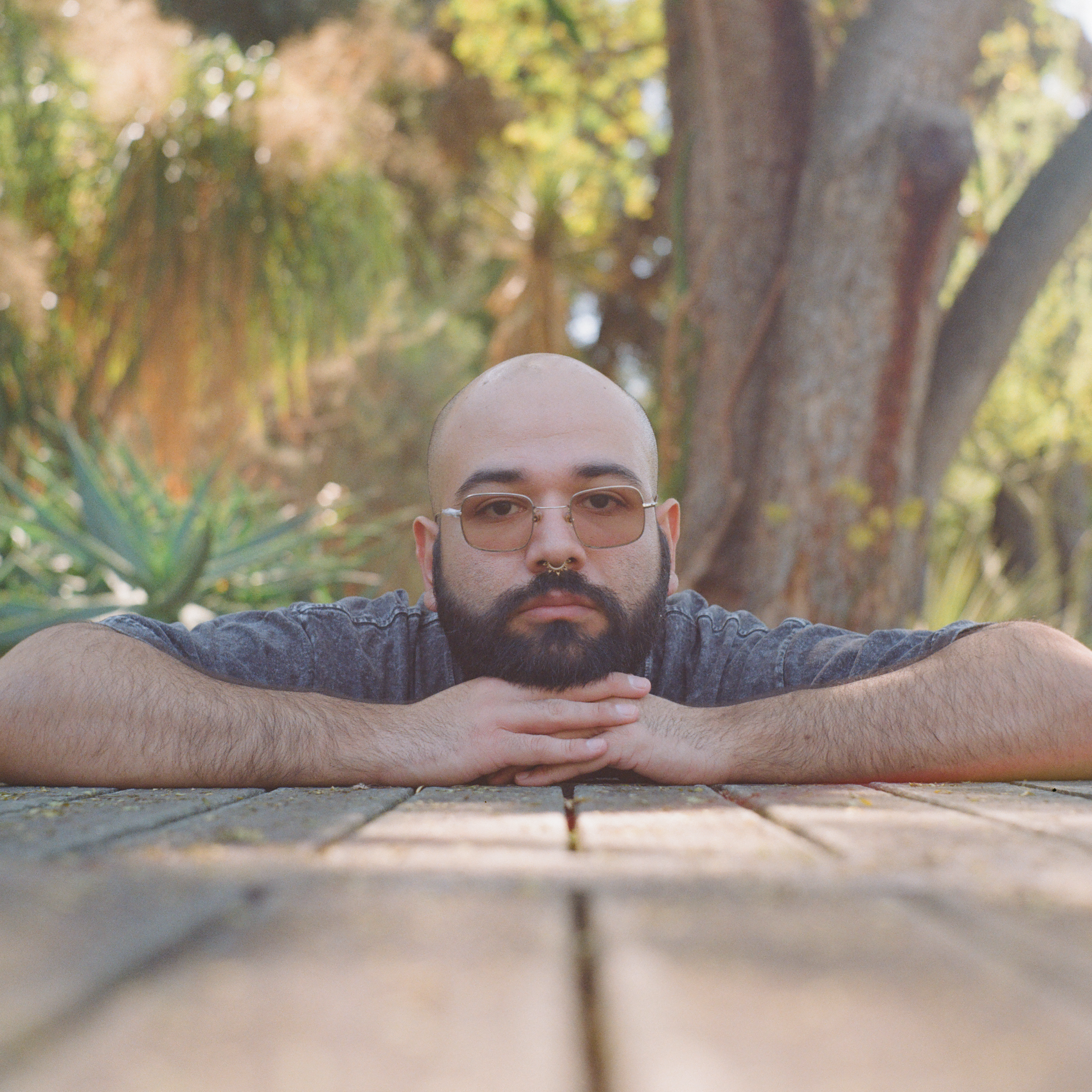
Pitney was just 18 when she won gold for women’s air rifle at the 1984 Olympics. She was born and raised in Billings, Montana, in a neighborhood where kids were perpetually outdoors, playing sports like baseball, tennis, and basketball.
Her father, an “avid hunter,” introduced her to target shooting using shotguns, rifles, and pistols. At age nine, she began shooting competitively, eventually joining the national team in 1983.
Pitney speaks of her gold medal with a tone akin to nonchalance, describing this accomplishment that so many vied for as one that was merely expected of her.
“‘If you're on the U.S. [Shooting] team and you go to the Olympics, you better win.’ That was how my coach and the people who were mentors of mine communicated, and I actually was the favorite going into the competition,” Pitney says. “So had I not won, it would have been a real disappointment.”
The amount of hours Pitney logged at the range grew as she became older, spending about two hours per day there as a 13-year-old and about six hours per day while training for the Olympic games. She trained four days out of the week, practicing at ranges in Colorado Springs, Fort Benning, Quantico, and Los Angeles.
One of the youngest Olympic air rifle medalists, Pitney was inducted into the USA Shooting Hall of Fame in 2014.
“[Competing] didn't really feel like a sacrifice,” Pitney says. “It didn't in my mind. There was never a choice like, ‘go to prom or go to Mexico for a World Cup match?’ I'm going to go to Mexico. There is no question here, hands down. So the choice in my mind was pretty easy. Towards the end of my career, then there was some trade-offs.”
Pitney says that she visited 25 countries during the span of her sports career, hitting about 17 of those countries more than once.
During the 1984 games, Pitney stayed in USC’s Olympic Village, an idyllic concept of buildings offering about three 5,500-calorie meals per day (including 24-hour food service), multi-lingual translators, and telex, according to their brochure. Multiple artists like Lionel Richie performed for the athletes at the Village.
After graduating college with a degree in engineering physics, Pitney pursued a master’s degree in business, an outlier from her peers who joined the Navy Nuclear Program or Department of Defense.
Shooting became “very unimportant” to Pitney as she moved to Alaska and began to start a family.
“I actually did go back and start practicing after my youngest was born,” Pitney says. “And I was like, ‘You know? I've got a full-time job. I've got three kids. I don't need another full-time job.’”
Pitney traded tracksuits and rifles for pantsuits and spreadsheets, acting as Alaska’s director of the Office of Management and Budget from 2014 to 2018 and the Legislative Finance Division in 2020. Despite not applying for the role, she would eventually become University of Alaska’s president at a time when the university’s enrollment and funding continued to fall.
“I always imagined being a leader in a large organization,” Pitney says. “And fortunately, I landed in an organization that has just tremendous purpose for the public good. And I was really drawn to that. How do we use this organization to help our state do as well as it can do, and the people in our state to do as well as they can do?”
As a retiree, she is looking forward to spending time with her five grandchildren and hiking outside of and throughout Alaska.
“When I was at the height of my career, I could completely stop the gun, and shoot perfect shots on demand,” Pitney says. “But that was because I practiced a lot, and it wasn't nearly as fun [now] when I couldn't make the gun stop. When the gun moves, it's just a different game.”
While some Olympians’ careers are totally unrelated to sport, others remain in the athletic sphere–crafting the playing styles of new recruits, contributing to the planning of the Olympic Games, and founding community organizations for kids just discovering sport.
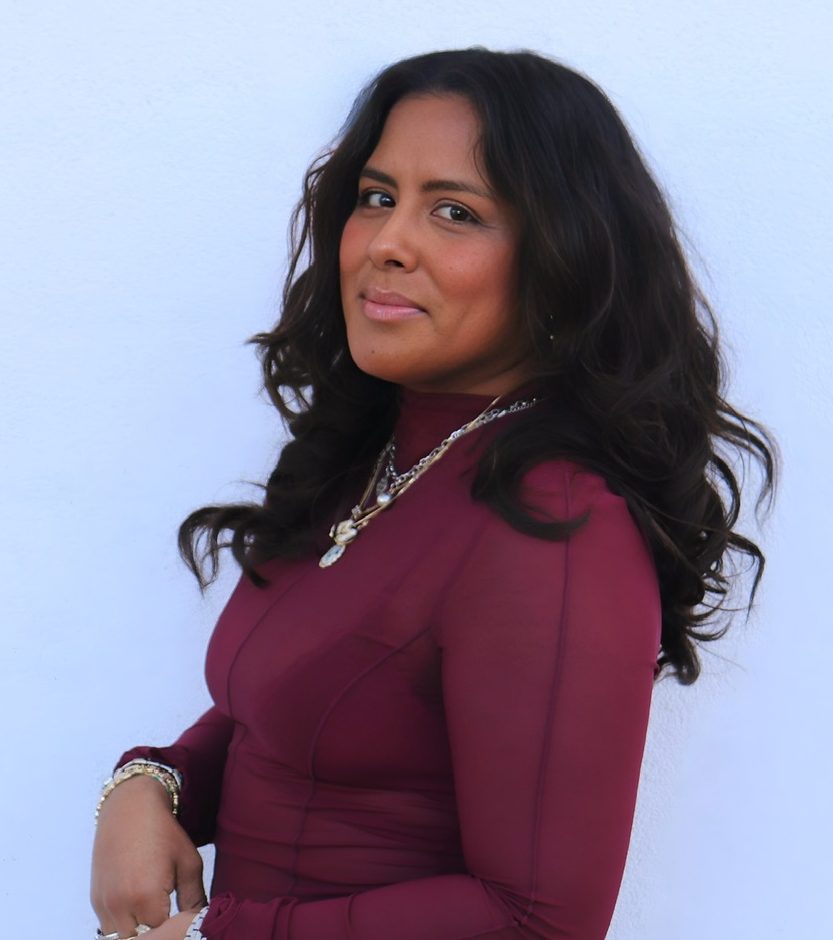
For Brenda Villa, a post-competition life consists of all three. If you’re a water polo fan living in L.A., there’s a good chance you’ve heard of Villa, a four-time Olympic medalist. You’ve maybe even had a swim at the aquatic center named for her in her hometown of Commerce.
Villa is the most decorated women’s water polo player in history. A mother of two, she also works these days as an associate head coach at Stanford University, splitting her time between the Bay and SoCal.
She is an Athlete Commissioner for LA28, an athlete director on the board of USA Water Polo, and the head coach of USA’s “16 and under” division of water polo, repping L.A. internationally since she was 18.
Originally from Jalisco and Nayarit, Villa’s parents immigrated to Commerce, California. Villa and her brother started swimming thanks to the City of Commerce offering low-cost lessons to residents.
“Once you learn to swim, you have the opportunity to join the team for free,” Villa tells L.A. TACO. “For [my mom], it started off as a water safety thing, and then she saw how much we were into it, and the community there was around it. So then that was just something that became a part of our lives, and they were very supportive.”
Villa is just one of two women’s water polo players to have won four Olympic medals. She scored gold at the 2012 London Olympics, her final Olympic game.
“[The feeling is] incredible,” Villa says. “I think about opening ceremonies and just all the energy in the air, there's just this pulse that you don't feel anywhere else, especially at the opening ceremonies, where no one's dreams have been broken.”
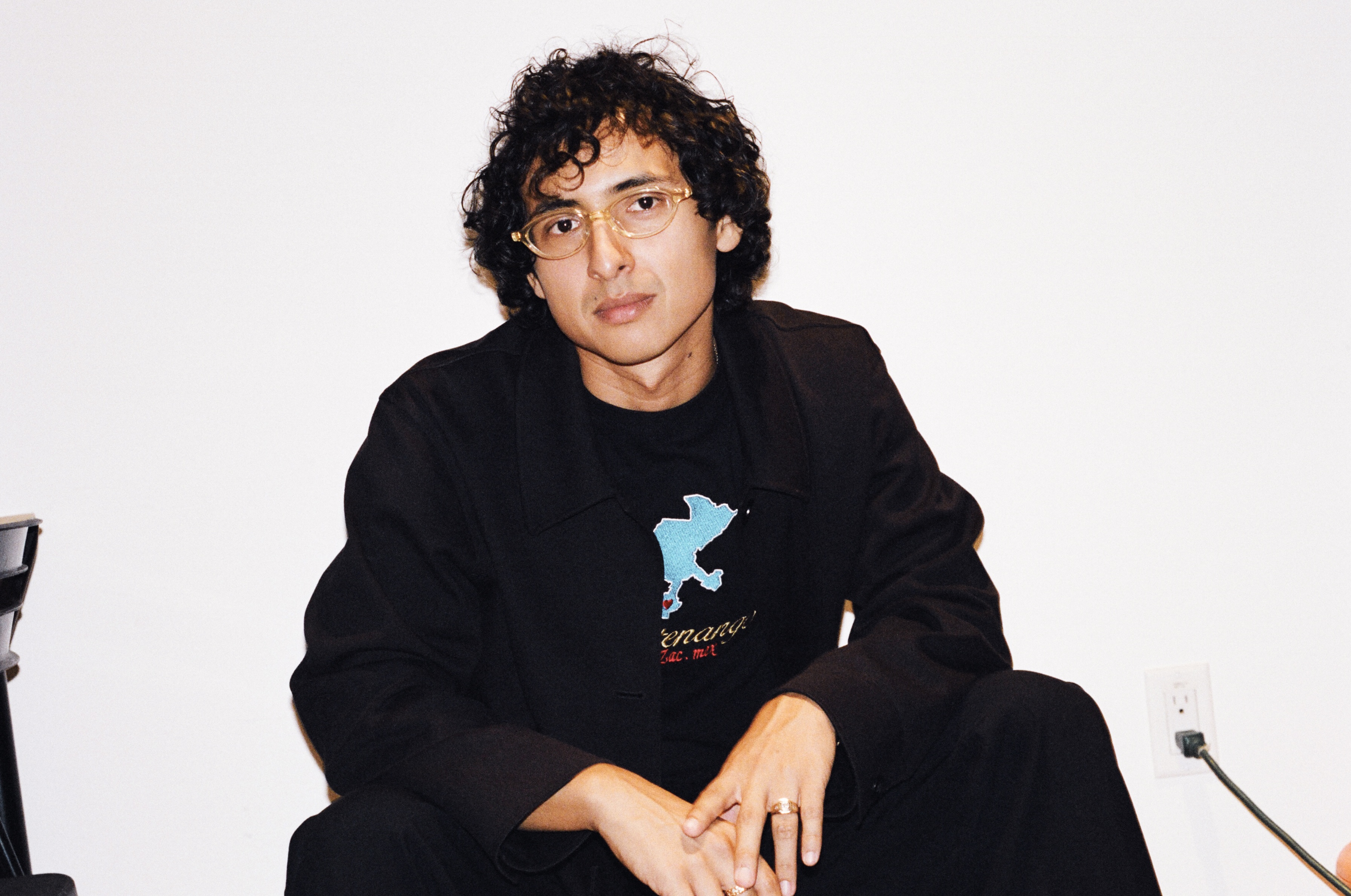
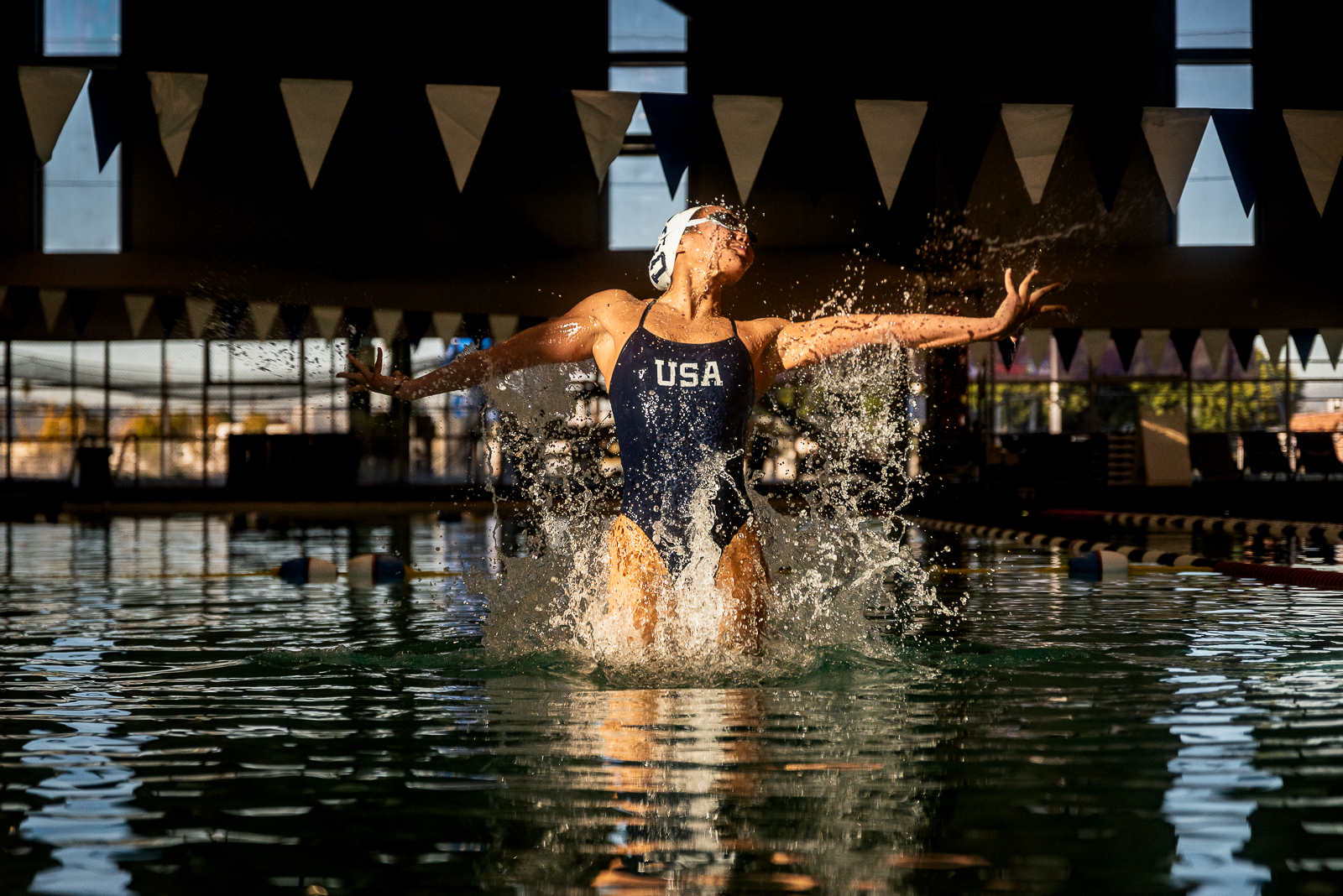
At 19 years old, Emileen “Emma” Moore is working towards declaring a business economics major at UCLA–while training for the 2028 Olympic games. She will be competing as an artistic swimmer for Team USA.
Moore only takes afternoon and evening classes, so that she has enough time to beat traffic after practice. She trains full time from Monday to Friday, spending eight hours each day on strength training, choreography, and run-throughs. Seven of those eight hours are spent in the water.
“The more traditional sense for artistic swimming is to continue schooling online,” Moore says. “So it's either online high school or online college that allows more flexibility. There's only been me and one other athlete who goes to an actual college on top of training with the team.”
This is Moore’s second season on Team USA. Originally from Walnut Creek, California, she started artistic swimming as a six-year-old and joined the national team in 2021 as a youth swimmer.
Last year, Moore competed alongside her teammates at the Paris World Cup, winning gold. Following this win, Moore was inducted into the U.S. Olympic & Paralympic Museum in Colorado Springs.
While UCLA’s athletes often receive “special treatment,” such as being assigned specialized tutors, Emma tells us that Team USA athletes attending UCLA do not receive the same treatment.
“[UCLA] only [focuses] on their NCAA athletes,” Moore tells L.A. TACO. “I've been in contact with the Aquatics team at UCLA, and they cannot help me in any way, because I'm not under NCAA. So being a Team USA athlete is very different than being NCAA ... Unfortunately, artistic swimming is a very small sport. We're probably the smallest aquatic sport, so we don't get federal funding.”
Moore said that the artistic swimming team’s monthly stipends are not enough to cover rent, leaving the members financially “restricted.”
“No one wants to be 24 to 27 relying on their parents to help them financially,” Moore says. “We're very lucky that we have amazing parents who will do that and support us, but that is not ideal for anyone on the team. We also train in Los Angeles, which is insanely expensive.”
Beyond struggling with a lack of resources, Moore says that navigating friendships and romantic relationships can be tricky when some strangers “put her on a pedestal.” Moore is aware that pursuing her longtime passion has prevented her from obtaining internships and carving out a non-sport career like most of her peers.
“We need to get it together to be able to live our life after sport,” Moore says.
Influenced by the “independent and powerful” women in her family, Moore has always wanted to run a business, she tells us.
It's not just life for athletes that have changed over the past 40 years; social concerns are prominent in the minds of once fervent fans of the games, as well. Despite the renowned, dependable reputation that the Olympic games have curated, the nature of the competition has undoubtedly transformed since the last time L.A. was the host city.
The 2028 games inch closer every day, as conversations regarding the displacement of the unhoused community, a lack of infrastructure and public transportation, and concerns about ICE activity increase.
Many sports fans are condemning the chairman of the Los Angeles Organizing Committee, Casey Wasserman, for his salacious correspondences with convicted child sex offender Ghislaine Maxwell. Wasserman claimed that the emails took place “long before her horrific crimes came to light,” as reported by BBC.
As countries from every region of the world convene to celebrate their greatest athletes, a fantasy based upon world peace comes to fruition for just a moment in time.
But tumultuous political landscapes exist as an ever-present veil atop the games, as countries like Palestine, Iran, and Ukraine suffer the loss of athletes and resources due to violence from countries like Israel, the U.S., and Russia.
When competitors arrive in L.A. in two years to represent their countries, we cannot lose the most impressive stories within the inevitable layers of applause. So, let’s cheer especially loud for the athletes who are barely making rent, the ones who had to crawl over fences to train, and the ones who wouldn’t have seen the world otherwise.