

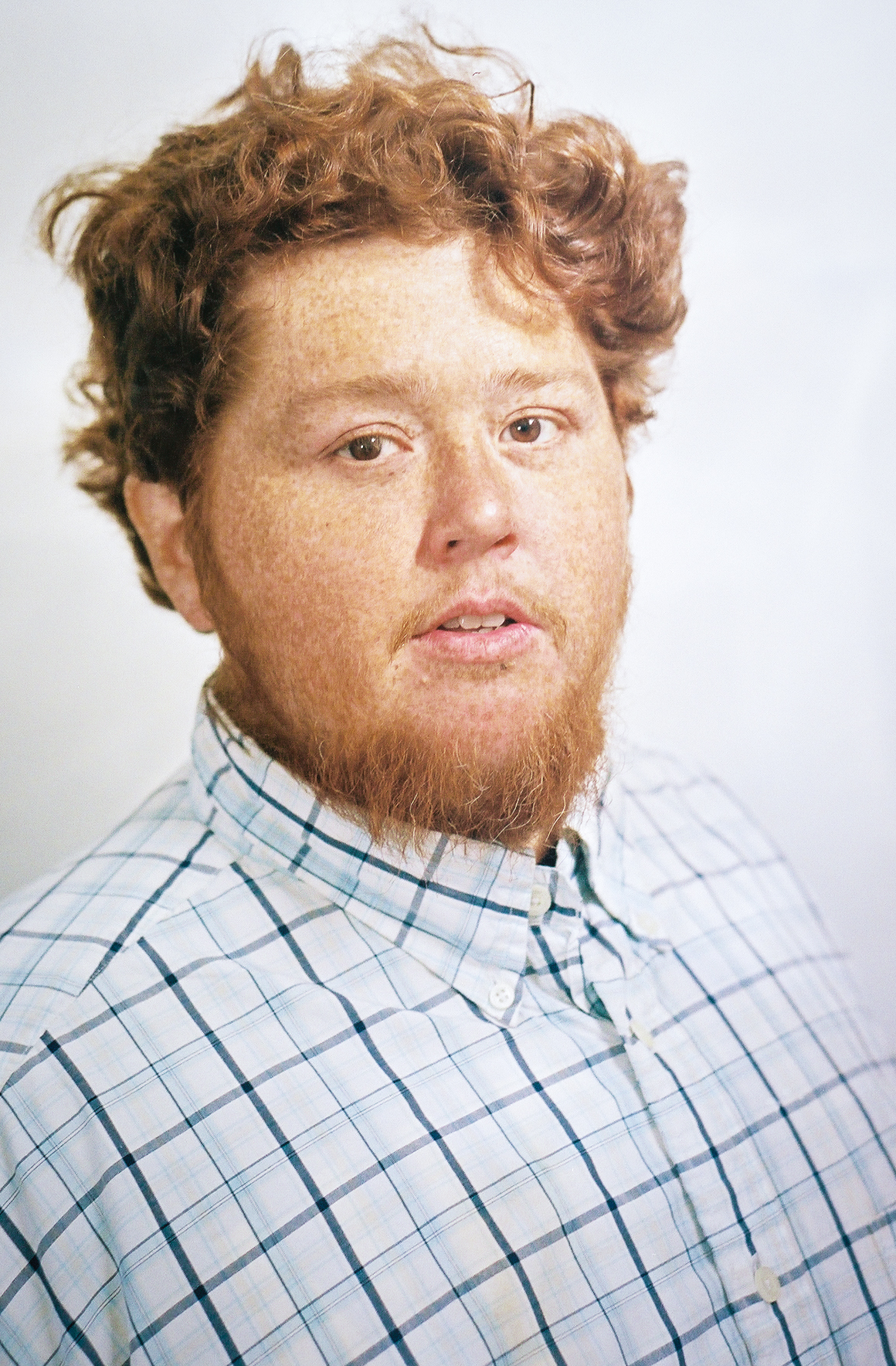
It’s Friday night in Los Angeles and Jerry Hernandez just got off stage after a stand-up set in West Hollywood.
He’s still wearing that comic mask—bearing charm, timing, and deflection—but underneath, the weight of the world hasn’t lifted. So he does what most people in L.A. do when they leave a club or party: he hits up a taco spot.
Except Jerry doesn’t just order a few al pastor tacos and bounce. He scans the block over his shoulders for ICE, slips the taquero some folded bills, and tries to give ‘em enough cash to go home for the night.
“I was out in WeHo, and there were all these people just living like normal,” Jerry says. “But every Latino working—valet, cooks, vendors—had that look in their eyes. That ICE-is-out-here look. Paranoid. Watching everyone.”
That’s the moment he knew—making people laugh onstage wasn’t going to be enough.

And it’s why he’s been calling himself a “Puerto Rican Oskar Schindler” lately. It’s a dark joke, the kind Hernandez’s known for. But it’s also the most honest thing he’s said on stage in weeks.
“I know I’m not in danger,” he tells me. “I was born here, I know what hospital I came out of. But I see these vendors, and I just keep thinking—if I could just buy out one more cart, get one more person off the street before they get picked up…”
He trails off. Then adds, “That’s why I feel like Schindler, bro. Every time I help someone, I see two more and I feel like I’m not doing enough. Like I should be able to help them too. But I’m broke.”
Oskar Schindler was a German industrialist who saved over 1,000 Jewish prisoners during the Holocaust by employing them in his factories and shielding them from Nazi death camps. He wasn’t a saint—he was a war profiteer at first—but something shifted. He used his privilege, wealth, and connections to save as many lives as he could, even as the Nazis closed in.
His story became widely known through the 1993 Spielberg film Schindler’s List, and that final scene—where Schindler breaks down, devastated he couldn’t save more people—is the emotional heartbeat of Hernandez’s joke. That’s how he feels, too: overwhelmed by the scale of suffering, desperate to do more, and haunted by the people he can’t reach.
The bit kills onstage. But offstage, he’s serious. He’s broke. He’s depressed. He’s haunted by the vendors who don’t take the money.
“One dude tried to shove the bills back in my pocket,” Hernandez said. “He kept saying, ‘God’s going to punish me if I take this.’ I had to beg him to accept it.”

His efforts started when ICE raids hit Downey. Hernandez showed up to demonstrate outside the Embassy Suites where agents were allegedly staying. But when he realized protesting wasn’t slowing the raids, he turned to what little power he had: his own cash and a half-working Venmo link.
In a week, he raised almost $4,000 from friends and family and gave it all away—to taqueros, paleteros, flower sellers, raspado carts. Anyone trying to make a buck on the sidewalk and disappear before the ICE vans rolled in.
Some vendors refused the money. Others broke down. Some looked at him like he was a cop. Some didn’t believe it was real. All were just trying to survive.
What gets him most is the ones he couldn’t help.
“I gave money to a vendor, felt good for a second, then I got on the freeway and saw two more flower sellers on the next corner. I had nothing left to give. That shit broke me.”

This is how Hernandez copes: he drives around L.A. in basketball shorts, spots a vendor, busts a U-turn, and hands over what he can. It’s not a campaign. There’s no GoFundMe. It’s just him.
“I’m not trying to be a savior,” he says. “I’m just trying to get people home a little earlier. So they don’t get caught up.”
To understand why this hits so hard for Jerry, you have to understand where he’s from—and what Downey used to be.
Hernandez was born in Downtown L.A. to Puerto Rican parents. He moved to Downey when he was seven years old. Back then, Downey wasn’t a symbol of Mexican American success in Los Angeles like it is today.
“The first time I ever learned the word 'beaner' was when some white girl in my high school was moving away to Anaheim,” Jerry recalls. “She said, ‘I’m finally getting out of Beaner Land,’ and handed out business cards to the people she wanted to stay in touch with. That’s the Downey I grew up in. It is cool to see though—the evolution of what Downey’s become. Because obviously it’s become the Mexican Beverly Hills. It’s cool to see that evolution, and I’m proud.”
One of the biggest reasons he’s proud of Downey is that the many members of the community there have really stepped up to protest and at times stop raids.
“Even people that I went to high school with, that I know from Downey growing up—they’re speaking out,” he says. “I’m meeting locals that don’t want this terrorism that’s happening in our city. They don’t want these fascists here harassing everyone.”
That’s the thing that’s notable about this moment. The L.A. basin is no stranger to protests, activism, riots even. But right now, it feels like there are swaths of ordinary people stepping up to peacefully fight back in any way they can.
Hernandez isn’t an organizer. He’s not a nonprofit. He’s not a YouTuber like Mr. Beast or Instagram-famous like Hood Santa. He’s just one of the funniest guys I know.
As a working-class comedian and struggling TV writer, these days, he’s not even sure how to be funny anymore.
“I’ve been so depressed,” he tells me.
Fortunately, he’s still funny.
“Here’s another bit I’m doing on stage about how I’m giving all my neighbors grace,” he laughs. “Before, if somebody let their dog shit on my lawn, I’d be like, ‘Hey, don’t let your dog do that.’ Now? I’m like, ‘Go ahead and do that. This is a sanctuary, my brother. You’re safe here.”
Other than the occasional protest, Hernandez says, Downey feels like it’s been swallowed by silence. His parents are both U.S. citizens and they won’t even go outside right now.
“Having one of my Mexican neighbors let their dog shit in my yard used to bug me—now I’m like, man, I wish we could just have that back,” he tells me. “It’s a ghost town. Nobody’s outside anymore.”
He tells jokes about it onstage, because that’s how he processes. But he also says it’s getting harder.
“I’m not trying to become a political comic, but how do I not talk about what’s happening?” he tells me.
Hernandez doesn’t think he’s doing anything heroic. If anything, he’s overwhelmed. Depressed. Angry. Tired. But he’s showing up. Not with speeches or a platform. With a wallet and a conscience and a broken heart.
But he’s a reminder that sometimes the hero we’ve been waiting for is us.


