



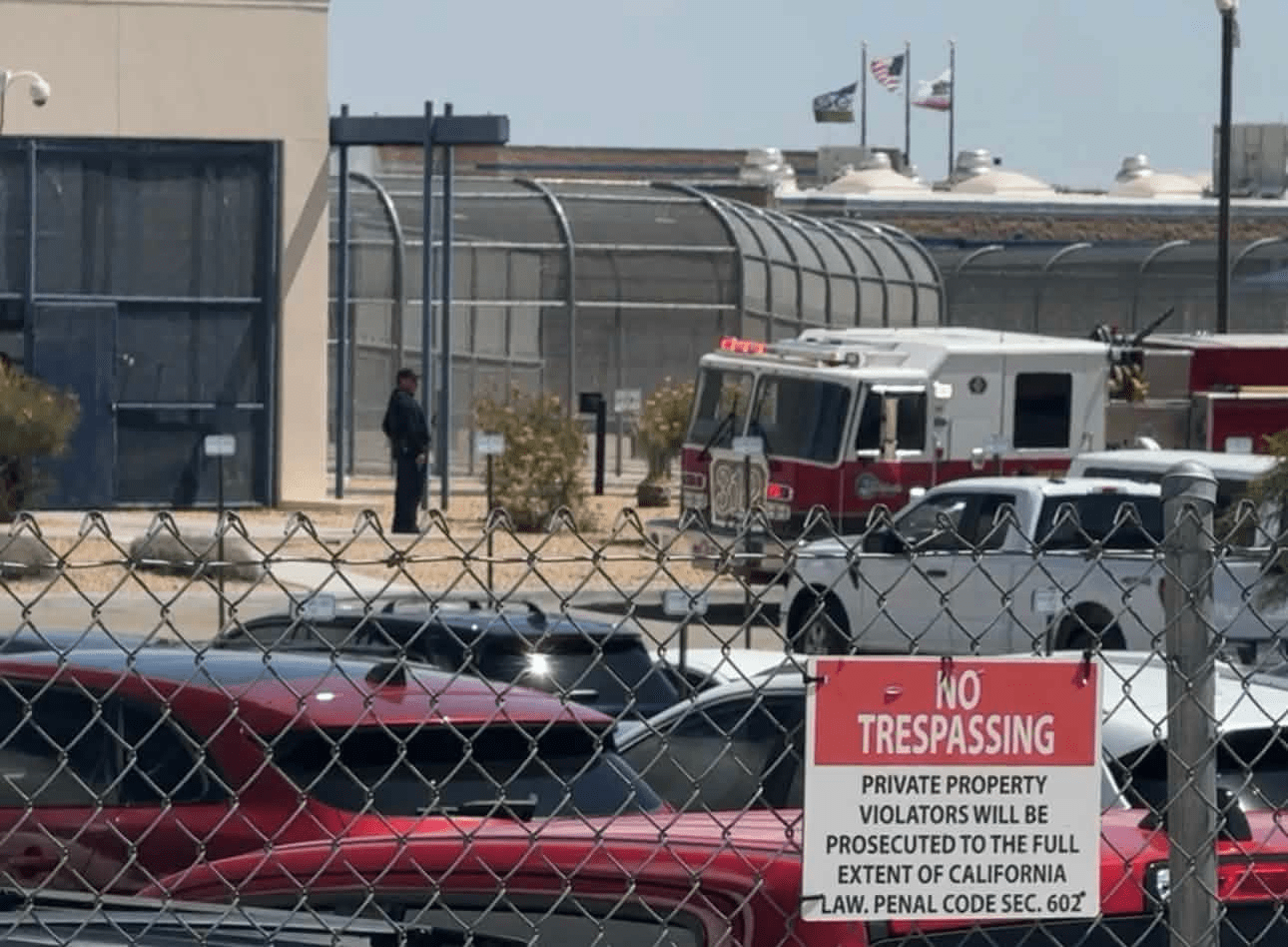
In a press conference held Monday in Newark, New Jersey, U.S. Representative Rob Menendez said that a man, yet to be publicly identified, died shortly after being released from ICE custody. According to Menendez, the man was released after he experienced a medical crisis during his intake at Newark’s Delaney Hall Detention Center.
Menendez further claimed that he discovered this information while he was conducting an oversight visit at the Delaney Hall following the death of Edwin Jeovanny Lopez Cornejo, who passed away on Saturday, August 1, 2026.
The unidentified detainee was said to have been going through the intake process at Delaney Hall when he began to experience a medical condition, believed to have been a seizure. Rep. Menendez said that nurses at the facility responded and called 9-1-1. About 30 to 45 minutes later, emergency medical services arrived. The congressman added that Immigration and Customs Enforcement officials then made a determination to provide the man’s discretionary release to University Hospital.
According to ICE’s website, the agency can exercise its discretion in making such custody determinations when a detainee is not deemed to be subject to mandatory detention, is a threat to public safety, or is a flight risk.
“ICE also takes other factors into consideration — including when an alien has a serious medical condition, is the primary caregiver of minor children, or other humanitarian considerations,” ICE’s website states.
The hospital's initial intake determined that the man had experienced a seizure. He passed away shortly after arriving at the hospital.
“Many people are dying in ICE custody, and we need to know why. Cases like this suggest that ICE is trying to circumvent reasonable oversight and make detention appear less dangerous on paper,” Dr. Weber, Medical Director with the Medical Justice Alliance, told L.A. TACO in a statement.
The discretionary release meant the individual was no longer officially in ICE custody, and the incident was not reported to the Office of Responsibility or the Office of the Inspector General, Menendez claimed. It became the responsibility of University Hospital to report it. Menendez also referenced a recent policy change to the agencies' guidelines for reporting deaths.
ABC News reported on June 4th that “U.S. Immigration and Customs Enforcement is ending a policy that required the agency to report the deaths of former detainees that occurred within 30 days of their release from federal custody.”
The 30-day death reporting policy went into effect in 2021, following the death of Martin Vargas at the Adelanto ICE Processing Center in California. Under the second Trump administration, four deaths have been linked to the Adelanto ICE Processing Center. Vargas was released from ICE custody to a hospital while he was extremely ill, and died just three days later.
Margaret Hellerstein, who represented Vargas, tells L.A. TACO that her client was brain dead and no longer on the premises of the ICE facility when he was released from the agency’s custody. He had been previously hospitalized with COVID-19 before suffering a stroke.
She says her client had many vulnerabilities due to COVID-19 and that she had been filing requests to get him out of the facility before he contracted the illness, which were denied because the agency said he was a danger to the community.
“ When he died, they didn't tell me,” says Hellerstein. “They just said to the ACLU that he'd been released. I had to file a missing persons report. I had to call the coroner. I spoke to a deportation officer on the phone. I asked him where my client was. He lied . . . it's unconscionable.”
It took Hellerstein almost 10 days to find out her client had died.
“ . . . it's hard to see that as anything other than a cover-up, and then a federal judge ruled that it was,” says Hellerstein. “They ruled that ICE had acted in bad faith . . . [Vargas] was essentially already dead because they knew he was about to die, and they didn't want that in their records.”
Hellerstein says ICE’s most recent policy change was made in bad faith, due to the record number of deaths that have occurred.
“If somebody has a serious illness that they contract while in detention, or if they have a preexisting condition that's not treated in detention, ICE can then, under this current policy, release that person when they know the person's going to die and not have to tell anybody about it,” Hellerstein says.
“I just hope that people understand that when a death happens outside of ICE custody after release, that doesn't mean that it was not ICE who was responsible,” says Hellerstein.
Previous to this new policy change, L.A. TACO had documented seven cases of people who died shortly after being released from ICE custody. At least one of those, Nurul Amin Shah Alam, a nearly-blind Burmese refugee, who was dropped off seven miles from his home in cold winter conditions when Border Patrol realized they couldn’t deport him, was ruled a homicide.
An asylum seeker named Daphy Michel was found dead at a Pittsburgh bus shelter with an ICE-surveilled ankle monitor still attached to her, days after she was released from custody. The other five died from declining medical conditions caused by neglect during their time in the detention centers.
In the first six cases of people who died shortly after their release, none of their deaths were accompanied by an official press release or were documented on ICE’s Detainee Death Report. Any comments by DHS, ICE, or the detention center in response to these deaths came either through a reply on social media or a request for comment, in which they repeatedly emphasized that these deaths happened after release and not under the agency’s care.
The most recent death that ICE or DHS has yet to report on or acknowledge is the case of Prisciliano Trejo Ricano, a 29-year-old from Mexico who was detained on June 19 in the Durham area of North Carolina. He was transferred to the Stewart Detention Center in Lumpkin, Georgia, where he developed leukemia.
On July 16, Prisciliano was transferred to an intensive care unit at a hospital in Atlanta.
“The news devastated the family, and they all drove between four and five hours to get to the hospital where he was admitted,” a cousin of Prisciliano told Enlace Latino NC,
“At first, the family couldn't visit him because Prisciliano was still under ICE custody. But eventually, the lawyers and ICE reached an agreement and managed to get him released from that custody,” the cousin said.
He technically died shortly after release from ICE custody on Friday, July 24, at 6:00 a.m. Therefore, due to ICE’s new policy, it appears the agency won't be reporting it.
Rep. Rob Menendez told the media on a press call on August 3, “ They're trying to underreport what is happening and trying to skew the numbers. We already know the number is higher than it's ever been.”


