

Skip to Content
News

Summer In L.A. Is Canceled, Kids. Blame ICE.

A new generation of children in the county are suffering what their immigrant parents feared most.

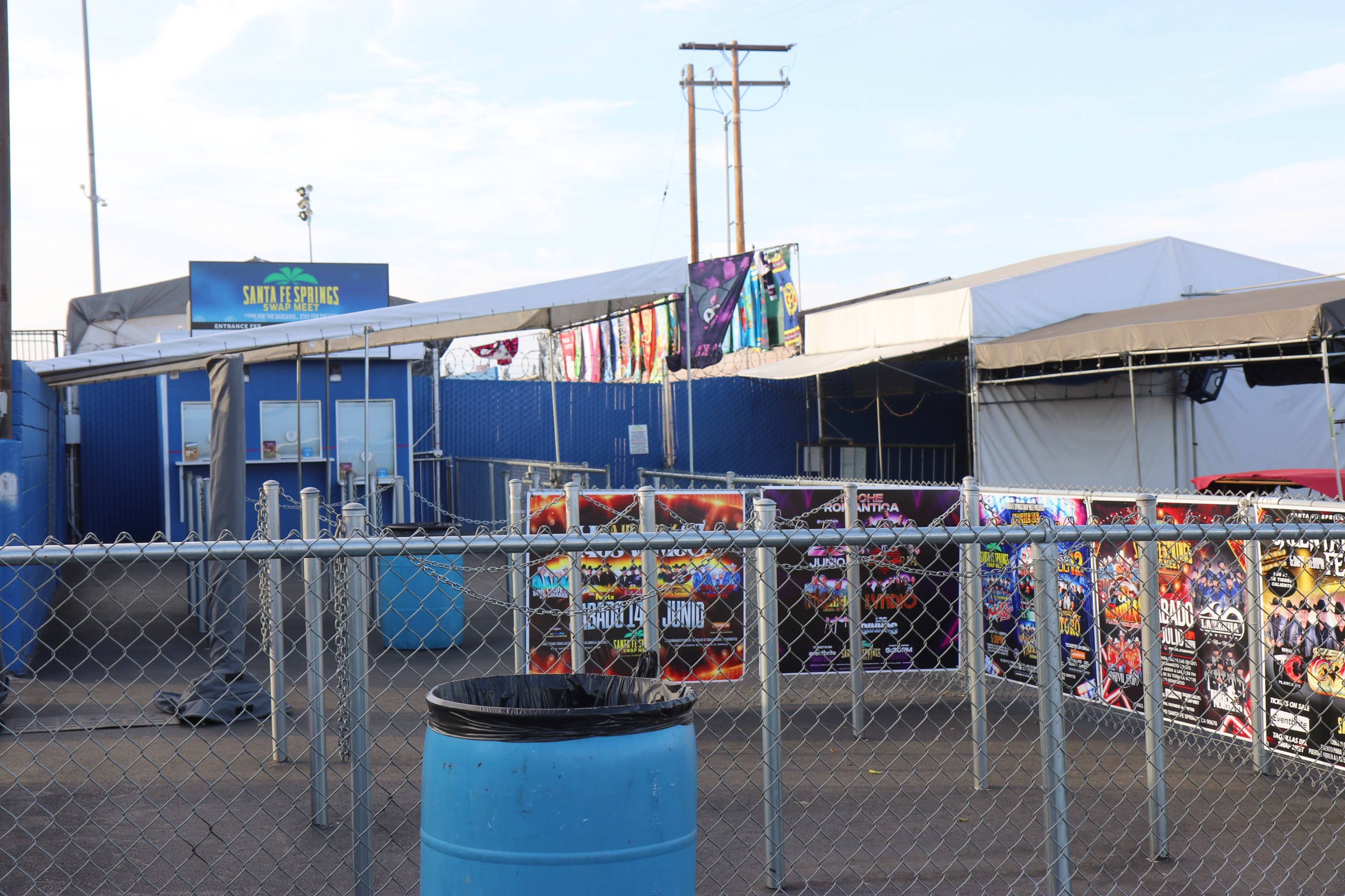
Santa Fe Springs Swap meet on Saturday evening empty and closed after Saturday's raid.

Santa Fe Springs Swap meet on Saturday evening empty and closed after Saturday’s raid. Photo by Janette Villafana for L.A. TACO.

Pasadena Mayor Victor Gordo reaches into his jacket, pulls out his passport, and sets it on the table between us. Born in Zacatecas, Mexico, Mayor Gordo arrived in the city that he now governs when he was just five years old. He grew up in a garage that his immigrant parents, a cook and a seamstress, converted into a loving home, turning its makeshift rooms into a haven where he and his siblings felt protected. When his mother and father were away at work, feared gnawed at Gordo. His parents stashed a Folgers coffee can containing vital records, identification cards, cash, and a list of important telephone numbers under their bed, and they warned their son that if they ever failed to come home, he was to retrieve this can, carry it with him to the neighbor’s house, knock on the door, and politely ask for help.

Gordo’s childhood fears have not faded. Instead, they have changed, taking new forms. As mayor, he now worries about federal agents abducting residents of the community that he is tasked with keeping safe. He is also aware that his vocal opposition to the federal raids targeting both immigrant and non-immigrant communities makes him a target for violence.

“What I see today is the stigmatization of an entire swath of our community, regardless of whether they’re here with work visas or born here as United States citizens,” says Gordo. “We can’t change how we look, and these agents are looking at us and making determinations based on their subjective interpretation of what an immigrant looks like. They’re acting upon that using our military, our federal resources, and taking action without affording us due process of law. That’s just wrong. It's immoral and its unconstitutional.”

Like Gordo, I’m also a Latina of Indigenous heritage. And in an odd twist of fate, my great grandfather Gumercindo was born less than ten miles from the village where Gordo was born. My home rests on the invisible border separating Altadena from Pasadena, and it brings me some comfort to know that at least one of my elected officials not only understands my family’s experiences; he shares them.

This quality differentiates Gordo from George Hobbs, the Santa Maria mayor who governed my hometown for most of my childhood and adolescence. When I was thirteen years old, Hobbs declared that Santa Maria had a “Mexican problem.” He called for the capture and internment of immigrants in “U.S. financed colonies” along the southern border. Hobbs’ dream has now become our nightmare.

Gordo is proud to be Pasadena’s first Latino mayor, but he also knows that his title means nothing to bigots. Under the advice of local law enforcement, he now carries in his jacket pocket the type of identification that his parents stashed in a coffee can. The police warned Gordo that he may become a victim of racial profiling. “I’ve been very vocal,” he says, "and so I’m carrying my passport, even as the mayor of this city. And as an attorney, I’m offended by the sheer dismissal of our constitution.”

This summer, the residents of Los Angeles County have witnessed a new generation of kids become burdened with the same childhood fears that once plagued Pasadena’s mayor. Every day, I scroll through my social media feed and see a fresh spectacle of federally funded horrors, videos of children begging masked gunmen not to kidnap their family members. While la migra has long been a threatening presence in California communities, this summer has proven to be a turning point. The scope and scale of the ongoing raids is massive and brutal.

Multiple federal agencies – from the Drug Enforcement Agency to the Federal Bureau of Investigation – are involved in these operations. So is the military and the National Guard. When I witnessed video footage of a federal raid launched at the intersection of Orange Grove Boulevard and Los Robles Avenue in Pasadena, my own childhood trauma was activated. I experienced the eeriest déjà vu.

On the morning of June 19, federal agents stormed a bus stop where laborers waited to be transported to construction sites in nearby neighborhoods devastated by wildfires. The agents wore masks and brandished firearms. The laborers clutched cups of coffee and baked goods. Agents abducted one man while he held a glazed donut. “These gentlemen were filling their stomachs to be able to work,” says Gordo.

The mayor lives not far from the Winchell’s Donut House where the abductees purchased their breakfasts. Madison Elementary School, the school that he attended, is next door to the Winchell’s. As the bus stop raid unfolded, residents flocked to sidewalks to observe and document. Many witnesses were confused by the sight. Without any identifying information displayed by the masked men, there was no way of determining what government agency they belonged to or if they belonged to one at all.

When one eyewitness exercised his constitutional right to document the rear license plate of the black Dodge Charger driven by one of the supposed agents, the driver exited the vehicle, brandished a handgun, and aimed it at the onlooker. Had the masked man opened fire, bullets would have flown in the direction of pedestrians gathered on the sidewalk. They also would have flown in the direction of Baja Ranch Market, a busy grocery store frequented by Latines.

Armed threats like these demonstrate a flagrant disregard for our lives, but we are not cheap. We are gold, and our community’s children and young folk are our greatest treasures.

When I was 10 years old, I saw an event that closely resembled the bus stop raid. It didn’t happen here. It took place in Guadalajara, Mexico. I was riding in the backseat of my tía’s sedan at night. We approached the Christopher Columbus roundabout as traffic slowed to a stop. Abandoned cars littered the usually busy avenue, blocking our passage. Suddenly, a group of men brandishing machine guns came charging up the lane. They swarmed a vehicle with two women trapped inside, surrounding and demanding that the passengers open the doors. A gunman climbed onto the hood of the car and beat the windshield, preparing to crack it. My tía was able to maneuver us away from the attack and, as we fled the area, I saw a police officer seated on a motorcycle, silently watching, perhaps stationed as a lookout. I never learned what happened to the women, and the video footage of migrant abductions in this country looks no different from what I saw in Mexico. This memory continues to haunt me, serving as a painful reminder that people disappear on both sides of the border.

The political theatre staged by the federal government in Los Angeles on July 7 likely traumatized its audience: children. Eddy, a queer Latino who lives near MacArthur Park, the site of the spectacle, walked me through area, explaining how he learned about the event in advance and what he did the day of it. The evening before, he heard rumor that ICE might be launching a raid at the park. The rumor did not suggest the time of ICE’s arrival and so, the first thing that Eddy did the next morning was print signs warning people of potential migra presence. With his backpack full of supplies, he headed to the park, taping up the signs and issuing verbal warnings to anyone who would listen. Then, he noticed a cluster of people holding fancy cameras. Photographers. It seemed that they had been tipped off too. When he spoke to a reporter staking out the area, he said that he had received a tip that ICE would be arriving in twenty minutes. The news sent Eddy into a panic.

Who was going to tell the children at the playground? Who was going to tell their parents?

Eddy removed his phone from his backpack and showed me a video recording of what happened next. It shows the path that he wends through the playground, bypassing palm trees, brightly colored slides, green umbrellas and an oversized turtle statue. An adult in a purple shirt stands at the swings, supervising a child at play. Eddie asks, “Are you a father?”

The man in purple answers, “No. I’m just in charge of the camp.”

Eddy warns, “I just talked with a reporter. There’s a rumor that ICE might come here in twenty minutes.”

The camp counselor’s facial expression shifts as he thanks Eddy for the
news, information that should not have had to come from him. The warning should have come from our civic leaders.

Eddy’s panicked breathing can be heard as he leaves the park.

I asked Eddy to describe what the spectacle looked like. He answered, “I was
expecting four unmarked vehicles. When I saw ten to fifteen horses, drones,
and law enforcement carrying guns, I was just like, why?"

"Those kids may have seen all of that, he continues. "I’m an adult and I was in awe. This is a day camp, and this is what they’re being exposed to. Why is the federal government doing this? Who is all of this for?”

Armed federal agents on horseback at MacArthur Park
Armed agents at MacArthur Park on July 7, 2025. Photo by J.W. Hendricks

Eddy says that, while he’s been a longtime activist, this summer has changed
him. He now carries a megaphone in his backpack. He never knows when he
will have to warn his community members of incoming danger and he wants
to be prepared.

Eddy also wears his politics. The first thing that I noticed about him when he strolled into the park was the Super Mario Bros. hat on his head. The puffy green accessory resembles the one worn by the classic video game protagonist Luigi, a figure who just so happens to have an infamous namesake on trial in New York City.

Laura is another longtime activist, an anarchist and art teacher displaced by
the wildfires that ravaged Altadena earlier this year. A mother of two little ones, she is also the daughter of immigrants. She spoke to me from New York by telephone. Now in her thirties, she draws upon political lessons from her teen years, when she participated in the Occupy movement.

Laura participated in the protests that happened in downtown Los Angeles on June 8. The community-led resistance that took to the streets that day has been
savagely mischaracterized by many mainstream media outlets. Laura explained that she felt compelled to become involved because many young people, teens in particular, might join the protests. Inexperienced protesters are more likely to be injured, so Laura wanted to ensure the safety of those in the streets doing community defense. “Downtown LA is one of the worst places to do protests, especially large-scale protests,” she says. "The police easily kettle people.”

After considering what action to take, Laura decided to bring a leaf blower to
the protest. Though much reviled for the inconvenient noise it makes, the leaf
blower has become a symbol of our resistance, and I must admit that when I
received my first leaf blower as a child, I was thrilled! Laura also brought
medical supplies which she used later. She protested with a group that
continued circulating, never idling in one place long enough to be kettled. Once the riot police arrived, the groups slowed its movement, gravitating toward the 101 Freeway.

“Everyone’s anger is righteous and important,” says Laura. "This is how some people choose to show up for their community. Some people think it’s a waste of time but if you’re there, you can see that the cops are clearly outnumbered. They’re scared of us. They have guns, yet they’re the ones who are afraid.”

She joined the large group of people who took control of the 101 Freeway. When someone near her tossed a spray paint cap in the direction of the police,
Laura watched an officer aim his weapon at the protestor. The officer missed,
striking Laura in the chest with a “less-than-lethal” rubber bullet. Laura credits her breast for saving her.

“It absorbed most of the impact,” she explains. "It protected my heart. I’ve been through childbirth twice and being struck was as painful as that for the first five minutes. It knocked the wind out of me. It also knocked me to the ground.”

Laura texts me a photograph of her injury. In it, she displays an enormous plum-colored bruise that spreads across half of her breast, angry dark blood vessels reaching around her areola. “It came in super clutch to have everything handy,” she says. "Some of us had guerrilla street training.”

“We could all be big and bad if we had guns,” she explains. “But that’s not the world we’re trying to create, and that’s not what I want to show my students either. I do want to show them an adult who is going to be down to defend them and their families. I’m not afraid and I want to show others how not to be afraid.”

Police deploying tear gas on No Kings Day protest in downtown Los Angeles last Saturday.
Police deploying tear gas on No Kings Day protest in downtown Los Angeles last Saturday. Photo by Kemal Cilengir for L.A. TACO.

Laura echoes ideas expressed by Eddy. He told me that when audiences watch movies about people performing heroic acts, they often slip into the role of observer, watching the hero from the outside. He suggests that we should try looking at the world through a hero’s eyes. Doing so can radically alter one’s mindset and choices.

At the end of summer, Laura will begin a new position as a full-time art
teacher. Her district has assigned her to four different school sites, and this
year, she is planning her return to the classroom with a new set of concerns in
mind. While immigration raids rarely happened on school campuses under
previous presidential administrations, ICE officers have defied this norm.

El Rancho Unified School District released a statement concerning one such incident that occurred on the morning of June 17. At 8:45 a.m., school district staff saw eight to ten ICE vehicles park in the lot of Ruben Salazar High School, a campus named after one of the most well-known Latino journalists of the twentieth century.

District staff asked the agents to leave the school grounds. They left the immediate area, but staff then observed the agents relocate nearby. Next, they saw the agents expose their genitals and urinate in plain view. Surveillance camera footage of the incident confirms the statements made by staff. Summer school was in session and the area where these men exposed themselves is adjacent to a pre-school playground.

According to state law, exposing one’s genitals is a criminal offense. It is also a form of sexual violence. With incidents such as this in mind, Laura is developing strategies to keep her students and their families safe. She has considered fundraising to purchase devices that will make her classroom harder to access from the outside. She has also considered that ICE may use force to break down doors. Under those circumstances, she would need to have an evacuation plan and an escape route in place. “There’s no way I can start the school year without addressing what’s going on,” she says. "I’m mentally preparing for it now.”

Other school staff are also taking creative steps to ease the anxiety that
children are suffering. Marlene Huerta, a mother and elementary school counselor, is one such person. She identifies as Hispanic and is the daughter of Mexican-born parents. She came to my attention through Instagram where I noticed an educational resource displayed on her page. We spoke by phone and discussed Tengo Miedo (I’m Scared), a workbook that she wrote to help kids understand the psychology and physiology of trauma.

Huerta knows that all too often, trauma renders survivors speechless. She
hopes that her workbook will function as a tool that enables its users to find the vocabulary to express their hopes, fears, and concerns.

“The workbook may help children reflect on and process the fear that they have about a loved one being taken,” says Huerta. "Or maybe they already have a loved one who has been taken and now they’re mourning. I hope that the workbook can give them the language that they need to communicate their emotions.”

Huerta has made the workbook free to download as a PDF. Non-profit
organizations have also contacted Marlene to request copies of the resource. One of these agencies supports farmworkers. Other inquires for use have come from medical facilities. Huerta finds these requests heartening. “It’s nice to know that there’s community who wants to help children and who are making the effort to find resources.”

Huerta also stresses that while many of us are experiencing fear, we process this emotion in different ways according to our developmental stage. Her workbook presents children and teens with a nuanced explanation the nervous system’s various responses to trauma.

Rather than reduce traumatic reactions to the usual fight or flight binary,
Huerta educates children about other reactions, like freezing and fawning. Fight and flight can be easier to identify than freezing and fawning. Freezing can look like a person getting stuck in a repetitive cycle of behavior, such as excessive sleeping. For Latine children, fawning can manifest as a denial of one’s ethno-racial heritage.

Huerta teaches kids that when we experience stress, our brains turn off. She provides suggestions for how to cope with this normal response to heightened anxiety. She communicates to teens that they should focus on making safe choices even as they’re trying to fight for what’s right. The workbook can be used to facilitate difficult conversations which might seem intimidating without guidance.

When she addresses the importance of having difficult conversations about what to do if a family member is abducted, I’m reminded of the instructions that Mayor Gordo’s parents gave him. While that must have been a challenging moment, Gordo’s parents gave him an actionable plan to execute in the event that they should not return home. Rather than ignore the threat posed by la migra, they faced it, named it, and addressed it. Their parenting prepared him how to defend himself, and now we must apply these lessons to defending our community.

The justification for these federal raids is steeped in irony. The federal
government claims to be making our communities safer by sending roving
bands of masked agents to hunt and capture undocumented criminals. ICE’s own data tells a very different story. The numbers show that the government is primarily detaining individuals with no criminal convictions.

To protect communities from these roving bands, some city leaders have cancelled summer programming. In Pasadena, swim lessons were suspended. Concerned parents are also keeping their children at home. Parks and recreation areas that are often bustling with people enjoy the summer are now empty. When children have opportunities for recreation, education, and community engagement taken from them, the effects can be disastrous. Those are the very conditions that create so-called criminals. Those are the dangerous conditions being created by the assault on our county.

Stay in touch

Sign up for our free newsletter

More from L.A. TACO

Border Patrol Detains Three at La Puente Chilaquiles Stand Before Seizing Its Cash Box

A screaming woman in an apron was seen running from the stand into the safety of a nearby firetruck, while the stand's other employees weren't so lucky.

Daily Memo: Feds Detain U.S. Citizens and Take Street Vendor’s Cash Box

Federal immigration raids are escalating in intensity, with more people being profiled and taken without due process.

L.A. City Council Rejects Proposal To Limit LAPD’s Use of Tear Gas and ’40mm Foam Launchers’

Prior to June 8, the LAPD had not used tear gas in crowd-control settings in almost 50 years, an LAPD spokesperson told L.A. TACO.

December 3, 2025

Update: Border Patrol Agents Raid Huntington Park Home Depot, As Fleeing Man Is Struck By Vehicle

“I denounce the Trump Domestic Terrorism Campaign that continues to target law-abiding residents in Huntington Park and across the nation,” said Huntington Park Mayor Arturo Flores. “I have faith that those who choose to violate human rights and constitutional rights will be held accountable for their crimes. Not to mince words . . . FUCK TRUMP and FUCK ICE.”

December 3, 2025

Daily Memo: Border Patrol Is Back, Targeting Southeast Los Angeles and Ripping Parents From Their Children

Border Patrol Is Back after their week-long hiatus, targeting Southeast Los Angeles and other areas, ripping parents from children, chasing workers and almost killing one, arresting a U.S. citizen, and targeting street vendors again.

‘If We Don’t Laugh, We’ll Cry’: Meet the Indigenous Activists Behind L.A.’s Chapter House

In 2020, executive director and environmentalist Emma Robbins founded The Chapter House, now home to an annual drag show, Indigenous art galleries, and improv comedy events.

December 2, 2025
See all posts