The first months of the year are home to Lunar New Year celebrations throughout Southern California: Vietnamese Tết festivals in Orange County, parades throughout the San Gabriel Valley, and lion dance performances all the way down to San Diego.
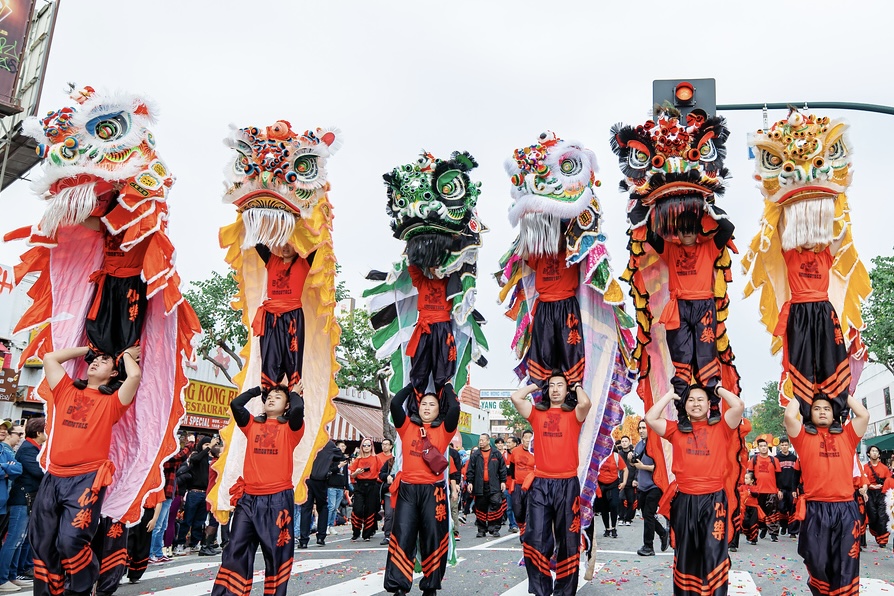
Lion dancers incorporate martial arts, elaborate costumes, and musicality to curate performances fit for welcoming a new year. The clashing of cymbals and low-noted drumming are melodic, punctuated with yells from the crowd. As the dancers perform stunts, the lion costume flutters and sways. Ashes from firecrackers swim through the air around them.
Their movements are entrancing. Suddenly you’re trying to fish a dollar from your wallet like everyone else, eager to feed it into the lion’s mouth.
Jeff Chan, the late founder of Immortals Lion Dance (ILD), moved from Oakland to L.A.’s Chinatown and formed the troupe in 1962 after recruiting local youth. Now, those original dancers perform alongside their children and grandchildren, upholding the group’s legacy as one of the most popular lion dance troupes in Los Angeles.
As staples at Lunar New Year’s events throughout L.A., ILD can also be seen performing at premieres for films like “Kung Fu Panda 4” and on-screen in shows like Hulu’s “Interior Chinatown.” They regularly perform at weddings, shop openings, and temples, too.
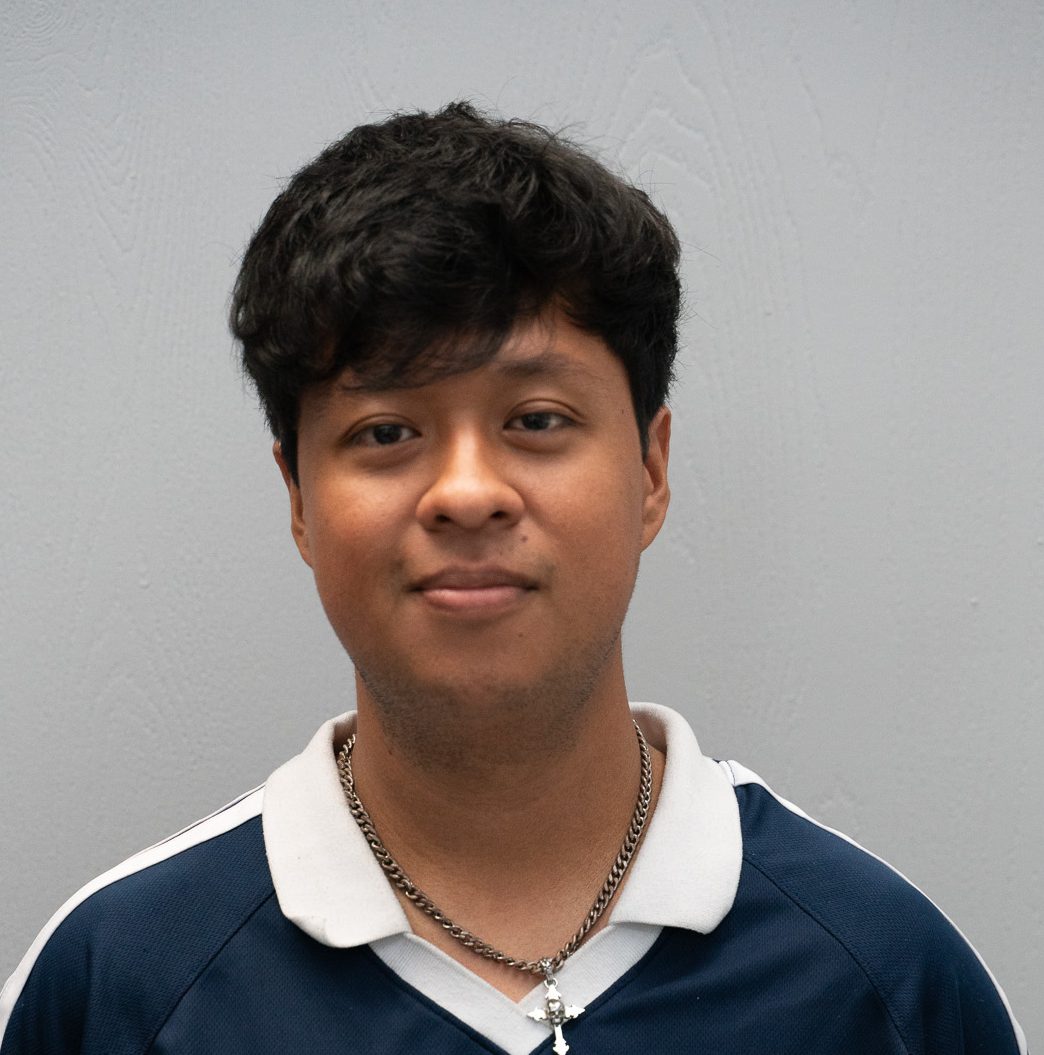
Social media manager Alex Dea joined ILD at 8-years-old, as a junior member after being recruited by his family and friends who were already members. Dea is turning 30 this year, marking 22 years with ILD. The oldest dancers are in their seventies, but they only perform at the largest events and Lunar New Year events.
Dea tells L.A. TACO that ILD is home to about 50 members, the most active being children and young adults.
“It's mainly through word of mouth,” Dea says. “There are times where people will see us at different performances or festivals in public, and they'll get our contact information to ask to join and see if I guess this hobby is right for them, because it's not for everybody. It's a very niche kind of hobby.”
Whether you’re in the crowd or inside the grand $2,000 lion costume, the energy that’s created by this tradition is totally palpable. You can see it especially in the kids, teetering between awe and fear of these giant-headed beings, operated by dancers in disguise.
Originally a way to mark the new year, lion dancers professionally compete across the world. ILD have traveled as far as Hong Kong to compete. They have also performed for audiences in Colorado, Nevada, and Northern California.
There’s been a lot of exciting change in the world of lion dancing within the past 30 years, Dea tells us at L.A. TACO. But before it was common for troupes to appear on-screen or travel for international contests, there was the legend of a monster named Nian who is believed by many to have catalyzed the need for lion dancers.
“There's a lot of different stories about how lion dancing started, but I think the most popular one would be during the springtime in China, there was a village that kept getting attacked by this monster named Nian,” Dea says.
“And the villages realized that every springtime this monster would come, but this monster was also scared of loud noises and the color red,” he continues. “So they decided to create a costume that kind of looks similar to the monster, and along with that, had drums, loud cymbals, and gongs, and they lit firecrackers to scare it away. So once that worked, the villagers believed that this lion scared away all evil spirits and brought good luck and good fortune.”
According to Dea, the hardest part of lion dancing is just starting out. The harsh learning curve is enough to weed out the casual enjoyers from the more serious performers. First-timers can expect to practice martial arts dances at their first session–which will probably leave them sore for a couple of days.
Practice usually starts off with around 30 minutes of warm-ups, including basic stretching and some aspects of martial arts like kicks and punches. A short music rehearsal follows, giving performers the chance to practice different beats on the drum, cymbals, and gong (which can be the hardest for some to learn).
Then the troupe splits up for lion dance practice based on their skill levels: beginner, intermediate, and advanced.
If you’re the tail, that means your back could be arched at a near 90-degree angle for 20 minutes or longer. Versatility is essential for lion dancers since it’s not always guaranteed which role they may play in a performance.
When there’s an equal chance of being the lion tail or lead drummer, paying attention during practice is pretty damn important. ILD practices throughout the year, but the frequency revs up during the Lunar New Year season due to how busy their schedules become.
“I think it takes a lot of patience, too, because you can't be a lion dancer overnight. You know, it takes a while to get the stances down, and then once you get the stances down, then you practice your head movements,” Dea says. “It's going to take time for you to master those moves and kind of master how you would mimic a cat or a lion because there's so many different emotions. You know, a lion could be happy, curious, cautious, excited.”
A typical performance for prosperity can include a head of lettuce on a stick, red envelopes, and oranges. At weddings, lions “eat” the head of lettuce and “spit” it back at the newlyweds to “kind of bless them,” Dea says. (Lettuce is a staple in these shows because the word “lettuce” sounds like “new prosperity” or “new wealth” in Chinese.)
If a new shop opens, they may hang lettuce, oranges, and red envelopes for lions to “eat and spit” back into the store for “good fortune,” Dea says. Sometimes the dance team or store will depict certain animals using different fruits and vegetables to then be incorporated in the routine.
“For example, for the year of the snake: A lot of people will take two oranges with the staff, and that'll kind of symbolize a snake,” Dea says. “They'll take the staff and they'll throw it to one of the team members, and the team members will do kind of a small martial arts set with that.”
Beyond lion dancing, ILD are also experts at dragon dancing, but Dea says it’s not as popular since “the dragon could only do so much.”
This is because the lion costume allows for more dynamic movement while the dragon’s movement is more akin to puppetry, the performers holding large sticks to maneuver the dragon. Their choreography mimics Asian dragons you may see in shows and cartoons, according to Dea.
“There's two types of dragon dancing that we offer. One is a more traditional dragon dance, and the dragon itself is a lot bigger. The head is bigger, the bottom is bigger,” Dea says. “The other type of dragon dance we do . . . a more modern-ish kind of dragon dance. There's a lot of different acrobatic moves like jumping and twisting.”
The ability of tradition and modernity to both mingle beautifully appears most naturally through lion dance, particularly when you stumble upon a set at a night market or local parade.
It may have taken performers hours of training to produce a few minutes of total joy for their audience, but those memories of artistry, theatrics, and physicality live on deep into the new year.
ILD will be helping lead the procession at the Golden Dragon Parade in Chinatown on February 21 at 1 p.m.