

In a low-key plaza on Alondra Boulevard in Norwalk, a pathway of LED lights in red, white, and green leads you to a new concept. It sits in the middle of a small shopping center that has fought off encroaching gentrification and is still cherished by locals for its boba shop, donuts in pink cardboard boxes, and corner liquor store.
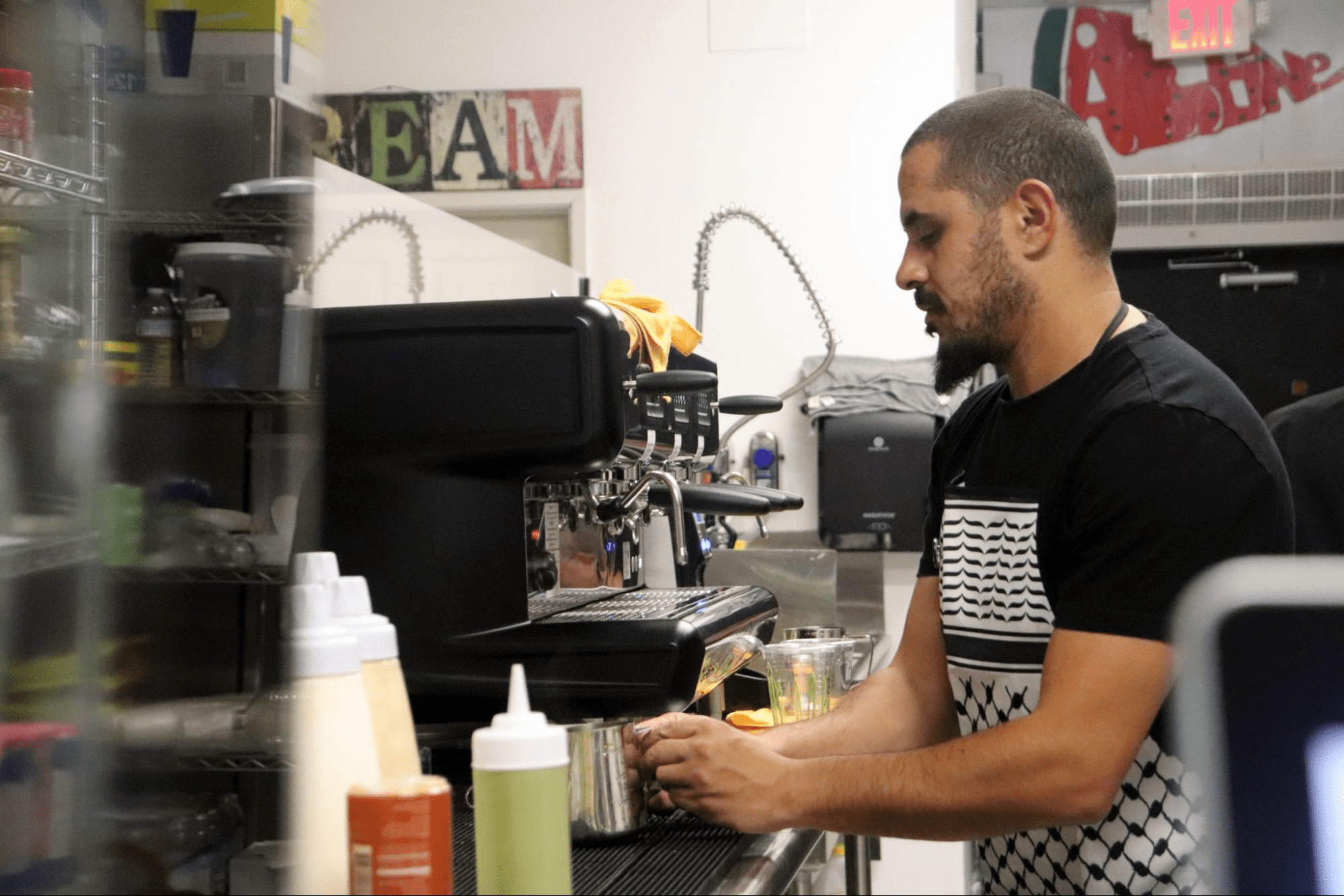
Newly opened, Cafe Palestina welcomes you inside, its register and espresso machines wrapped in keffiyeh print, the black-and-white pattern that has become one of the most recognizable symbols of Palestinian identity in the world.
The bases of every table have the same print, while imagery of Palestinian landmarks covers the tabletops and the walls carry Palestine map art. Depending on where you sit, the words "Free Palestine" stare back at you.
It is a coffee shop, but it is also a statement, a room built to make a community feel like it belongs.
Gee is the co-owner of Cafe Palestina. He keeps his identity partially anonymous, not out of shyness, but out of necessity. He dealt with gang extortion before launching this concept, a reality that shadows the ambitions of small business owners in communities like this.