This article was published in collaboration with The LA Local.
A gun props open a toilet seat, a boom box rests on a tire—walking into Acacia Marable's new exhibit “trash flag” at Human Resources in Chinatown, feels not unlike walking on some L.A. sidewalks.
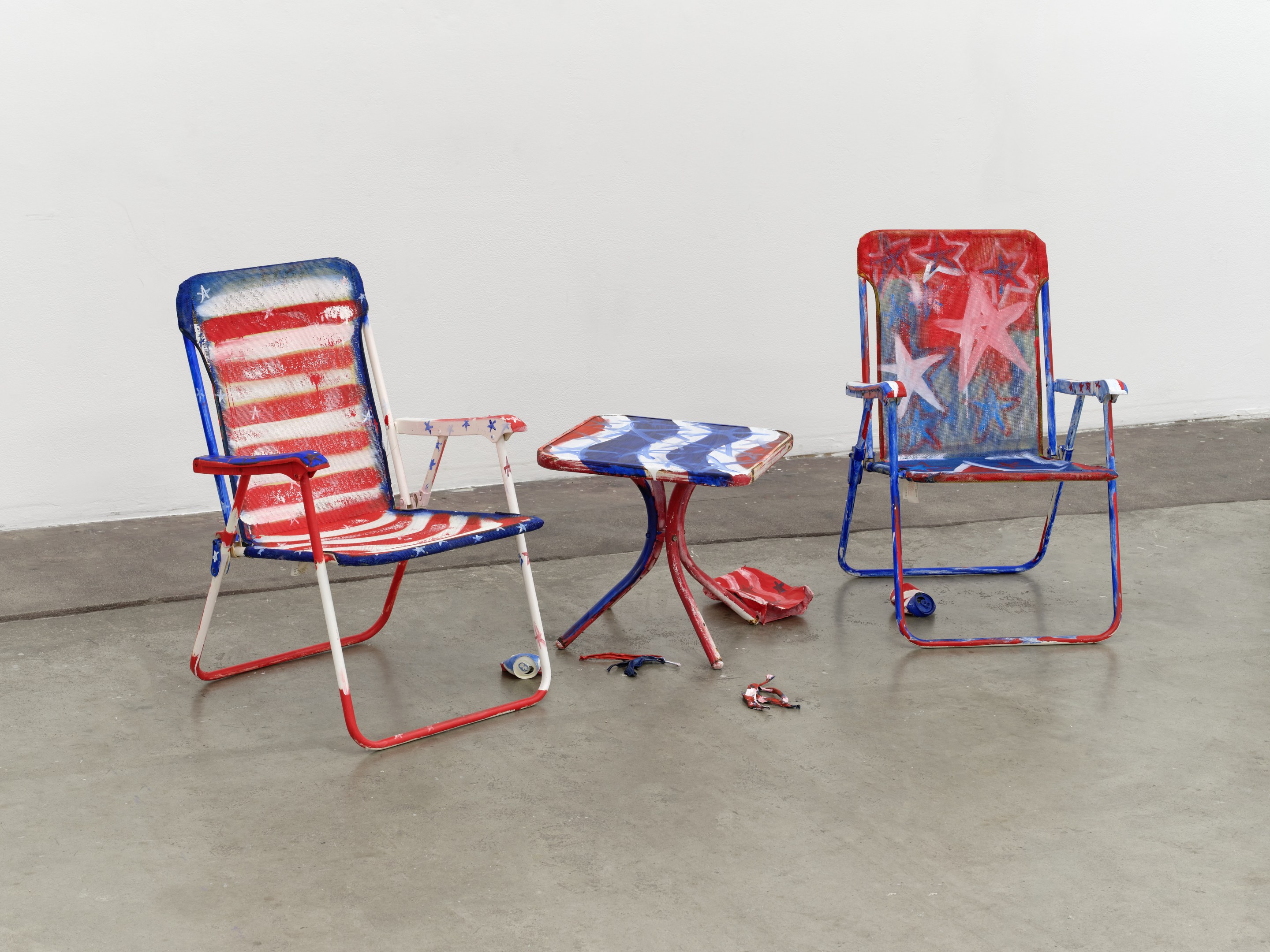
The exhibit is made from trash piled precariously, methodically into totems, with a degree of precise randomness. There’s also bold red, white and blue flags painted on each item—from banana peels to foil chip bags.
“The flag is really violent, but it's also just like patriotism and national identity,” Marable tells me sitting on a curb outside of the gallery. “I am so American. I'm deeply American. I love being American. So it's a complicated symbol.”
In order to build “trash flag,” Marable collected items of trash around his home and studio and from his friends who offered up melted trash cans, a rusted block of nails, and a basketball hoop.
But the flag itself came from the heart of L.A.’s resistance to ICE raids.
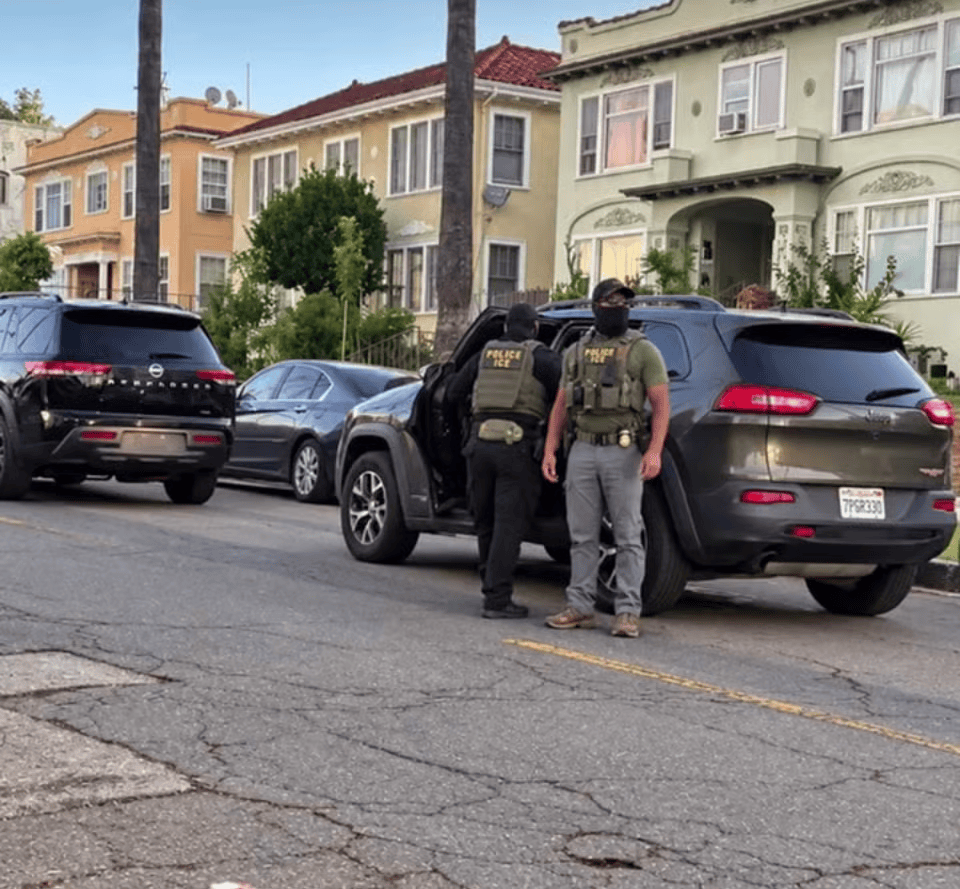
In June, as mass immigration raids prompted county-wide protests, he drove to the center of the protests to collect more items for his exhibit, including an actual American flag.
He painstakingly cleaned each item of trash by hand, and sealed them with an archival glue before varnishing with oil paintings of the flag.
Marable’s complicated patriotism is rooted in his family history.
His dad was a first-generation student of desegregated schools in Birmingham, Alabama, and the rest of his side were descendants of slavery. In 1976, Marable’s grandmother’s home was bombed by a white supremacist neighbor and she lost half her hearing. But the family always had an American flag on the porch.
“How do you reconcile that?” Marable wonders. “Why are we still trying to be under this banner of the flag?”
Marable says he is the first generation in his family to have “full rights” as a US citizen.
But in January 2025, during Trump's first week in office, The White House issued sweeping anti-trans legislation including an executive order that stopped any further changes to your gender on your social security documents, and another that made nonbinary gender markers obsolete.
Marable, who is trans, rushed to get his paperwork sorted. With all the extra copies of the documents, he found himself picking up his paintbrush, and painting the flag on the old bits of paperwork.
The process was cathartic for him.
“Definitely,” he explains. “I'm working out things that I can't put language to, but making into a pattern. And repeating the pattern and kind of like dissolving it and also transferring it.”
From that point on, he started painting the flag on items as small as a nail to big-scale detritus like a baby grand piano. Eventually, those individual items became clusters of carefully created tableaus - a pink spotlight on a patriotic can, a peephole through a trash can, a basketball hoop balanced precariously on a fast food container.
The conceptual art show is not just about Marable’s personal story. He also pays homage to Yard Shows, a form of sculptural exhibition that dates back to civil rights' era artists like Joe Minter and Purvis Young.
The flag art of David Hammonds, Jasper Johns and Thornton Dial also served as big inspirations in their exploration of American-ness through the flag.
As an Angeleno, it's also impossible to experience this exhibit without also experiencing the unhoused crisis in our city.
Marable says it’s about the many unsightly things taking place in our city, within our nation.
“I thought a lot about the ICE raids immensely. And a lot about the unhoused people, ‘cause I mean, it's literally like this idea of this ugly thing that you don't want to be associated with your community or our country,” he says. “But there is a lot of beauty in that.”
Walking out of the exhibit—careful so as not to slip on one of the banana peels painted red, white and blue—I left with a new awareness of “the junk” and “the mess,” of the “visible” and “invisible” people that share our streets.
Sometimes seeing the mundane in new gallery lighting, with a fresh coat of transformative paint, can remind us of uncomfortable truths around us.
The exhibit is open through December 14th from 12-6pm at Human Resources. There’s an artist walkthrough and cookout on Sunday December 14 from 1-6pm.