

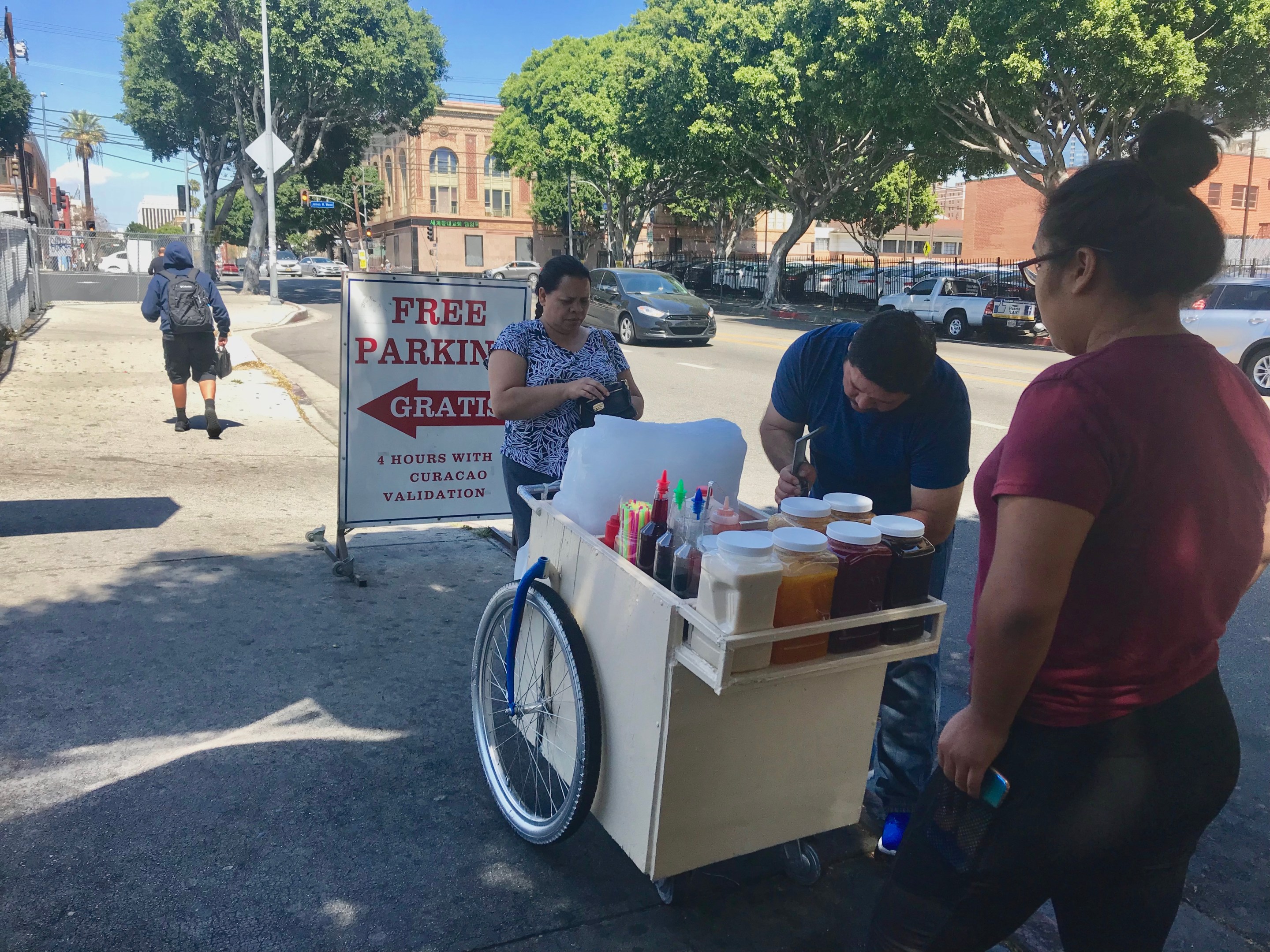
[dropcap size=big]O[/dropcap]n a busy street at the edges of Pico-Union, a crowded neighborhood known for its Mexican and Central-American immigrant population, a row of street vendors line up, one by one, next to each other, making their living.
Mostly women, the vendors wait for customers to walk out of an electronic and appliance store in front of them, or for a hungry passerby to stop at the sight or smell of their fruit, churros, and raspados.
Some of them have been selling on the same street for more than ten years, and have been waiting for some form of legal protection to work in Los Angeles for just as long. For them, the city’s slow-moving plan to legalize and regulate street vendors is a step in the right direction, but one they’ll only believe until they see it fully implemented.
“If they are going to legalize vendors, that’s a really good idea, right?” a vendor named Claudia tells me in Spanish. “But sometimes they’ll say that and that’s when police come to bother us. They move us because they say we are disrupting the sidewalk.”
Indeed, street vending, technically, is still not legal. And it may take months or even longer for it to actually happen. An estimated 50,000 unlicensed street vendors — not taco trucks or food trucks — operate in Los Angeles, advocates say, and up to 80 percent of them are women. They all remain in limbo.