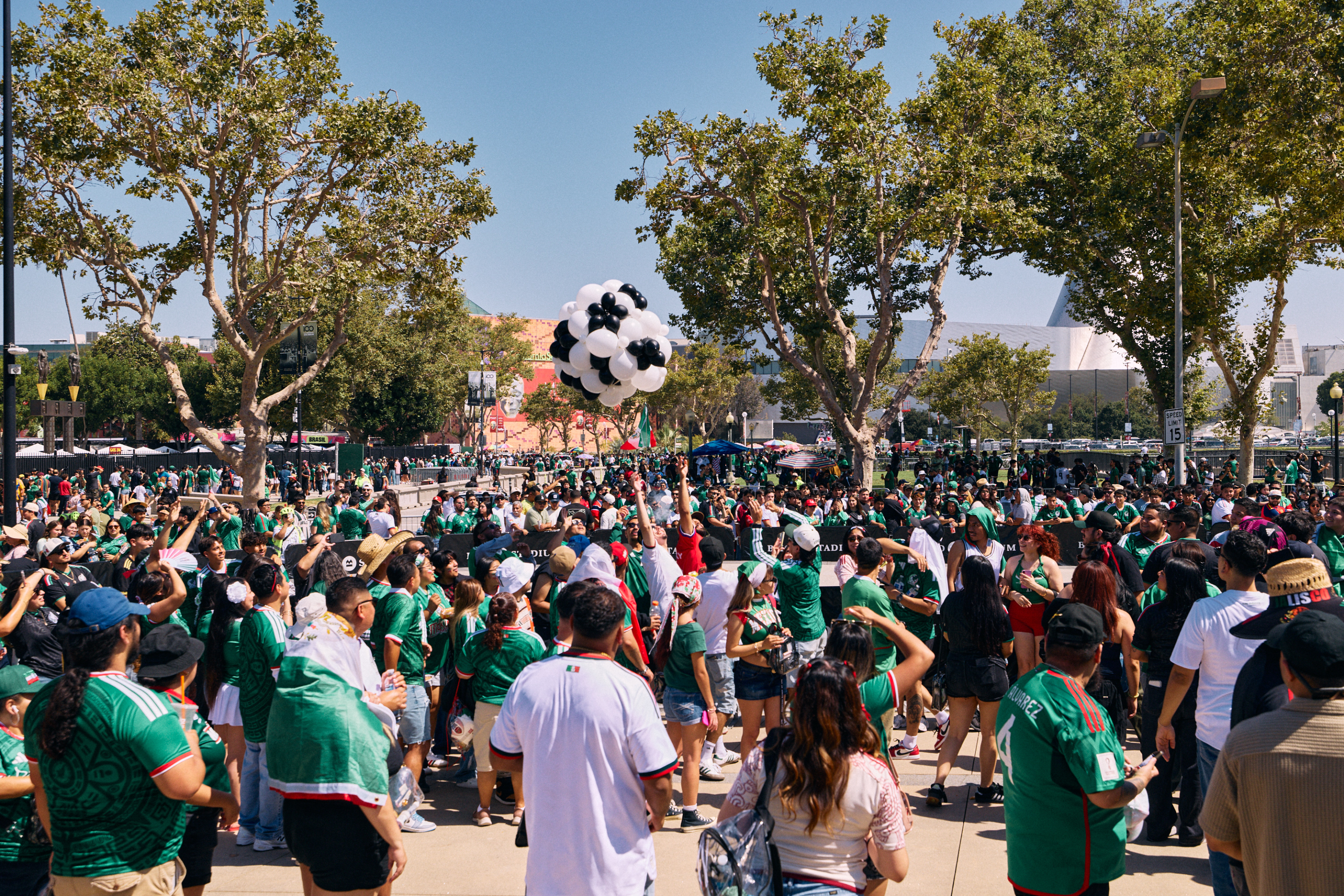
A “banda” plays as a sea of green, white, and red surrounds them in Exposition Park on Thursday afternoon. Mexico had just won their opening game against South Africa. Soccer fans from across Los Angeles and beyond gathered at the park to attend the “Home of Soccer,” a massive watch party hosted by Adidas, in partnership with the Los Angeles 2026 World Cup Host Committee, at BMO Stadium.
These parties are two World Cup-related events open to fans in the Los Angeles area who are unable to watch the games at SoFi Stadium. The Home of Soccer event also included a 3v3 AdiCup tournament and a free concert by DJ Noodles and Peso Pluma.
The 2026 FIFA World Cup is hosting its largest tournament in history, with 48 teams, according to U.S. Soccer, and is being played across three host nations: Canada, the U.S., and Mexico – the first time this has been attempted.
It has been mired in controversy for many reasons, such as dynamic ticket pricing, which has left many football fans without access to games they have been waiting their whole lives to attend, even when those games are in their backyard.
“ To be honest with you, it was out of my budget,” Gabriel Quintanilla told L.A. TACO. “Everybody dreams to … be able to make a match at the World Cup, but, you know, things happen.”
He told L.A. TACO that he was able to get free tickets to the Home Of Soccer opening-day event and hopes to attend similar events throughout the rest of the Cup. He says that if he is not able to access more events, he will just be watching the games from his house.
Tickets for the U.S. Men's National Team's World Cup opener at SoFi Stadium ranged from $400 to $3,000, according to reporting by NBC Los Angeles. L.A. TACO reported tickets as expensive as $5,730.00 for a quarterfinal game at SoFi.
Thousands of empty seats at Levi’s Stadium in San Jose were reported during a match between Qatar and Switzerland, though they were in an area of the stadium where it typically gets very hot, according to NPR. Empty seats were seen during the South Korea-Czech Republic match in Guadalajara, though FIFA blamed fans in the concourses for the empty seats, according to the Associated Press.
The Trump Administration's travel and visa restrictions on specific countries, and wars with countries like Iran, have impacted who has been able to enter the country for the World Cup. Omar Abdulkadir Artan, who would have been the first Somali referee to participate in a World Cup, was denied entry into the U.S. by Border Officials, according to the New York Times.
Iran’s national soccer team was not allowed to train in the U.S., and Mexico said their nation would host Iran’s team, according to NPR. 15 Iranian soccer federation members were reportedly initially denied visas to enter the U.S. ahead of their World Cup opener in the U.S., according to ABC 7.
“The whole situation with Iran, it's pretty messed up right now, so I don't agree with that part of it. These are things that I think that should be free, so we can all come together and remember we're all human,” a Mexico fan told L.A. TACO.
Not only are ticket prices holding some fans back from game attendance, but so are fears of federal immigration activity. Los Angeles was the testing grounds for the Trump Administration's mass deportation strategy.
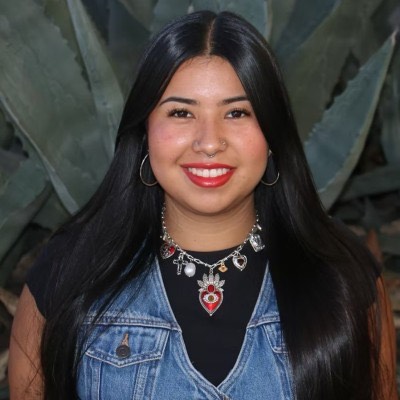
“I do know that a lot of people wanted to come to this game to support, but because of ICE … it's a lot of things, going back and forth about it,” Hennessy Hernandez told L.A. TACO.
She told L.A. TACO that the tournament being played across different countries was important, especially due to ICE attacking the Latino community.
L.A. TACO reported no credible reports of U.S. Immigration and Customs Enforcement in the lead-up to, during, or following the first game at SoFi Stadium on Friday. Security was high due to the presence of Department of Homeland Security Secretary Markwayne Mullin, Secretary of State Marco Rubio, and Secretary of Transportation Sean Duffy. Federal law enforcement present during the game was connected to their appearance, according to L.A. TACO.
I played club soccer for most of my life; I'd wake up early to play in all-day weekend tournaments. I'd get out of school, then my parents would drive me 30 to 45 minutes to practice three times a week. That was my life for a decade. Growing up on the pitch taught me valuable lessons: teamwork, humility, and perseverance. Playing in a World Cup was once one of my biggest dreams. When I decided to give up soccer at 17, I knew watching a World Cup match would be the closest I would get to reaching my childhood dream.
I was busy building my career, but I managed to sign up for the FIFA e-mail list to be notified when the 2026 World Cup match tickets would go on sale, and those notifications got buried in the chaos of my inbox. Then came the reports on ticket prices, and, like many others, they were out of my budget.
I was still on the fence about trying to attend, and then FIFA gave the current presidential administration an inaugural peace prize, which felt like an insult, especially in the midst of one of the most xenophobic administrations in American history.
It was cringe and tone-deaf for sure, but what does that matter to Infantino when he makes $6 million a year and is cozy with global leaders like Trump, Putin, and Crown Prince Mohamed bin Salman? These actions really should come as no surprise given FIFA's history of scandal; has it ever really been about building a global community of peace, or is it just a means to an end, another global corporation seeking to consolidate power and influence?
For now, I'm watching the games with my dad at home, or at the local bar. I'm not proud of my country this World Cup; I do not feel proud to be American. I'm not repping red, white, and blue.
And no, I will not chant "U.S.A.!"