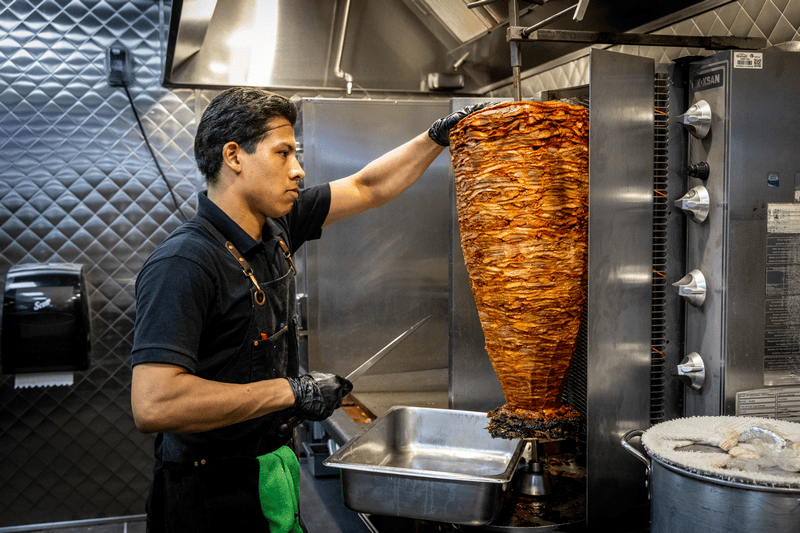
It’s the middle of June in Los Angeles. ICE and Border Patrol agents are swarming the city, especially its working‑class, Latino neighborhoods. In a small, crowded restaurant on a busy corner, the owner and head chef—let’s call him Mark—is frantically trying to get his employees home.
Some of them are U.S. citizens. Some are legal residents. Some are not. But they are all Latino, and they are all scared of being stopped, questioned, or separated from their families.
Even though it is a beautiful day in a very walkable community, Mark decides he will not take any chances. He calls an Uber for every single employee and sends them home one by one.
He walks each of them out, shielding their faces with his arm the way publicists shield celebrities from paparazzi. Only these are not celebrities. They are line cooks, dishwashers, servers—working‑class Americans trying to make an honest living in a city where federal agents feel ever more free to ignore the basic rights the Constitution is supposed to guarantee.
When Mark—whose real name is not Mark—told me this story, he also told me something else: Just a few weeks earlier, his restaurant had been the busiest it had been in years. But that was before we started to truly see and feel the financial impact of the raids.
This is the central contradiction of 2025: Latino culture has never been more celebrated in public, even as Latino communities and the small businesses that sustain them are being terrorized into hiding.
I’ve spent the past few months driving across Los Angeles checking in on restaurants, markets, bars, coffee shops—anywhere people gather to eat, talk, feel human.
And it’s a bit of the same story for many of L.A.’s eateries: In the first few months of 2025, business was slow. Part of that was the post-holidays lull most businesses experience. A bigger part of the downturn was the Altadena and Palisades fires which really impacted life in L.A. in many ways including the economics of owning and running a restaurant.
But since the early spring, L.A.’s restaurants were finally seeing light at the end of the tunnel. Then the indiscriminate and forceful immigration raids began and everything changed again.
“Restaurants are the canaries in the coal mine,” Barney Santos tells me. “When the economy goes bad, we’re the first to feel it.”
“When did being a restaurant owner stop being about feeding people and start being about being an event planner just to get bodies in the door?” - Barney Santos
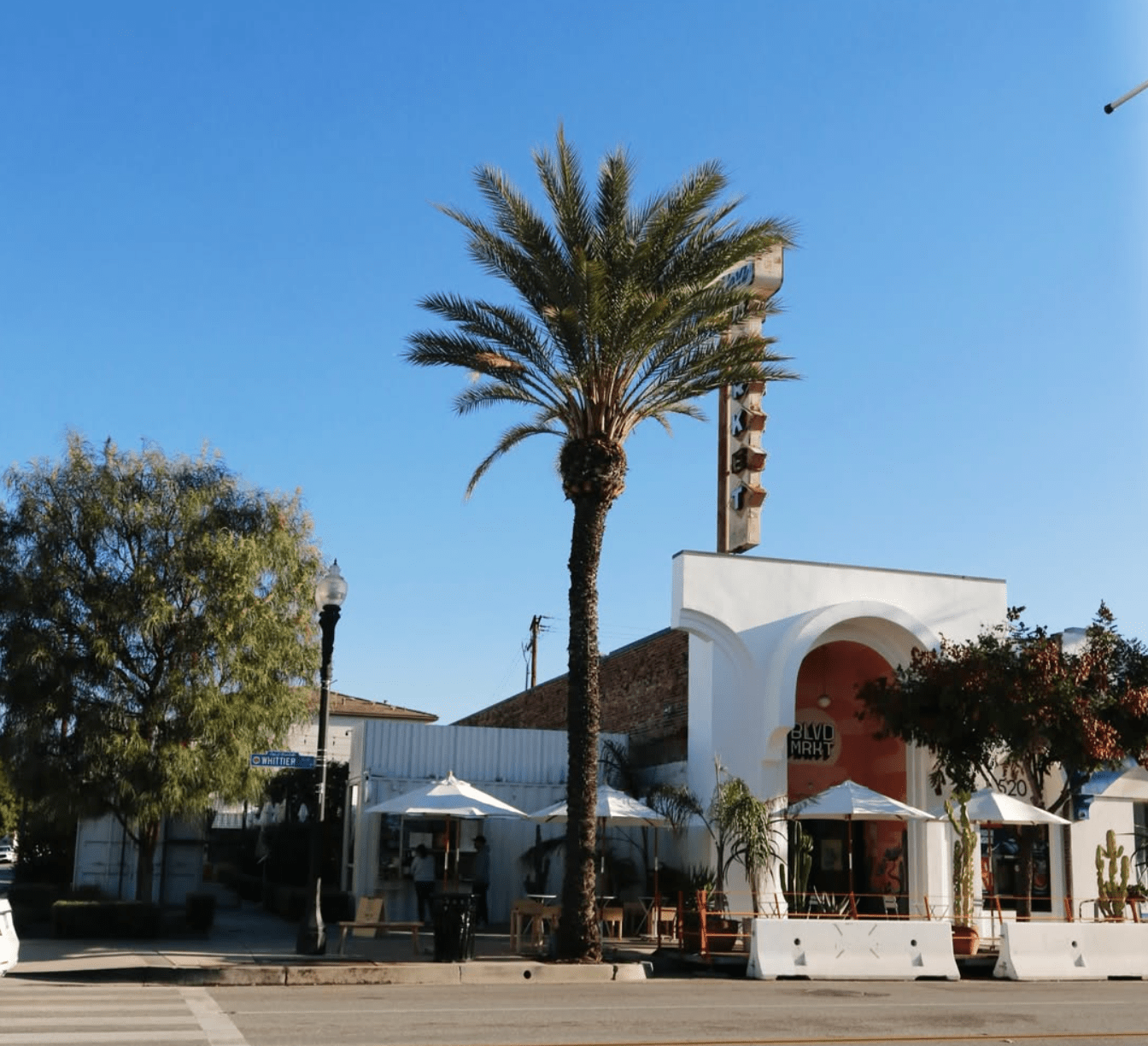
Barney Santos is the co-founder of the Montebello food hall BLVD MRKT, one of the most innovative food spaces in Los Angeles County for its repurposing of old shipment containers—lowering cost and waste—to create an open-air community space that often doubles as an events center. Barney and his wife Evelyn Santos founded and run BLVD and the food hall’s swanky bar Alchemy Craft.
Most of the time food halls like BLVD can weather economic storms because they naturally attract foot traffic. But this has been an exceptionally hard year even for them.
Barney tells me business is down 19% just this quarter and 30 percent year-over-year. That’s with constant pivots like community events and catering gigs.
“When did being a restaurant owner stop being about feeding people and start being about being an event planner just to get bodies in the door?”
Barney tells me the raids have cut into business in a way he’s never seen.
“Forty percent of people aren’t going out anymore,” he says. Raids wiped out foot traffic. Inflation spiked costs. Every restaurant and bar is pivoting to events now just to survive, which means BLVD’s events business doesn't work like it used to either.
“I’ve never seen this many restaurants close in my life,” he says. “Next year might be worse but thankfully we have been able to survive just by doing a lot more private catering events. It’s really saved us.”
It seems everywhere I go, I’m struck by the same whiplash: How is this one of the toughest years for food businesses in a generation at the exact same time Latino culture is having its biggest, loudest, most mainstream moment in American history? Bad Bunny is headlining the Super Bowl. Fuerza Regida, Grupo Frontera, Karol G, Peso Pluma—our artists aren’t just on the charts, they are the charts. Mexican flavors can be found on most fine dining menus; Spanish is the soundtrack to every festival and DJ set, and Jenna Ortega and Pedro Pascal are household names.
It should feel like the long-awaited Latino Renaissance.
Instead, restaurants—the heart of that culture, the vanguard of this belle epoque—are barely hanging on.
To get a better understanding of this wild juxtaposition, I called Ricardo Cervantes, co-founder of La Monarca Bakery, which turns 20 next year. Surely a popular chain like La Monarca has it figured out, I thought to myself.
Not exactly.
Ricardo and his partner Alfredo Livas, both Stanford business school grads, started with one shop in Huntington Park and slowly, carefully expanded to more than a dozen locations across L.A., plus packaged cookies and café de olla in Target and Costco. If success stories had a mascot, it would be the Monarch butterfly on their cups—migration, survival, transformation. But even they aren’t immune.
“This year has been harder than most,” Ricardo tells me over the phone. “On par with the pandemic.”
He said longtime customers—some even born here—are afraid to come in because of the ICE raids sweeping through working-class neighborhoods. Some of his employees are nervous too. And it’s not just them.
A 2025 ThinkNow study found that 44% of Hispanic consumers nationwide are avoiding public places like restaurants and stores because of fear of immigration enforcement. Nearly 45% said they’ve reduced spending altogether for the same reason. That’s almost half of a $4 trillion consumer market suddenly staying home.
But it’s not just paranoia. According to ProPublica, nearly 200 U.S. citizens have been detained during raids, some held for hours without warrants, others stopped simply because they “looked Latino.”
As someone who grew up with the Constitution drilled into me as a promise, it’s hard not to see that as a violation of the protections the Bill of Rights is supposed to guarantee every person in this country. If citizens can be targeted just for existing outside, how is anyone supposed to feel safe going out for a meal?
To help its customer base and possibly hurt their bottom line, La Monarca did what most businesses can’t afford to do anymore: they lowered prices on Uber Eats and DoorDash so the people too afraid to walk into a bakery wouldn’t be punished for staying home. Customers noticed and thanked them.
But it didn’t make a dent in the downward trend of losing 44% of consumers.
“These days, it’s not about growth,” Ricardo says. “It’s about trying to maintain.”
All around L.A., service-based businesses from chains like La Monarca to your average hole in the wall are trying to hang on.
Even the legendary upscale Oaxacan restaurant La Guelaguetza in Koreatown has pivoted into hosting more events, streamlining their menu, and offering experiences on Open Table, where you can buy a ticket to make pottery or tlayudas with professional artisans.
In Highland Park, Corissa Hernandez, co-owner of Nativo, sounds exhausted by all the hurdles of 2025 but resolute to fight the good fight.
“The ICE raids have severely impacted our businesses,” she says. “Some of my colleagues are down 50%. But we’re still here.”
That number didn’t even seem real to me at first, but then she told me what she’s seen: Staff members afraid to go to work, customers avoiding the streets, people being detained in Boyle Heights while unlocking their shops.
Corissa says she spent weeks feeling like she had to physically guard her door.
“It was mentally distressing,” Corissa explains. “Not just financially devastating—emotionally.”
She pivoted too. Renting out Nativo for meetings, brand activations, private gatherings—spaces where people felt safer.
“It’s helped,” she says. “But we’re still struggling.”
She tells me that many businesses in her network are just one rent payment away from closing for good.
Corissa points out something else that stuck with me.
She recently attended an event where the mayor said, “Don’t let anyone convince you that L.A. isn’t ready for the Olympics.”
Corissa just stood there thinking: How can a city be ready for the Olympics when more than 15,000 small businesses have shut their doors in the last two years?
It’s not just that the raids are happening; It’s that they’re happening on top of record inflation, supply chain hits, wildfires, and the lingering instability of the COVID years. Its crisis on top of crisis.
And maybe that’s the hardest part to reconcile: On one hand, Latino culture has never been more visible, more celebrated, more profitable. On the other, the very places that built that culture—the mom-and-pop restaurants, the food halls, the panaderías, the neighborhood cocktail bars—are empty.
The U.S. loves our music, our flavors, our style, our vibe. But the people and businesses who created it? They’re being pushed back into the shadows like it’s the 1950s again.
Except it’s not.
Nearly 1 in 5 Americans today is Latino and 79% of them are US Citizens, according to the Pew Research Center. The future is also Latino with more than a quarter of all Gen Z nationwide being Latinos, and the Latino population accounting for more than half of all U.S. population growth in the last decade.
This isn’t some small, marginal community hiding in the cracks of the country; this is the future workforce, the future consumer base, the future electorate. This is the demographic powering the cultural boom everyone profits from—while the neighborhoods that raised them are being emptied out by fear, raids, and economic freefall.
Every owner I spoke with is still fighting.
National and global brands that profit from Latino culture could also do something like put real money behind the communities that fuel their bottom line—through emergency relief funds, and commitments to keep sponsoring events in immigrant neighborhoods instead of pulling back at the first sign of controversy.
Ricardo is preparing a year-long celebration for La Monarca’s 20th anniversary. Barney is expanding his catering business. Corissa is protecting her staff and customers day by day.
They’re not quitting.
But beneath all of it is a quiet, steady alarm: If something doesn’t change soon, Los Angeles could lose the very places that made the Latino Renaissance possible. And if that happens, we won’t just lose restaurants. We’ll lose the heart of the city.
And here’s the thing, L.A. is a big, powerful metropolis with a big bureaucracy that isn’t exactly helpless to do something here.
City and state leaders could start by offering targeted grants and tax relief to small food businesses in neighborhoods most affected by raids, and by funding legal and mental‑health support for workers and families caught in the dragnet.
National and global brands that profit from Latino culture could also do something like put real money behind the communities that fuel their bottom line—through emergency relief funds, and commitments to keep sponsoring events in immigrant neighborhoods instead of pulling back at the first sign of controversy.
And all of us who can, should continue to eat and drink at our favorite L.A. joints and continue to express our public opposition to abusive enforcement practices, because we can’t let these restaurants continue to close on their own.
“It’s always an ongoing battle,” Barney tells me. “That’s just the restaurant business. Always has been. We keep fighting one battle after another but we keep going.”
It seems to me, even though this has been a wild year, in the long run we are winning. Or as the old union rally call goes, “When we fight, we win!”
Editor's note: L.A. TACO's Editor in Chief, Javier Cabral, co-wrote "Oaxaca: Home Cooking from the Heart of Mexico" cookbook, with Bricia Lopez, who is co-proprietor of Guelaguetza.