
If I close my eyes I can see it: Soldiers marching on an American city, clashing with protestors over liberty and justice.
The streets thicken with tension. Shouts echoing off buildings. A young man—barely more than a boy—taunts one of the soldiers guarding a government building. The soldier’s jaw tightens. The young man throws a piece of trash that hits the soldier square in the chest.
More soldiers arrive. The crowd grows thicker. They’ve been simmering for months—furious about being ruled by a dictator, a wealthy tyrant who's never walked in the shoes of regular Americans. Never marched on these streets for the right to live. Never had to go hungry for the night so his kids could have something to eat in the morning. Never fought in a war but ordered brave soldiers to descend against his own people.
Someone throws a rock, knocking down one of the soldiers. The tension goes from thickening to bursting open. And these two young men—a soldier and a protestor, both patriots in their own way—are pitted against each other by forces beyond them, leading to a bloody altercation.
That was March 5 of 1770—an incident forever known to history as the Boston Massacre, one of several protests against King George III leading up to the creation of the United States of America as a nation of people who refused to be ruled by a dictator, tyrant, or king, no matter how rich or powerful he sees himself.
I thought about that scene this week, as the country prepares for its second nationwide No Kings protest against President Donald Trump—who’s spent years bragging about being a “powerful dictator,” deploying troops into American cities, and working to consolidate his grip on power.
“The American Revolution started as a protest until the British continued escalating and eventually the American people kept standing up to them and stood their way into a new country,” Hunter Dunn told me during a phone interview Monday. Dunn is the press coordinator for one of the groups behind the Los Angeles faction of the national No Kings movement.
I decided to reach out to Hunter and the people behind the protest to try and understand what the purpose and timing behind the national anti-Trump demonstrations are all about. And Hunter said it comes down to being pro-democracy.
“Oct. 18 ended up being the sweet spot between urgency and preparation,” Dunn said. “The Trump administration is escalating—we needed to do something big soon—but mass mobilizations take real time: press outreach, training safety leads and de-escalators, recruiting as many volunteers as possible. Coming a bit after Labor Day also gave labor—one of the pillars of this coalition—the space to do their actions first."
Labor Day saw national “Workers Over Billionaires” demonstrations across the country.
Now I’m not saying Trump is King George III, but you get the feeling he would love to have that kind of power. He recently sounded proud when he said “we took the freedom of speech away.”
When I hear that, it’s hard to think of this weekend’s protest as strictly political. No matter who you voted for, being against an all-powerful executive branch should unite those of us who love democracy and the Constitution.
“There are three goals [for this event],” Dunn said. “First, a show of solidarity—people locking arms in their own towns so they know they’re not alone. Second, a united front against fascism: thousands of local actions, millions of people across 2,500 events in the U.S., territories, and abroad. Third, it’s about plugging folks into the long haul—mutual aid, defense groups, strike support—because one day of marching matters more when it grows the work that happens tomorrow.”
But this country is littered by peaceful protests for justice that have led to shed blood like the Boston Massacre, Bloody Sunday, the Chicano Moratorium, and countless others. Here in Los Angeles, we only have this past summer to look back at.
“The coalition takes safety incredibly seriously,” Dunn said. “Every event has a safety lead and a safety plan; those leads go through de-escalation and community-care training and share it with their teams. We push resources from groups like the ACLU and ‘know your rights’ trainings. In L.A., we’ll have hundreds of veteran labor volunteers and community defenders on the ground—calming presences who can de-escalate far-right agitators and protect the crowd.”
The first No Kings protest happened this summer, on June 14—Trump’s birthday—when thousands of people flooded the streets in more than two thousand cities across the country. Los Angeles showed up like it always does: loud, colorful, and riled up.
From Grand Park to MacArthur Park, the crowd pulsed with drums and heat amid a National Guard crackdown against mostly peaceful anti-ICE demonstrations. Families waved homemade signs that read “Brown and Proud” and “Los Angeles Melts Ice.”
Vendors sold aguas frescas and tacos al pastor under the beating sun. For hours, it felt more like a block party than an uprising.
Then came the shift.
By mid-afternoon, outside the Edward R. Roybal Federal Building in Downtown, police claimed that a few people in the crowd had begun throwing bottles and bricks. Protesters say it was the opposite—that officers escalated first, firing tear gas and flash-bangs into a sea of unarmed demonstrators.
"The police violence was totally unprovoked and has been the worst I've ever seen it in all my years of covering protesting," photographer Kemal Cilenigr, who documented the day's shift from peaceful to besieged on our site, said at the time.
With all these scenes in my head, it’s kind of hard not to wonder why there’s another No Kings protest days away at a time when tensions remain high across the country’s biggest cities.
Dunn says this time around, organizers have spent months regrouping, setting up local safety networks, legal observer teams, and community aid stations to protect each other from the next inevitable clash. He also said de-escalation tactics are part of the safety measures.
“De-escalation starts with space,” Dunn told me.
I asked him to give us a few tips on how to de-escalate.
He shares: “If a counter-protester shows up, you separate them from the crowd—put trained de-escalators between them and everyone else, essentially a human wall. With hostile ‘press,’ do a quick credential check; half the time their stream falls apart once their viewers learn who they are. Lead with calm and kindness when you can, be firm when you have to—the goal is protecting the crowd.”
This weekend’s protest is about reclaiming what it was supposed to be in the first place: a reminder that this country was built by people who stood up to kings, not bowed to them. It's one of roughly 80 actions happening around the L.A. and Southern California area.
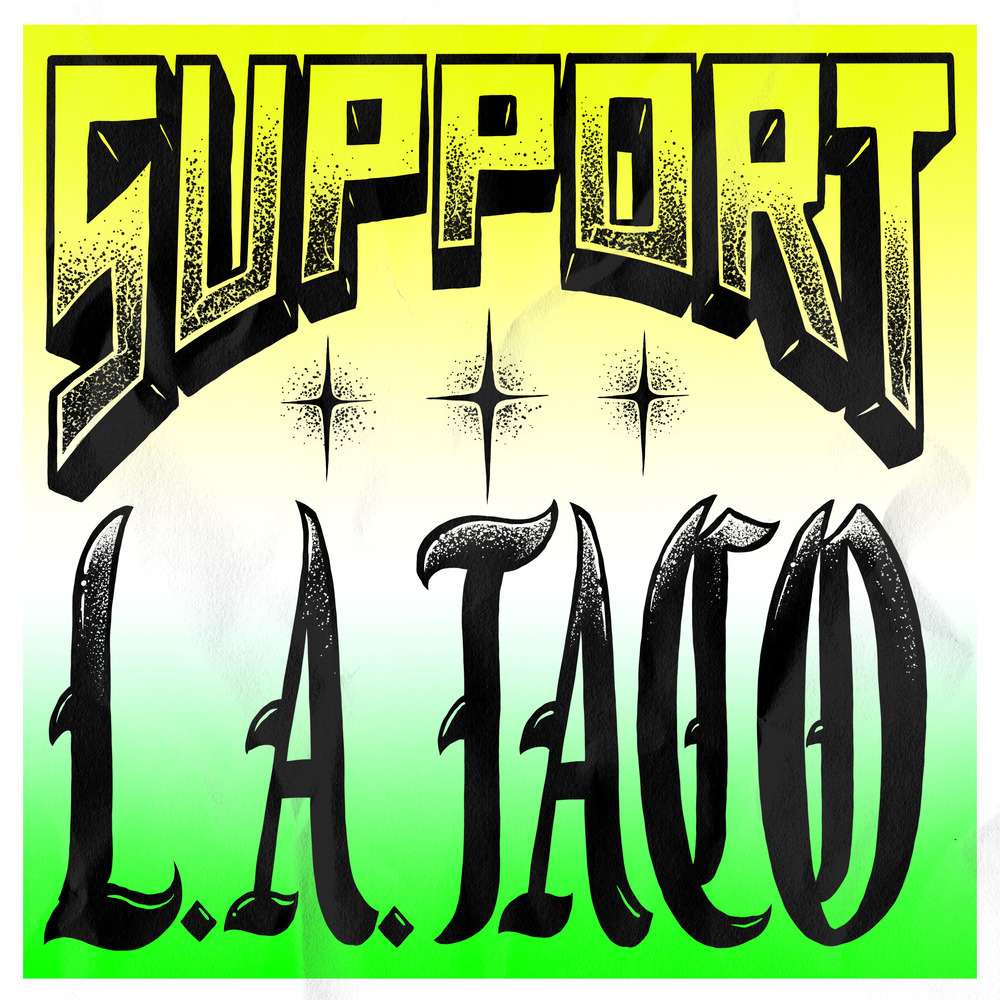
In Downtown L.A., there is even a taco costume contest taking place as a form of resistance.
“In L.A., that first No Kings day helped defang the occupation,” Dunn said. “It showed the emperor had no clothes—the people were in charge, no matter how many troops he sent. Curfews ended, the propaganda backfired, the raids and incidents dropped, and the show-of-force started to fade out.”
But in Los Angeles, protests are never just about one man or one administration. They’re about everything that piles up: the rent hikes, the ICE raids, the militarized police, the feeling that power keeps concentrating at the top while everyone else gets squeezed. It’s the same old story—different king, same castle.
That’s why people will show up again. Because this city has never trusted thrones. We’ve marched for immigrants, for tenants, for Black lives, for DACA, for Gaza, and for each other.
And we'll keep doing it as long as we have to.