

It’s a late Thursday night, and I’m crawling through traffic on my way back from a gig in Hollywood, inching toward Whittier. The freeway is a parking lot and I can’t take it anymore. I veer off the 210 and decide to cut through Altadena.
Altadena’s had a hell of a year. The Eaton Canyon fire—likely sparked by faulty Edison cables—scorched large parts of the community. I’ve been spending time here recently, especially at the restaurants that managed to survive. Spots like Fair Oaks Burger, Prime Pizza, MIYA, and a few others—places that feed a neighborhood still recovering and trying to rebuild.
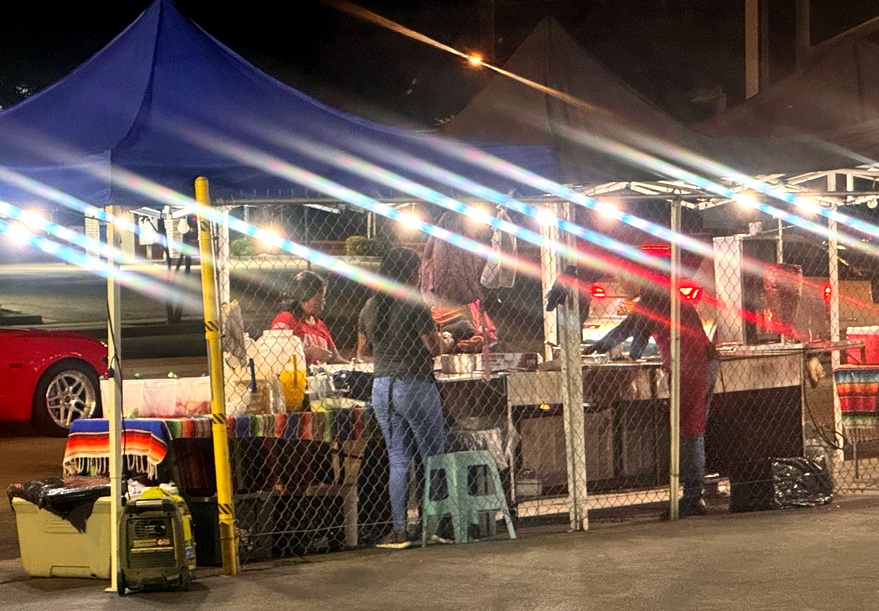
As I cruise down one of the town’s main arteries, I see it. At first, it looks like a mirage. Then, like an oasis. Damn my good luck, I just found what may be the last true street taco stand in Altadena.
Not a restaurant. Not a food truck. A real puesto ambulante. The kind you almost never see around here anymore. Not since the fires.
A man stands behind a plancha, cleaver in hand. Next to him is a woman rolling out masa into thick, oblong discs. The trompo glows like a beacon in the dark, spinning with caramelized slivers of al pastor, their edges crisp and glistening. Handmade tortillas puff on the comal, the smell of seared pork and fresh masa thick in the air. It’s one of the most beautiful sights in Southern California.
And the food? It doesn’t disappoint.

The tacos are excellent. But it’s the huarache that steals the show. A handmade oval of masa, wide as a sandal (hence the name), crisp on the edges and soft in the center, layered with refried beans, your protein of choice, bubbling cheese, shredded lettuce, diced tomatoes, and a salsa that kicks just enough to make you close your eyes. It’s delicious. One of my mom’s favorite street foods, I tell the taquero.
He and the tortilla lady look tired. We’re in the middle of a heat wave, and you can tell they’ve been out here in the hot sun. Thank god, I was in an air-conditioned studio all day long, and with the sun down, darkness envelopes us with a coolness that clashes against the steam of the parilla. I’m so lucky, I tell myself.
I’m also the only customer.
“How’s it going?” I ask in what I imagine is my own dialect of Spanish—a pastiche of L.A. pocho-isms, California mush mouth, and my parents’ Sinaloense swag.
Something about being out here in this moment with this lone taco guy makes me feel like I’m as special as he is.
He just shrugs and speaks in perfect Mexican Spanish, “It used to be busy before the fire. Every night. People from all over.”
He glances at the street—mostly empty.
“Now? It’s a crapshoot. Some nights, nobody comes.”
As we talk, I notice the woman working the register is yawning. So is the tortilla lady. I ask where they come from.
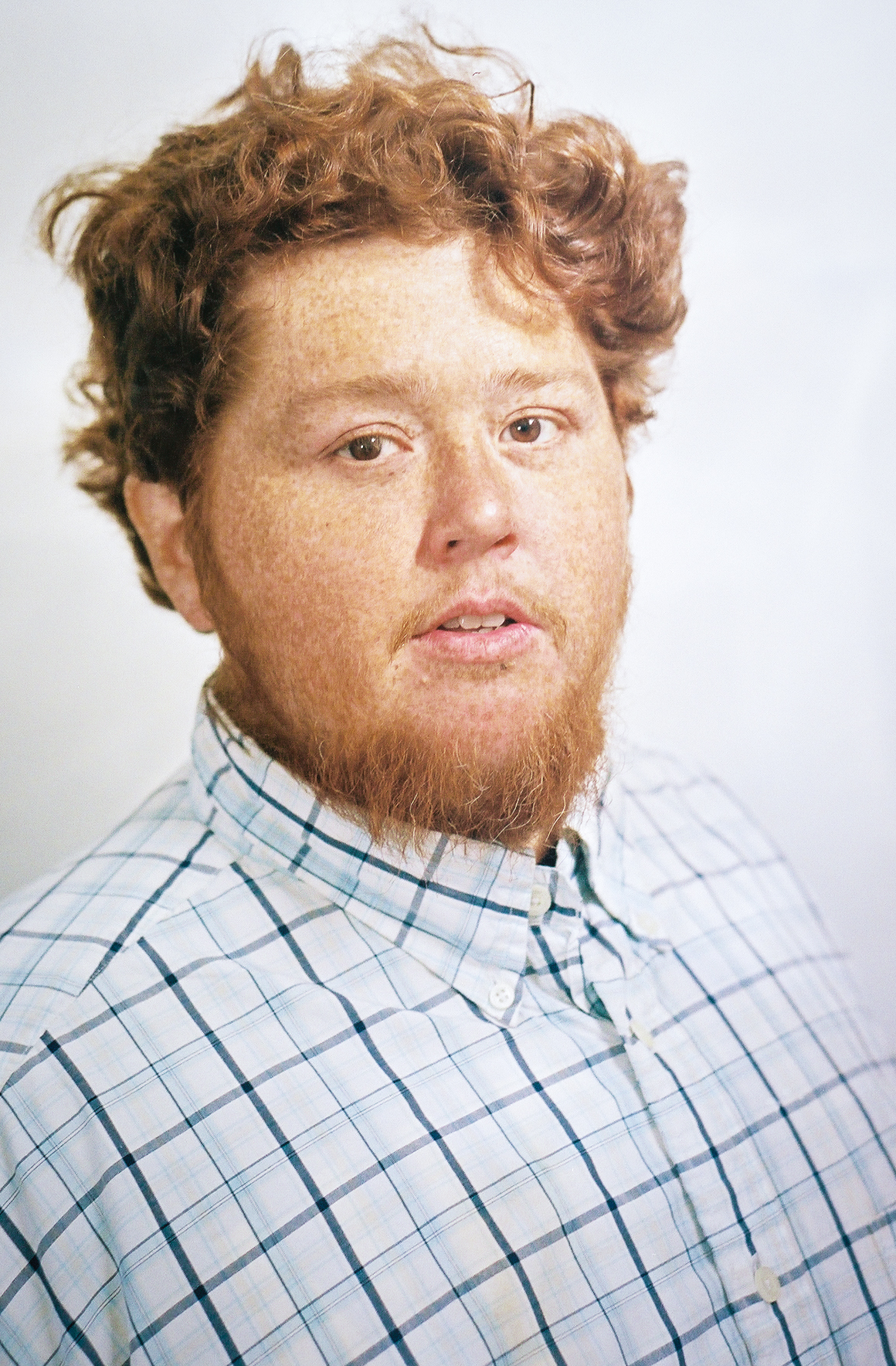
There’s something in their body language, a kind of weariness I recognize. And something else—a quiet suspicion. It’s like they’re not sure what to make of me. A redheaded Mexican guy, cracking jokes in mushy Spanish, asking questions.
“South Central,” they say. Every day, they drive here, set up shop, and hope.
Maybe they’re wondering, “What does this guy know about any of this?”
The truth is, I don’t. Not really.

Altadena is hurting. Homes are gone. Businesses burned. Some people never came back. I look around. It's dark, eerily quiet. But in front of me is a plate of tacos: crispy handmade tortillas, juicy carne asada, topped with piping hot pinto beans, and salsa that tastes like it was made in someone's grandma’s molcajete.
Then—
Sas! A squeeze of lime. A bite of cucumber. A sip of cold horchata. For a moment, I feel okay.
Then comes the huarache.
A huarache is a hell of a thing to try and eat standing at a street food stand on a hot Thursday night. But I do my best.
First, I try taking bites off it while holding the plate like a slice of pizza. That’s a mess. I try a fork, then hands, then both. Slowly, like the girl in the Shel Silverstein poem eating a whale, I take it down. One bite at a time.

People start showing up. A man orders two tacos. Then two women stroll up. The taquero calls one of them “madre”—not his actual mom, just a term of endearment. She looks startled by the familiarity, but rolls with it.
“¿Qué tiene?” she asks.
He runs through the list like a pro: “Al pastor, carnitas, asada, chorizo, pollo. Tenemos papa loca, mulitas, quesadillas, burritos. Y me queda una última papa loca—¿qué quiere, madre?”
There it is again, “madre.” I wonder where that term of endearment comes from, what region of the world this young taquero’s people are from. My guess would be southern Mexico based on his accent and slang. But every time I try to pry him into his personal life, he's on guard.
I say, “Hey, you know what? Give me that last papa loca. I’ll take it to go because I don’t think I can fit another bite.”
This time he laughs. He’s finally warming up to me.
“At first,” he says, “I didn’t understand you. I didn’t even realize you were speaking Spanish.”
“I’ve been told I have a mush mouth,” I laugh.
The taquero takes a foil-wrapped baked potato from the corner of the griddle, slices it open, and flattens it like a butterfly. He sears the exposed flesh on a slick of butter until it crisps up like the edge of a hash brown, then loads it with juicy grilled chicken and tops it with a generous layer of melty cheese that fuses into the potato like lava.
In about 15 hours, I’ll eat it. It will be incredible, even reheated. I’ve never had chicken that good from a taco stand. I’m generally anti-chicken at taco spots—unless it’s a pollo specialist, I don’t order it.
Hell, I’ve never had a papa loca I actually liked. But something about that papa loca and pollo called to me. And I’m glad I gave in.
But that’s later.
Right now, I tell him I’m a journalist. I write for L.A. TACO. I asked if he’d ever want to do a video. He looks around toward his taco teammates, his shoulders tensing again. He clearly is torn. On one hand, maybe it could help stir up some business—scratch that. SIRENS! Cars screeching. Lights flashing in the distance. The taquero’s face drops like a stone.
Turns out it’s just a routine traffic stop. But his reaction says it all.
I saw a post on Threads the other day that said something like, “In L.A., seeing a ‘F**k ICE’ sign at a restaurant is like seeing a Michelin star. That’s how you know the food’s good.”
But I realized at that moment that this taquero doesn’t have the luxury of putting that sign up. Not if he wants to keep being the last taco stand in Altadena.
So no—I’m not gonna tell you where this puesto is. If you know, you know.
If you don’t, go up there and explore this resilient town’s great eateries. I’m sure you’ll find it. But if you’re the kind of person who goes creeping instead of supporting—well, you don’t deserve tacos like these anyway.


