After a federal judge banned the Los Angeles Police Department (LAPD) from using 40mm foam projectile launchers in crowd-control settings, the LAPD dug into their seemingly endless arsenal of so-called “less-lethal” weapons and replaced the 40mm with another “less-lethal” launcher known to seriously injure people: the Fabrique Nationale de Herstal 303 (FN303).
The FN303 shoots high-speed .68 caliber projectiles containing small pieces of metal and sometimes chemical irritants or paint that cannot be washed off. The rounds are designed to cause a “dissuasive level of pain,” according to the weapons manufacturer, while the paint allows law enforcement to mark certain people for arrest or questioning later.
In 2004, a woman in Boston died after being shot with an FN303.
“Since we don't have access to the [40mm launcher], the FN303 is an alternative option,” LAPD Chief Jim McDonnell admitted during a Board of Police Commissioners meeting last Tuesday. “[And] we're looking at other options that are available as well on the field.”
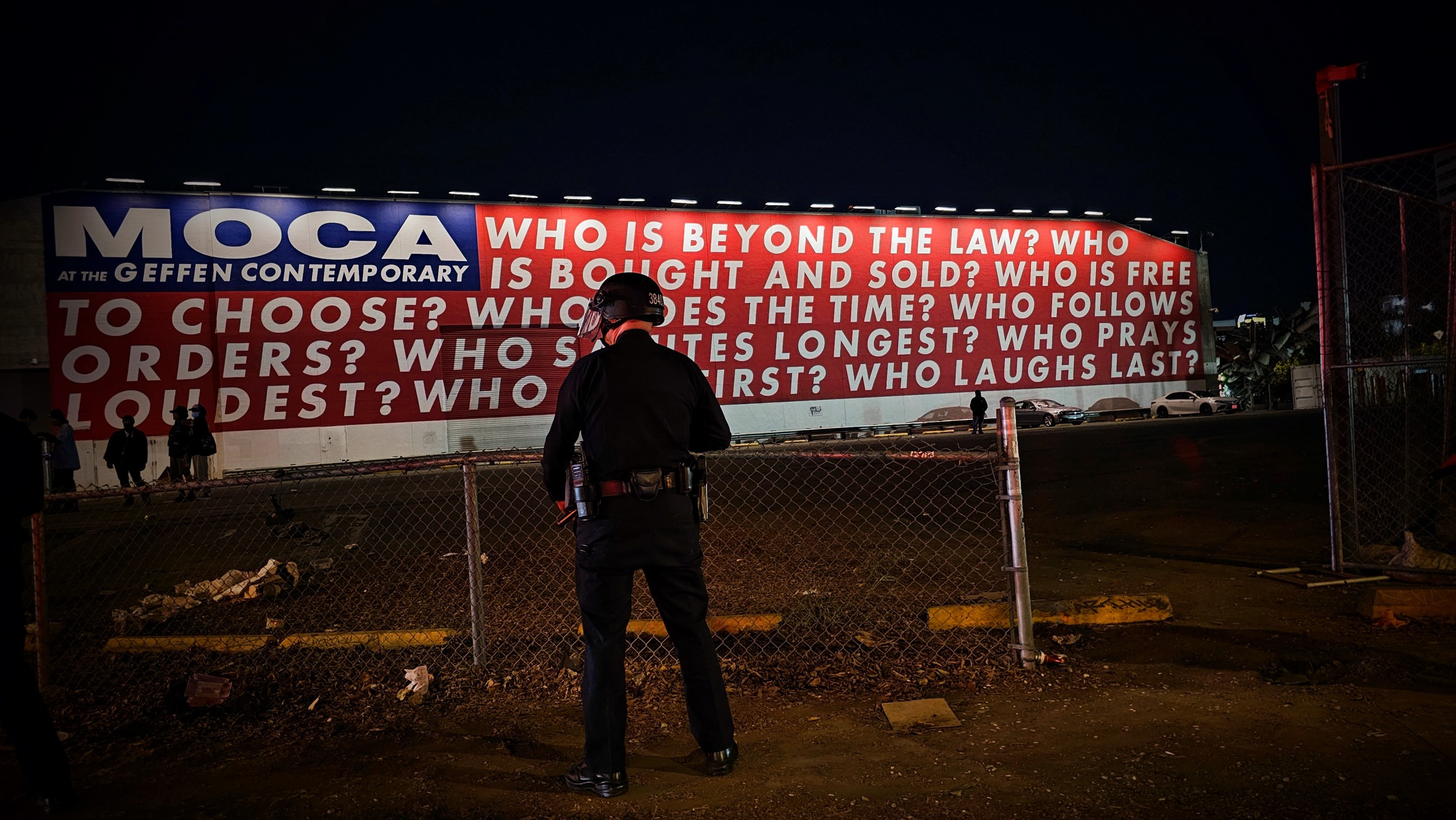
At around 6 p.m.on Friday, January 30, heavily-armed Los Angeles police responded to a protest outside of the Metropolitan Detention Center (MDC), in what was the first major test of the judge’s order banning the use of the 40mm launchers.
The LAPD was called to the scene after a peaceful protest “escalated, acts of vandalism occurred, and objects were thrown at” federal agents guarding the Metropolitan Detention Center, Chief McDonnell told the Board of Police Commissioners.
“Federal officers reported that a door to the facility had been breached and that individuals were attempting to ignite materials near the roll-up doors,” McDonnell explained. “At that point, the situation shifted from protected speech to an immediate safety concern.”
“Based on the ongoing threat to officer safety, the incident commander authorized the use of department-approved less lethal options, including the 37mm launchers and the FN303,” McDonnell explained. “These tools were used only after repeated dispersal orders failed and criminal activity continued throughout the incident.”
Within minutes of authorizing the use of the FN303, a person was seriously injured.
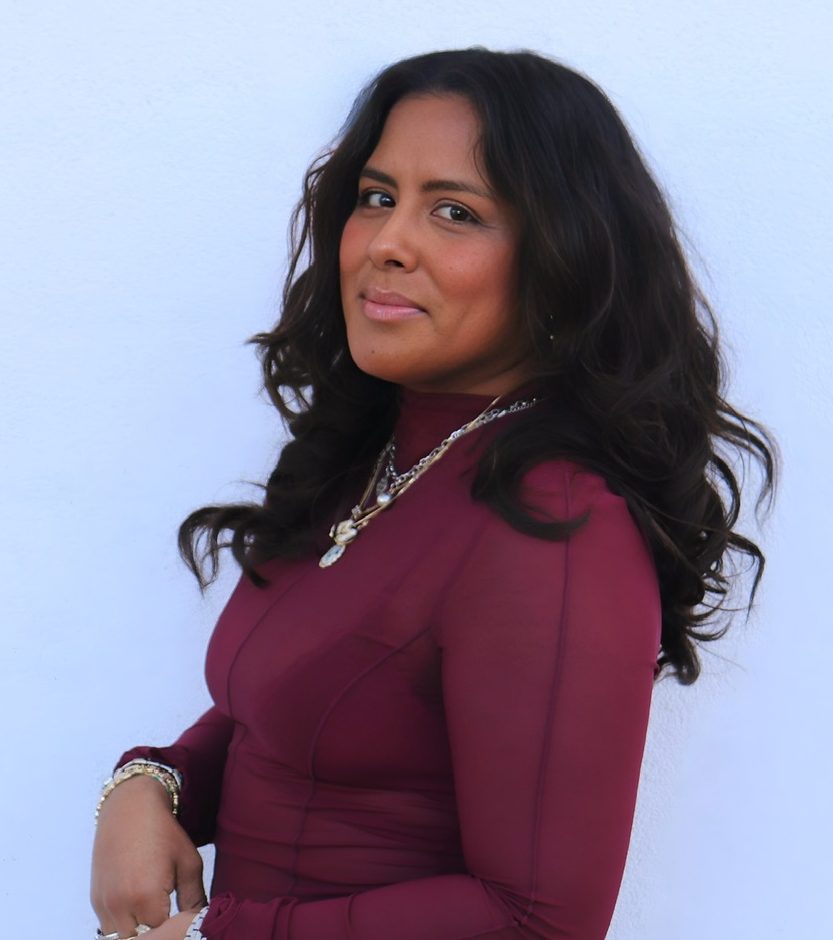
While protesters stood toe-to-toe with a line of police officers on the corner of Alameda and Commercial Streets, 25-year-old Jasmin Lomas sat on the curb with two girls whom she met up with earlier.
“I thought I was far enough to where I wasn't going to be in the midst of [any violence],” Lomas tells L.A. TACO during an interview.
Then seemingly out of nowhere, “people started running.”
As people took off, Lomas got up from the ground and lost track of the two girls she was sitting with.
Standing from a point that she felt she was far enough behind the frontlines of the protest to remain safe, Lomas fumbled with her phone trying to take a photo or video of what was happening to send to a friend who was going to give her a ride home later, as police pushed the crowd towards Temple Street. The friend wanted to know what area she was in.
“And that's when I was hit in the face,” Lomas says. Later, she found out it was an FN303 round that struck her.
Getting hit with an FN303 round in the right cheek felt similar to a basketball smacking her in the face, the young mother of two children recalled later. But at first, she wasn’t sure what had happened.
“I put my palm over my face, and I looked down, and I was confused,” Lomas describes. “I didn't see any blood, so I just started walking forward, and I remember a girl ran up to me and told me that she had caught it on video.”
Then people started crowding around her while taking pictures and videos of her face.
“When I moved my hand … I didn't know what was wrong with my face, but just by their reaction, that made me panic,” she says.
Lomas was then taken to a nearby parking lot where a volunteer “EMT” helped treat her wound.
“He helped with the bleeding,” Lomas says. “And then they called 911.”
Lomas arrived at the hospital in an ambulance at around 7 p.m. She didn’t leave until roughly three o’clock in the morning, she says.
“At first, they didn't really know how to handle it,” she explains.
Nurses kept coming in and out of the hospital room where she was being treated, and even when the plastic surgeon got there, they had to consult their supervisor by sending texts and taking pictures of the wound to make sure they were following the proper procedures.
Hospital staff told Lomas that the projectile left “glass” and small particles of metal inside her wound, and her skin was burned. The round just barely missed her eye, Jasmin recalls the doctor telling her.
“I could be wrong, but I believe the plastic surgeon that did my stitches was saying that it was like a centimeter or so from my eye,” Lomas tells L.A. TACO. “It was basically like the perfect shot, like it didn't break my bone. [And] I had just gotten a piercing, and it didn't hit that area either.”
The wound required two layers of at least eight stitches, she says.
A CT scan confirmed that doctors were able to remove “all of the big pieces of glass” from her face but small pieces of metal remained inside the wound even after she left the hospital, Lomas says.
Doctors told her that her “body would push [the metal] out.”
“I felt on my face like one or two already surfacing,” she says, nine days after being shot.
Photos reviewed by L.A. TACO show that Lomas was hit with an FN303 “marker round” containing a mix of small pieces of metal and indelible yellow paint enclosed in a plastic shell.
“Our client was participating in a lawful demonstration to raise awareness about the devastating impact of ongoing ICE raids on her community—an issue that has instilled fear and instability across countless families in Los Angeles,” writes Paul Aghabala, an attorney representing Lomas, in a statement to L.A. TACO. “Instead of protection, she was met with unnecessary force, resulting in serious injuries.”
“This conduct demonstrates a profound failure of leadership, accountability, and respect for civil liberties,” he continues. “When law enforcement responds to peaceful dissent with violence, it sends a chilling message that constitutional rights are conditional, undermining public trust and democratic principles.”
Aghabala called for an immediate investigation, accountability for those responsible, and reforms “to ensure that law enforcement upholds, rather than suppresses the rights of all peaceful demonstrators.”
A GoFundMe was set up to help Lomas with her recovery.
Chief McDonnell and the LAPD did not respond to a request for comment.
A Legal Observer and Journalists Shot
Lomas was one of several people who appeared to have been hit by FN303 rounds on the night of January 30.
Di Barbadillo, a legal observer with the National Lawyers Guild (NLG) who was out monitoring Friday’s protest, similarly tells L.A. TACO that a fellow legal observer was also shot with an FN303 round containing yellow paint near the intersection of Alameda and 1st Streets, not far away from where Lomas was struck.
They were hit “just below their wrist” while holding their phone above their head with two hands, Barbadillo explains.
A photojournalist who does not want to be identified, for fear that they might be further targeted, was also shot with an FN303 while standing at the corner of Alameda and 1st Streets. They were hit twice in their chest. One of the rounds hit them directly in their LAPD-issued press pass.
The photographer tells L.A. TACO that they were shot while standing approximately 20 feet away from police, and were clearly identified as press, at a time when the protest was “calm.”
“There was no need to be shooting at people in general, especially at press that is clearly identified,” the photographer says.
The reporter of this story was also hit with at least one round, believed to be shot from an FN303, leaving yellow paint permanently splattered on their backpack, bike helmet, and pants.
The LAPD has had access to the FN303 for years now, but began using them more frequently during the anti-ICE and Trump protests over the summer of 2025.
Before June of last year, the LAPD had used the FN303 only once in a crowd-control setting since April 2024, according to LAPD reports reviewed by L.A. TACO. On the night the Dodgers won the World Series in October 2024, the department fired seven FN303 rounds.
During the first wave of protests in early June, LAPD officers fired over 240 FN303 rounds by comparison.
Now, following the decision by a federal judge who is overseeing a lawsuit between Black Lives Matter and the city, banning the LAPD from using 40mm foam launchers, the LAPD seems to be prepared to use the FN303 even more frequently.
When Police Commissioner Jeff Skobin asked if commissioners should expect to see the FN303 more "present" at protests during last week’s Police Commission meeting, McDonnell responded: “Yeah, since we don't have access to the [40mm launcher] the FN303 is an alternative option."
"[And] we're looking at other options that are available as well on the field.”
“So basically the BLM case took away one toy, so they grabbed another,” says Adam Rose, the press rights chair for the Los Angeles Press Club.
“This is why I generally don’t like listing out weapon types in court orders,” he continues. “If you forget one of the gazillion options, they find it.”
Rose highlights an instance over the summer when Los Angeles police fractured freelance journalist Sean Beckner-Carmitchel’s ribs and split journalist Nick Stern's chin open. A judge overseeing a lawsuit filed by the L.A. Press Club didn’t hold the city in contempt because the judge’s order didn’t limit the LAPD’s use of batons, Rose explains.
In recent weeks, multiple people have been shot in their faces with so-called “less-lethal” munitions during protests.
The night after Lomas was shot in her cheek, a young man—reportedly on his way home—was allegedly shot directly in his eye with a “pepperball by an LAPD officer, ” according to a family member speaking with L.A. TACO. (During last week's Los Angeles Board of Police Commissioners meeting, Chief McDonnell said that they believe DHS was responsible for the shooting, not the LAPD).
The injury was so severe that the victim is now blind in their right eye, according to a GoFundMe page.
Earlier in January, federal agents blinded two protesters in Santa Ana. One of the protesters told the Times that they were hit with “a round plastic pellet that was filled with a pinkish powder.”
“Whatever euphemistic term people use for these weapons, all of them are known to maim people for life,” Rose said. “They’re only appropriate when the only alternative is lethal force.”
L.A. TACO staff reporter Izzy Ramirez contributed to this report.