
This article was co-published with La Opinión, the leading Spanish-language news outlet in the U.S., and produced under the California Local News Fellowship program at the University of Berkeley.
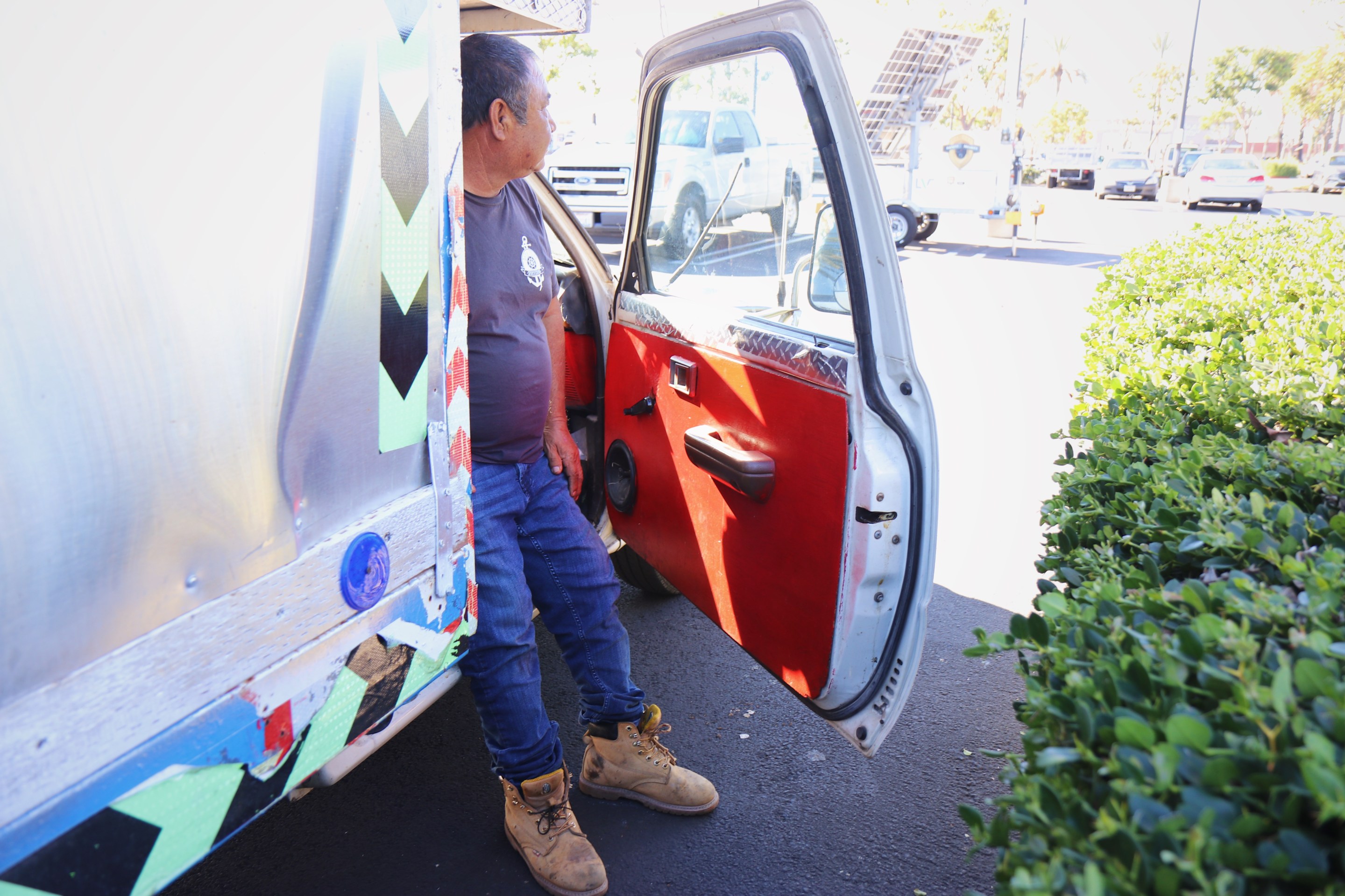
It is early in the morning when José, a day laborer who prefers not to reveal his full name for security reasons, waits outside a Home Depot store in Orange County to be hired.
While sharing coffee and bread with an advocacy group patrolling the store's parking lot, he tells us that in recent months, it has not been easy to go out and look for work.
José reports that in the last two weeks, attempts to conduct raids at Home Depot, where he usually asks for work, have increased.
“The raids have affected us a lot; we are afraid to come here and expose ourselves, just hoping that someone will hire us to work; they have already taken several people,” said José in Spanish. “And then it's not just about always being on alert, but sometimes, if they hire us, they threaten us with ICE so they don't have to pay us.”
According to the labor centers and day laborers in Los Angeles, Orange County, and the Inland Empire with whom we spoke, reports of threats of reprisals related to immigration enforcement have increased since the raids began in June 2025.
One of the most common cases is when day laborers are hired but threatened with being reported to U.S. Immigration and Customs Enforcement (ICE), especially if they file complaints about working conditions or wage theft.
“It has definitely increased since Trump took office; employers use that fear to abuse these day laborers and force them to accept poor working conditions, low wages, or even no pay at all,” said Alexis Teodoro, director of the Center for Economic Opportunity in Pomona. “Right now, I am representing two-day laborers who were threatened with a call to ICE if they continued to exercise their right to claim the wages they had already earned and were owed.”
José is one of ten day laborers with whom La Opinión spoke personally in Orange County, who report being threatened by their employers with calls to ICE in recent months. As a result, they did not receive payment for the work they did, which, in José's case, took more than a week to complete, working eight or more hours a day.
“There are people who hire us and treat us well, and others who are the devil himself,” José said. “Thank God it hasn't happened to me much, but when it does, it hurts, because this is how we make a living, and there's hardly any work to begin with.”
His colleague, Manuel, who also prefers not to share his full legal name for security reasons, said he was hired last year by a man who did not pay him.
“A man came who needed to do some repairs on a house in Costa Mesa, and I agreed to go for about a week. I worked, and then he didn't pay me anything. When I demanded payment, he took out his cell phone and threatened to call ICE,” Manuel recalls. “It's nothing new for us to be scammed because these types of people don't do it just once; they do it constantly, taking advantage of us, but someday they'll pay for what they're doing.”
José and Manuel have not reported their cases to the California Labor Commissioner's Office, mainly because they say they fear they will not be believed, as they have no contract or documentation of what happened or the work they did. The two, like other day laborers, face a double threat during raids: being detained or threatened with ICE, or even physically assaulted, by employers.
Teodoro says that economic opportunity centers, such as theirs in Pomona, are not safe from raids either.
“Unfortunately, not only have employers threatened our members with immigration, both at the center and in the warehouses, but immigration agents have taken action against our center on multiple occasions,” Teodoro explains. “More than 80 immigration operations have been carried out outside Home Depot stores in Pomona, Riverside, and San Bernardino. As a result, we have also seen a decline in the number of day laborers seeking work.”
The director says that anything can lead an employer to refuse to pay a day laborer. One reason is that employers may consider that the person did not meet their requirements or standards, or anything else that might upset them. They may hint at a possible wage reduction, suspension of payment, or threats to call immigration authorities to avoid retaliation by the worker.
“Day laborers are directly affected by the raids. Not only is there little work, but many report wage theft and threats to call Immigration,” says Teodoro. “And they don't qualify for most of the state's social safety nets, so they're trapped in this cycle of poverty that has been further exacerbated under the Trump administration.”
The first threat the Pomona center received came from a potential employer who was upset because a day laborer declined his job offer. Teodoro reveals how the employer called the center to hire a day laborer to fill a hole in the wall.
“He didn't like the quote the day laborer had given him, and the day laborer ended up turning down the job because the person didn't want to pay him what he was asking,” Teodoro recounts. “He got angry and threatened me, saying he was going to call ICE to report our workers and the center. He did it via text message, so I reported the incident to the California Labor Commissioner's office.”
Another case Teodoro is assisting with involves a day laborer from Home Depot in Pomona who came to the center to report his experience with an employer.
“He told us that his employer made him work for a few months and then fired him, paying him for only one week's work,” explains Teodoro, who prefers not to reveal the names of the day laborers while their cases are being investigated. “We decided to file a wage claim, and after asking him a few more questions, the day laborer said that this person had threatened to report him to ICE because he kept contacting him to get paid.”
“He told him that if he kept calling to be paid, he would call ICE and threatened to physically assault him, which scared the day laborer,” he added.
When asked what solutions could be implemented to help day laborers, Teodoro said there are several things that can be done at the state and local levels.
For starters, he says that right now the Labor Commissioner’s office takes a long time to process wage claims, and he would love to see a special task force created that focuses solely on claims filed by day laborers and centers.
“In my opinion, the rate of wage theft faced by day laborers is higher than that of other workers, as it occurs almost every week,” said the organizer. “In the last week alone, five workers reported wage theft.”
As for José, 35, who continues to visit Home Depot in search of job opportunities, he says that, thanks to advocacy groups like Lucha Santa Ana, he is less fearful to go out because he knows volunteers have his back.
He has already experienced several occasions when the advocacy group has been able to scare off immigration agents without anyone being detained. He says he is currently working as a day laborer to survive, but hopes things will improve so he can study someday.
“This is a place where people come to look for work, not to do anything wrong. We just come here to better ourselves and support our families,” says José. “Although I'll never understand why they treat us this way, we have no choice but to put up with it and hope we don't end up with an abusive boss.”