


Skip to Content
ICE

Immigration Enforcement Cost L.A. Businesses $3.6 Million in June Alone, New UCLA Report Reveals

“. . . for a business, the closer you are to a place where enforcement happens, the worse it is for your customer visits,” Amada Armenta, a lead researcher, says.

3:58 PM PDT on July 22, 2026

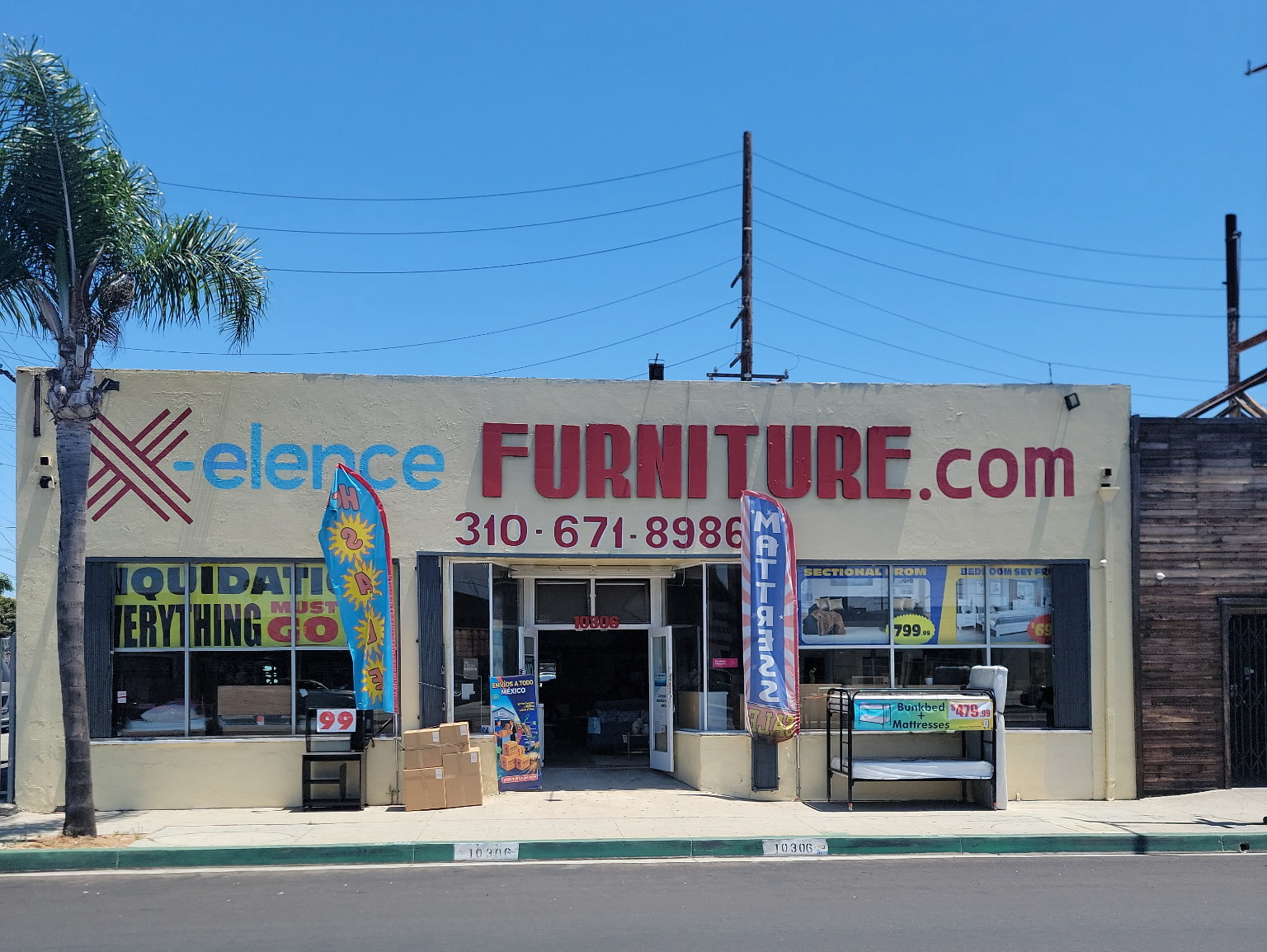
a furniture store exterior

Photo courtesy of X-elence Furniture.

Gonzalo Monti tells L.A. TACO that business wasn’t even as bad as it is now back during the pandemic.

Since the federal immigration siege began in Los Angeles in June of 2025, the owner of X-elence Furniture on Hawthorne Boulevard in Inglewood says he’s lost over 60% of walk-in customers, which is reflected in its sales. The furniture shop has lost an estimated $40,000 per month on average since an immigration enforcement raid took place just two blocks away.

A new UCLA Latino Policy and Politics Institute (LPPI) and Inclusive Action for the City report found that immigration enforcement surges that occurred in June of 2025 resulted in substantial and sustained economic and physical health ramifications for businesses and Latino entrepreneurs across Los Angeles County. 

Researchers found that during two-week periods following enforcement operations, businesses in nine areas within a half mile of immigration operations had 46,000 fewer customer visits and around $3.16 million in accumulated revenue loss, when compared to the two weeks prior to the enforcement actions. 76% of Latino entrepreneurs who researchers interviewed said they experienced substantial emotional impacts from immigration enforcement operations, as well.

A map showing immigration enforcement sites and Latino population sizes in Los Angeles County. Image via "The Cost of Fear" report by UCLA Latino Policy & Politics Institute.

“It was silent,” Monti says. “Everything stop[ped], like in the pandemic.”

When the immigration raid happened, he said the normally heavily trafficked boulevard grew quiet. He estimates that the area his store is located in is about 90% Latino. 

A bar graph depicting the decline of foot traffic near enforcement sites, dependent on how long ago enforcement occurred. Image via "The Cost of Fear" report by UCLA Latino Policy & Politics Institute.

L.A. TACO could not confirm if the incident Monti referred to was a federal immigration operation at the time of publishing. We have reached out to Immigration and Customs Enforcement, Department of Homeland Security, and U.S. Customs and Border Patrol for comment confirming the incident that Monti identified.

June 2025 was a time of great confusion; federal immigration agents appeared to be descending all over Los Angeles. Videos were going viral of people being detained, including U.S. citizens. People were not used to having to differentiate between different law enforcement agencies, and there was a widespread feeling of mistrust of law enforcement in general–that continues to this day. The fear was palpable in the air, and it still lingers over Los Angeles.

In the time since, to make ends meet, he has had to let go of at least four of his staff, begin renting part of his warehouse to Amazon, reduce the number of days he makes deliveries, and is now handling everything himself. 

Monti says there have been at least four or five people who have called him, on behalf of those who were detained by federal immigration agents, to tell him they will no longer be able to pay their credit debt. 

A neighborhood market that had been around for thirty years closed down a few months ago, and a nearby bakery, too. He suspects due to the fear around immigration enforcement. To get the business back to where it once was, he says it's going to take a long time.

Santa Fe Springs Swap meet on Saturday evening empty and closed after a Saturday raid. Photo by Janette Villafana for L.A. TACO.

The UCLA report examined business corridors in nine neighborhoods: Fashion District, Warehouse District, Westlake, Cypress Park, Paramount, Huntington Park, Whittier, Pacoima, and Ladera Heights. Immigration enforcement operations included in the report included raids at Ambiance Apparel and several Home Depots. Researchers reviewed data from 989 businesses and interviewed 75 Latino entrepreneurs. 

The report draws from both qualitative and quantitative data. Researchers used mobile location data, like cell phone pings to count business visits before and after immigration enforcement raids in June 2025. The quantitative data was limited to brick-and-mortar establishments. 

Data for businesses within a half-mile of where the enforcement actions occurred was reviewed. Qualitative data were drawn from 75 interviews with Latino entrepreneurs, ranging from street vendors to brick-and-mortar business owners across L.A. County, in which they were asked about their experiences with immigration enforcement. 

Amada Armenta, one of the lead researchers of the project, tells L.A. TACO that businesses within a quarter mile of an immigration enforcement raid experienced twice as much foot traffic loss when compared to a half a mile away.

“ . . . for a business, the closer you are to a place where enforcement happens, the worse it is for your customer visits,” Armenta says.

Researchers estimate that countywide business decline due to federal immigration enforcement could have resulted in $52 million in losses over a two-week period and $114 million over a month. 

A line graph depicting the cumulative estimated revenue loss for businesses near enforcement sites. Image via "The Cost of Fear" report by UCLA Latino Policy & Politics Institute.

Latino business entrepreneurs interviewed said they experienced fewer customers and sales, temporary closures and reduced hours, and staff missing due to fear.

“The first operation was two blocks from my store. Helicopters. Complete chaos. From that day on, people were afraid to go out. You would hear all the merchants pulling down their metal gates,” a party supplier referred to as Berenice told researchers.

The damage to the surrounding communities was not limited to financial losses but also manifested in physical health impacts. In their interviews of dozens of Latino entrepreneurs, they found sustained psychological and physical impacts that resulted in limiting the ability to work, difficulties managing businesses, and making a recovery from those events. 

A man being wrestled to the ground by Border Patrol agents. Screenshot via GoFundMe.

”My husband got scared and did not want to go out, and we barely worked for five months. The savings were running out . . . And it triggered so much stress, the pressure, the expenses, and I developed facial paralysis. I ended up in the hospital; my blood sugar went up,” Lourdes, a street vendor, told researchers in the report. 

The health impacts included: fear, anxiety, depression, sleep disruption, hypervigilance, stress, gastrointestinal disorders, panic attacks, and worsening chronic conditions. People they spoke to also discussed needing to begin new medications, more frequent medical visits, and even needing to be hospitalized. Researchers say that these adverse health impacts are outcomes of immigration enforcement and the resulting economic damage.

“Small businesses and commercial corridors have sat vacant, while business owners and workers struggle, and families suffer,” Rudy Espinoza, CEO of Inclusive Action, said in a press release. “This research shines a spotlight on the horrific toll these policies have taken and gives our community members a platform to share their truth.”

Armenta told L.A. TACO that researchers hope that their report will be turned into policy recommendations, and that they will be collaborating with other nonprofit organizations and community leaders on how to make that a reality.

Stay in touch

Sign up for our free newsletter

More Stories

Don’t Want the Dodgers at the White House? A New Petition Is Gaining Momentum

Currently, the petition has over 2,000 signatures, with a first goal of reaching 2,200. That's 1/28th the amount of people that can fit into Dodger Stadium.

July 22, 2026

Is Gentrification Ruining Mexico City’s Iconic Lucha Libre?

The Consejo Mundial de Lucha Libre was accused of gentrifying lucha libre. The truth is more complicated and a sign of many changes happening in wrestling worldwide.

July 21, 2026

L.A.’s 13 Best Pancakes, Ranked

Whether they're impossibly fluffy soufflé pancakes, chewy mochi stacks, or thin diner-style griddle cakes swimming in butter and maple syrup, they're all chasing the same sensation of making an ordinary morning feel a little more special.

July 21, 2026

L.A.’s First Palestinian Coffee Shop Is Now Open In Norwalk, Against All Odds

"I named it Café Palestina with the Spanish spelling because I also wanted to pay homage to the Latino community," the owner says. "My Latino friends have been beside me from the beginning, supporting me, and showing up."

July 20, 2026

L.A.’s 13 Best Donuts Shops, From Long Beach to Eagle Rock

The keepers of the early morning hustle before dawn and past dusk to keep our city fueled on carbs and caffeine. Here's a baker's trece of the best spots around Los Angeles.

July 20, 2026

A Filthy Night of Hard-Rocking Sleaze From Your Favorite Jumbo’s Dancer

"The Night Scene" curated by Jumbo's Clown Room royalty Ashley Hayward features professional gogo dancer Trauma Boner and fellow Jumbo's performers.

July 17, 2026