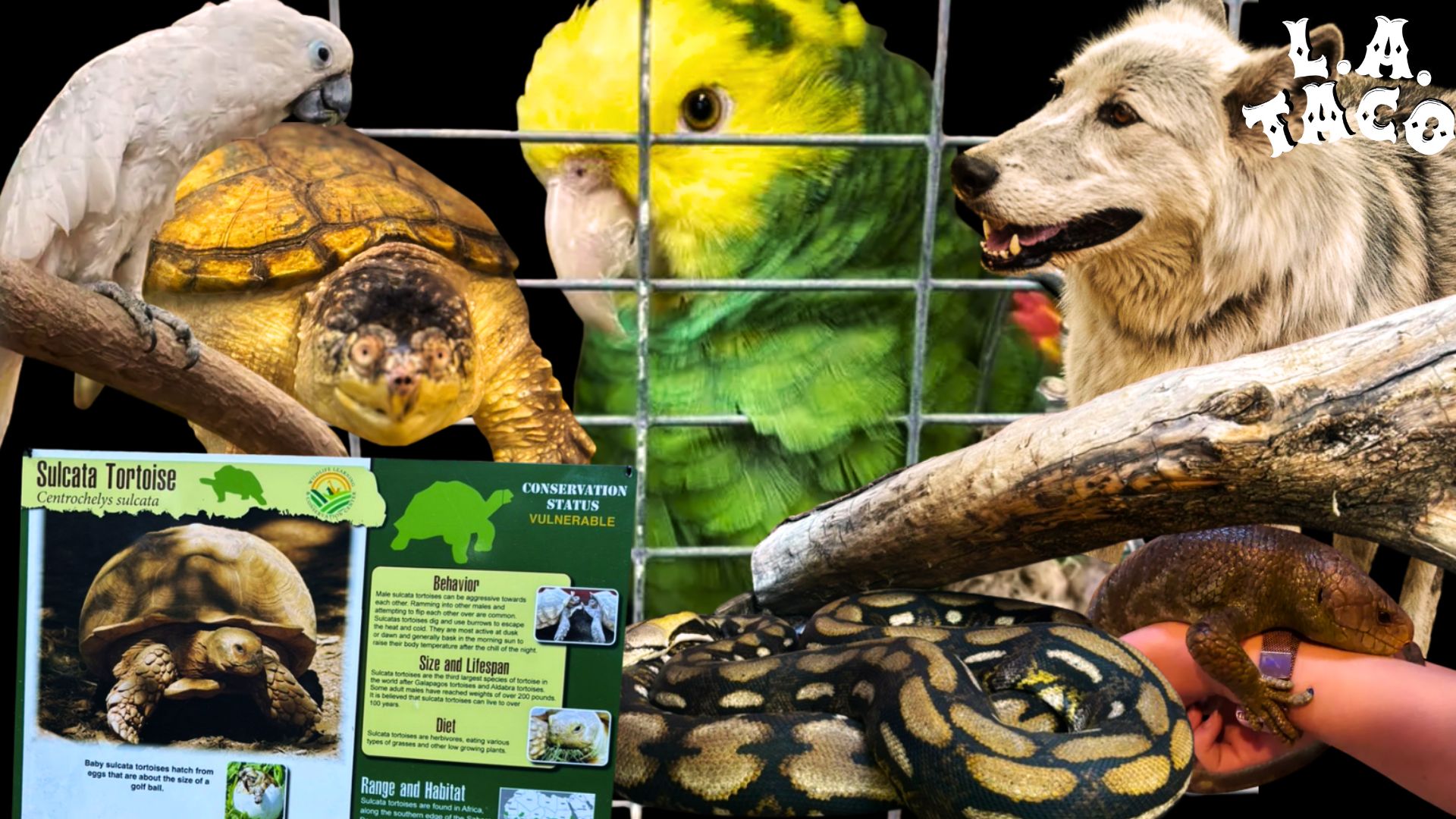
Just beyond the busiest neighborhoods in L.A., local wildlife conservationists are caring for some of our most vulnerable neighbors: "pets" rescued from the multimillion animal trafficking industry. Many exotic pet owners believe they are adequate caretakers, ensuring their animals are safe and happy. But wildlife experts do not think the average person can actually be a “good owner” to wild animals.
“Most of these animals are not kept for very long because people will often realize they're not equipped to care for them,” David Riherd, the executive director and co-founder of the Wildlife Learning and Conservation Center (WLCC) in Sylmar, says. “And the sanctuaries are overloaded. It becomes someone else's problem.”
WLCC is a relatively small facility housing “over 100 displaced, rescued, and zoo-born wild animals.” Its 15-person staff cares for these animals, which often arrive after surviving horrific traumas including injuries sustained in the wild, physical abuse, and overall neglect. WLCC is part of a program called the Southern California Wildlife Confiscations network, a collaborative attempt to place wild animals at humane facilities; the Association of Zoos & Aquariums and U.S. Fish and Wildlife help organize these placements.
One baby fox arrived at WLCC after a successful parking lot “sting” carried out against a Craigslist seller. The fox was confiscated, and the seller faced legal consequences.
Kingston, one of the monkeys at WLCC, arrived from the infamous Playboy Mansion after alleged mistreatment (the same mansion that has been accused of animal cruelty, canine bestiality, and more heinous crimes in the past). Kingston’s mother abandoned him as a baby, requiring hand-raising to survive–which brought him to WLCC.
Riherd says that the trafficking of monkeys has increased in recent years, especially here in North America.
Curtis Lepore, a Vine influencer and newcomer to the film industry, was forced by U.S. Fish and Wildlife to surrender his pet marmoset monkey in the Hollywood Hills about eight years ago.
Before that, it was common for Lepore to post content of Sherlock the Monkey. Riherd tells us Lepore made millions from his YouTube channel. There are over 10 videos on Lepore’s YouTube page featuring Sherlock, including “MY PET MONKEY HAS A GIRLFRIEND *ROMANTIC*” and “WE'RE GETTING MY PET MONKEY BACK!!! #FREESHERLOCK *UPDATE*.”
Despite losing his monkey, Lepore was granted the chance to decide where Sherlock would be sent. When the marmoset was confiscated, it spent some time at the WLCC in Sylmar before being transported to a facility in Las Vegas.
Riherd says this may have been due to Nevada’s looser restrictions on marmoset pet ownership. Lepore was a widely liked Internet personality at the time, but irreversibly tainted his reputation later after being charged with sexual assault–which ended with him taking a plea deal.
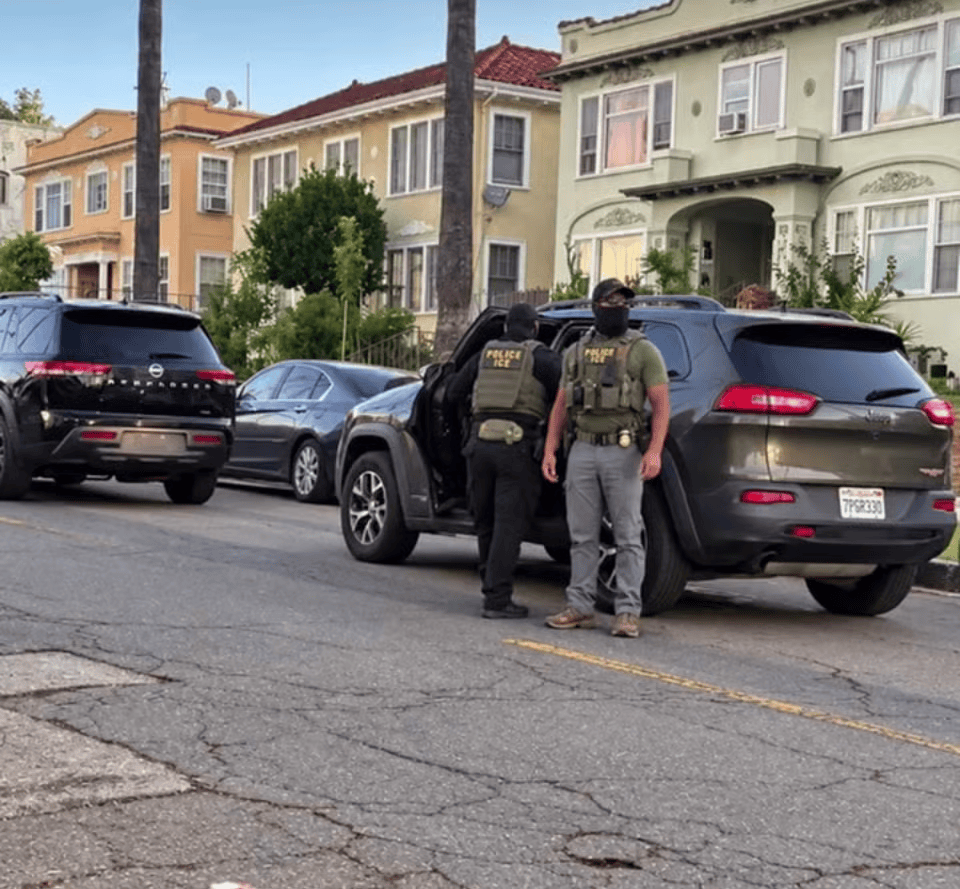
The WLCC was also called when a pet spider monkey was in need of a new home after its owner had been detained by ICE, Riherd says.
The owner, a single father of two young girls, was detained by ICE agents at his home in Sylmar, before a neighbor discovered his scared daughters hiding in an alleyway with the pet monkey. WLCC was contacted, and U.S. Fish and Wildlife were notified about the incoming resident. But the monkey was ultimately not surrendered to WLCC.
In the Angeles National Forest, a sanctuary called Wolf Connection (WC) is providing safety to abused and injured wolves and wolfdogs while socializing them with community members. They offer nature walks aimed to improve mental health, inviting groups to connect with the creatures. The late and beloved chimp expert Jane Goodall has even met up with their staff and wolfdogs before.
Animal residents of WLCC and Wolf Connection are often rescued from drug busts and inept owners. Some exotic animals find safety after escaping their owner’s residences or are rescued from fur farms known for skinning animals for their coats.
Originally neglected by an affluent family of hoteliers in Mexico, Gemma is a dark grey, low-content wolf who affectionately greets the lucky visitors who get the chance to enter her habitat. Daisy, affectionately nicknamed “Diesel,” was falsely advertised as a German Shepherd male pup and sold at a silent auction. Koda, a one-eyed wolf rescued from an Alaskan roadside attraction, arrived at WC with his late brother. When a visitor presses the back of their hand to the habitat fence, Koda eagerly appears to receive “pets” by brushing his body against your hand like a housecat might.
John Calfa III, the content manager and podcast host at Wolf Connection, started volunteering at the sanctuary over nine years ago.
There’s a unique exhilaration that comes with hiking alongside the wolves–the same feeling that causes some schoolkids to become rowdy on the trail. When those kids ask Calfa III why the wolves are being extra rambunctious, he explains that the wolves mirror the behavior of the humans around them. The kids, who often come from underserved communities, are thereby able to learn how regulating their own emotions can help calm the animal, too.
Calfa III says that the teenagers who visit WC have experienced more life than he can imagine. Oftentimes when LAUSD expels a child from their traditional high school, they transfer to a continuation high school. These continuing students are some of the most frequent visitors at WC.
Women veterans and foster children also visit the sanctuary looking to connect with the wolves, often learning more about themselves in the process, Calfa III says. He emphasizes the necessity of “space and time” for both the wolves and humans. It is difficult for us humans to not resonate or empathize with the wolves’ tragic histories. Calfa III attributes this to a centuries-long connection between our species.
A 2.5-hour group hike for the average patron costs $180. Private tours that allow visitors inside the wolf habitats cost $1500 for 1-4 visitors. WC is currently considering if an overnight visitor experience is a feasible option. Similar programs already exist at larger facilities, like the Roar & Snore Safari at the San Diego Zoo.
Back in the city, the STAR Eco Station in Culver City is an animal education hub, housing reptiles, fish, birds, and an alligator. Its main demographic includes families and schoolchildren, as it offers childcare, mobile exhibits, day camps, and private birthday parties.
Its staff-guided tours cover each exhibit and include opportunities to physically interact with the animals–feeling the reptilian skin of a skink or actually holding a medium-sized snake.
One portion of the tour focuses on our human impact on aquatic ecosystems; the harm we’ve done by littering portrayed in the most gruesome way. A turtle named Mae West was left permanently deformed after having been trapped inside a six-pack ring, like the ones used for soda cans, a STAR Eco Station tour guide tells us. (On the facility’s FaceBook page it appears that Mae was actually stuck within a plastic milk jug ring, a somehow even more harrowing reality.)
Mae became stuck as a young turtle and her body accounted for the trash as she continued to grow larger. Unable to remove the plastic herself, her body adapted by contorting her organs and shell.
Originally from Louisiana, she was transported to Culver City after her handler decided they could no longer care for her. Mae went viral online, inciting advocacy for ocean wildlife; another turtle named Peanut also became famous for her similar trauma and deformity.
The constant need for additional funding is an unfortunate throughline shared between animal sanctuaries and rescues. The well-being of all animals living in captivity–wolves, cats, lizards, alligators, dogs–depends on the amount of grants, admission profits, and generous donations that facilities can obtain.
“It’s an expensive operation to run, and, you know, veterinary bills can be quite high sometimes. We just had an animal that had cancer and required expensive surgery. It was ovarian cancer, so it can be very costly, and to provide specialized diets for all these different animals and labor costs and insurances,” Riherd says.
It costs about $30,000 each month for the WLCC to operate, according to Riherd.
The immense amount of caregiving required to keep the animals in good health is provided by surprisingly small teams. There are about seven full-time and seven part-time staff members at the WLCC. A staff of about 30 paid workers care for over 40 wolves at Wolf Connection. Volunteers also help upkeep these facilities, often helping with cleaning habitats and preparing meals for the animals.
To avoid cutting corners, sanctuaries like the WLCC have strict capacities, which limits the amount of animals they can give refuge to.
STAR Eco Station brought up a potential move to a new facility, ideally one with more natural sunlight and space for its residents. At its current location, there are no outdoor exhibits, and many of the animals would benefit from having more room to roam about.
L.A.’s glamorous reputation only amplifies the pursuit towards novelty that irresponsible pet owners seek. Individuals who have surrendered exotic pets or had them confiscated usually obtained their animals through sites like Craigslist, Nextdoor’s shady uncle. Or even through TikTok.
@Simplyexoticsavannahs, a TikTok account, advertises “Exotic & Sweet Savannah Kittens F3 and F4.” Savannah cats were developed in the 80s as hybrids between domestic cats and wild African servals. F3 and F4 refer to how far removed the kittens are from their serval relatives. This account sells third and fourth-generation savannah kittens, which are physically easier to achieve than direct descendants of servals and cheaper to purchase. According to their page, the sellers are based in Riverside, CA.
The laws around exotic pet ownership vary throughout the U.S. (which also promotes the trafficking of wild animals across states). It’s legal to own any generation of savannah cat in California, but states like Georgia, Hawaii, Nebraska, and Rhode Island totally outlaw the ownership of serval descendants, regardless of generation.
At the STAR Eco Station, visitors are shown the “Wall of Shame,” a display of various animal parts and trophies that have been illegally distributed. Shoddy, illegal taxidermy and mounted tusks are just other ways that humans have “conquered” the wild.
Some L.A. residents explore the novelty of exotic animals by consuming wild game. Meat markets like Harmony Farms sell ground kangaroo and ostrich steaks. It’s common for any home chef to buy meat to prepare a dish that is familiar to them; but sometimes that meat isn’t beef, pork, or chicken.
Some grocery stores sell turtle meat and armadillo (the legality around selling and consuming these meats have been a controversial topic). There is a difference, though, between the individuals who eat so-called exotic meat because it is taboo in Western culture and the individuals who eat the same meat because it is an accepted ingredient within their cultural cuisine.
When Redditors ask their online peers about restaurants offering exotic meat because they want to try something new for their birthday, that craving comes from a different place.
“I’ve eaten alligator” is spoken with the same tone, but carries less pride, than “I’ve hunted an alligator.” “I have a pet alligator” is the most extreme way for someone to convey their self-important individuality at the expense of the comfort and safety of living creatures.
“I think that fear of wildlife might lead to, you know, maybe a lack of appreciation for the natural world,” Riherd says.
Maybe it is the fear that drives us to conquer wild animals–to trap them inside Hollywood McMansions, order them through sketchy online sellers, and learn how they taste. If so, then it is hope that drives L.A.’s sanctuaries to continue advocating for these vulnerable creatures and caring for them when they need it most.