

On June 24, two back-to-back earthquakes of magnitude 7.5 struck northern Venezuela just 5 kilometers apart, killing at least 1,719 people and injuring more than 5,000 others. Tens of thousands more remain missing beneath collapsed buildings and debris, making it one of the country’s deadliest natural disasters in recent history.
In the days following the earthquakes, rescue efforts were hindered by a slow and ineffective government response. Despite Venezuela having thousands of police officers and military personnel, many survivors have reported having to wait days for organized assistance.
Volunteers and local residents have been forced to take action, digging for family, friends, and other survivors themselves with limited rescue equipment. Reports have also emerged accusing security forces of stealing valuable supplies from aid shipments and preventing rescue volunteers from entering disaster zones with desperately needed supplies.
As conditions worsen, the responses to help Venezuela from all around the world have been staggering, with thousands of people traveling to Venezuela to help and hundreds of thousands organizing donation sites all around the world to get supplies to send to Venezuela.
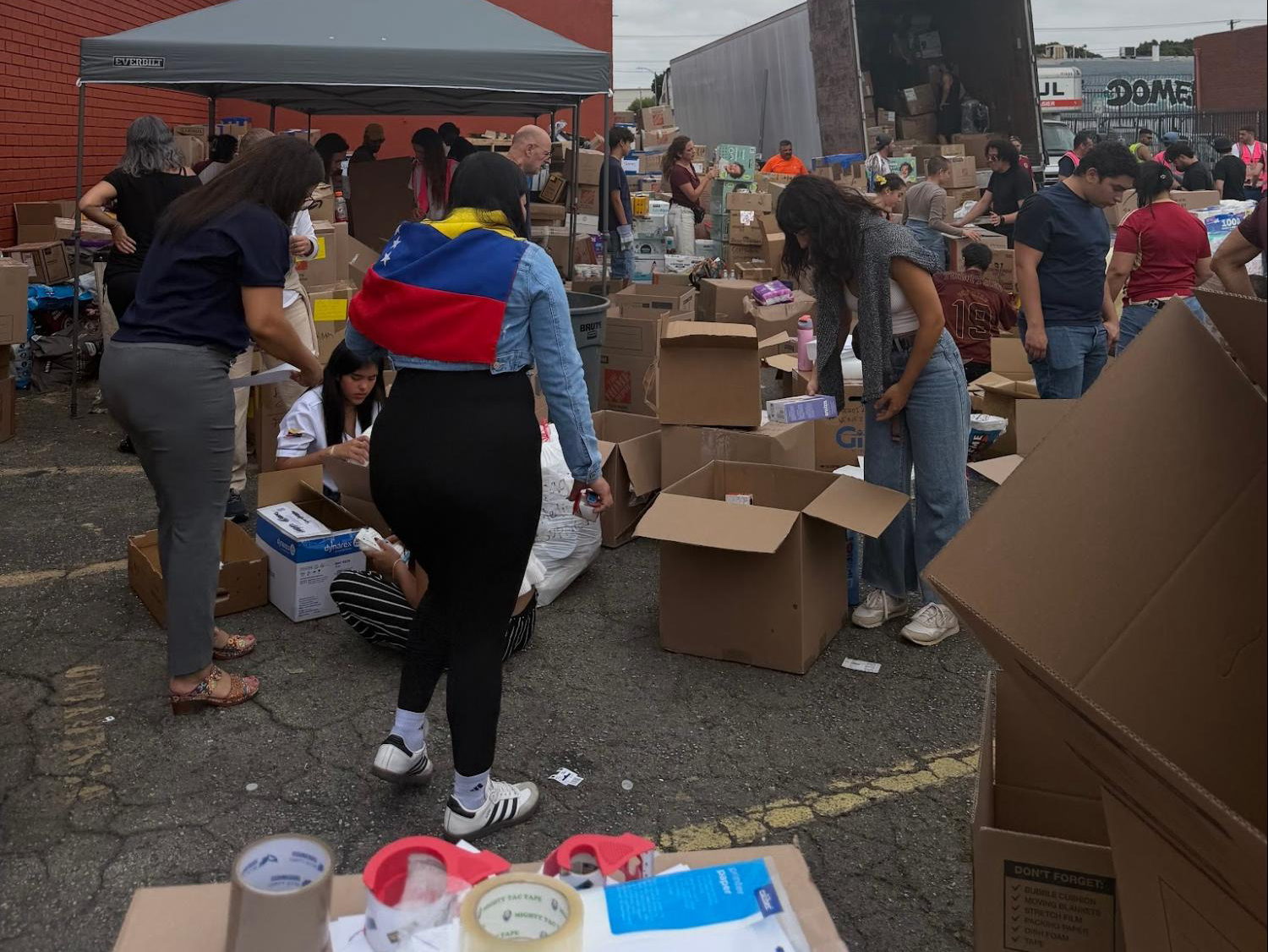
Across Los Angeles, Venezuelan-owned businesses have transformed into community donation centers, with volunteers working daily to organize and ship emergency aid to those affected by the earthquakes. After visiting many of these locations throughout Los Angeles and interviewing volunteers coordinating aid efforts, what’s actually needed right now has become clear: Sending help is important, but sending the right kind of help is even more critical.
At Venezuelan restaurant Full Arepas, owner Kelly Montano has been collecting donations for over a week for victims of the earthquake. The restaurant has become a place for the community to gather with people bringing medical supplies, clothing, non-perishable food items, rescue aid items, and more to be directly shipped over to Venezuela.
However, volunteers say that many donations have unintentionally caused additional work instead of being helpful. Volunteer Andrea Casanova explained that many people have been treating donation sites as opportunities to rid themselves of unwanted belongings.
“A lot of people are just coming and dropping off their spring cleaning, you know, we found lingerie yesterday,” she says. “Broken items, dirty items. underwear that clearly hasn't even been washed, so I think a lot of people are coming here and just dropping off things that they clearly just didn't want, and treating this as if it was a garbage can.”
According to many other volunteers interviewed at multiple collection sites, this problem is widespread. Expired food, damaged clothing, and unusable household items must all be sorted and discarded before volunteers can get to legitimate usable donations.
Every minute spent removing trash is time that could be used to prepare life-saving supplies for families in need.
Claudia Serven, organizer of a collection site run by Helping Children in Venezuela has said, “ The catastrophe in Venezuela has affected so many people. Many have lost their homes and their families. We need support. We need donations, not just today, because this crisis is going to last”
Rather than old clothing, organizers consistently request unopened medical supplies, over-the-counter medications, hygiene products, diapers, baby formula, nonperishable food, and financial donations. They have also expressed that a good rule of thumb when purchasing medical aid should be to think: "Can someone immediately use this item with no extensive medical training?"
If the answer is yes, then there you have it. Items like rubbing alcohol, gauze, butterfly stitches/wound closure strips, Band-Aids, and medical tape are all perfect examples of suitable medical relief items. Several volunteers also explained that monetary donations to trusted sites in Venezuela can also have a great impact, as they can purchase the most urgently needed items locally whenever possible to help rebuild affected communities.
Many of the volunteers have personal connections to the crisis. Some have family members living in Venezuela who have not been heard from, while others have spent years organizing relief efforts for communities affected by economic hardship and now, the devastating earthquakes.
Their work reaches beyond just sending boxes, as they spend countless hours sorting through donations, coordinating shipments, and raising awareness about a crisis that has largely disappeared from international headlines, even though over 60,000 people still remain missing.
Ultimately, the best way for people in Los Angeles to help is by supporting their community members and donating thoughtfully. Before dropping off items, organizers and volunteers encourage donors to ask themselves a simple question: Would this actually help someone who has lost everything? If the answer is no, financial contributions or purchasing items from a relief organization's requested supply list instead could make all the difference.
As Venezuela continues its long road to recovery, the response from Los Angeles demonstrates the strength of a community determined to help in a time of need.
Whether through donating essential supplies, volunteering at a collection center, contributing financially, or simply spreading awareness, every action could bring hope to families still struggling in the aftermath of the earthquakes.
Here's a list of requested items for immediate and secondary relief:
- Rescue, cleanup, & repair supplies (walkie-talkies, working gloves, KN95 masks, hazmat suits, duct tape, gloves, hand and foot warmers, flashlights, shovels, industrial trash bags, body bags, tarps, hard helmets, etc.)
- Medical supplies (rubbing alcohol, gauze, butterfly stitches/wound closure strips, sterile wound dressings, Band-Aids, antiseptic wipes, antibiotic ointment, burn dressings/burn gel, medical tape, disposable gloves, hand sanitizer)
- Baby items (diapers, wipes, baby formula, bottles, etc)
- High protein non-perishable items (canned food, rice, instant ramen, beans, dried fruits and vegetables, protein bars, snacks, canned meat, grains, pasta, oatmeal)
- Over-the-counter medications and multivitamins
- Powdered milk, protein powder, protein shakes, electrolytes
- Pet items (food, crates, leashes, bowls, etc.)
- ALL NEW Shelter items and sleeping essentials (tents, cots, sleeping bags, blankets, pillows)
- Emergency supplies (First aid kits, LifeStraw filters, solar lanterns, power banks, radios, flashlights, batteries, etc.)
- Hygiene products (shampoo, conditioner, deodorant, feminine hygiene products, toothbrushes/toothpaste, toilet paper, wet wipes)
- NEW clothing items
- Water/liquids
- Shoes
These L.A. locations are accepting donations:
- Olarte Transport Service ~ 1125 E. Pico Blvd. Los Angeles, CA 90021
- Mad City Pallets LA ~ 1006 San Pedro St. Los Angeles, CA 90015
- Full Arepas ~ 312 W. 7th St. Los Angeles, CA 90014
Find more drop-off locations using this database created by LA for Venezuela.
Here are reputable charities to donate money to:
- International Rescue Committee: Responds to humanitarian crises by providing emergency relief, healthcare, education, clean water, and long-term support to refugees and displaced families.
- UNICEF USA: Supports children worldwide by funding lifesaving healthcare, nutrition, education, clean water, and emergency aid.
- Greater Good Charities: Delivers food, medical supplies, disaster relief, and support to people, animals, and communities affected by crises all around the world.
- Project Hope: Provides medical care, health training, disease prevention, and emergency disaster response in communities facing health crises.
- UN Crisis Relief: Coordinates global fundraising to help UN agencies deliver food, shelter, healthcare, and emergency assistance during humanitarian disasters.
- Americares: Delivers medicine, medical supplies, and healthcare services to communities affected by disasters, poverty, and disease.
- Catholic Relief Services: Offers emergency relief, food, shelter, healthcare, and long-term development programs to people regardless of religion.
- Direct Relief: Supplies hospitals and health workers with medicines, medical equipment, and emergency resources during disasters and health emergencies.
- Global Giving: Connects donors with vetted local nonprofits around the world, funding disaster relief and community recovery projects.
- International Medical Corps: Provides emergency medical care, mental health services, clean water, and health training in crisis and conflict zones.
- Oxfam America: World to fight poverty by providing emergency aid, clean water, food security, and advocating for long-term economic equality.
- Save the Children Federation: Protects children by providing education, healthcare, nutrition, and emergency assistance during disasters and conflicts.
- World Vision: Supports children and families through disaster relief, education, healthcare, and community development programs.
- Unidos To Give: Mobilizes the Venezuelan diaspora to deliver humanitarian aid, medical supplies, food, and emergency support to communities affected by crises in Venezuela.


