Art museums and galleries may be abundant in Los Angeles, but in the heart of South L.A., one gallery has to fight every day to stay afloat amid ICE raids, economic hardship, and—get this—illegal hash oil explosions.
Superchief Gallery, an underground art space known for its indie and community-based roots, has been around for over a decade. From the outside, it may not look like more than another storefront, but once visitors step through its doors, they are transported to a world of color and culture adorning every square foot of blank canvas.
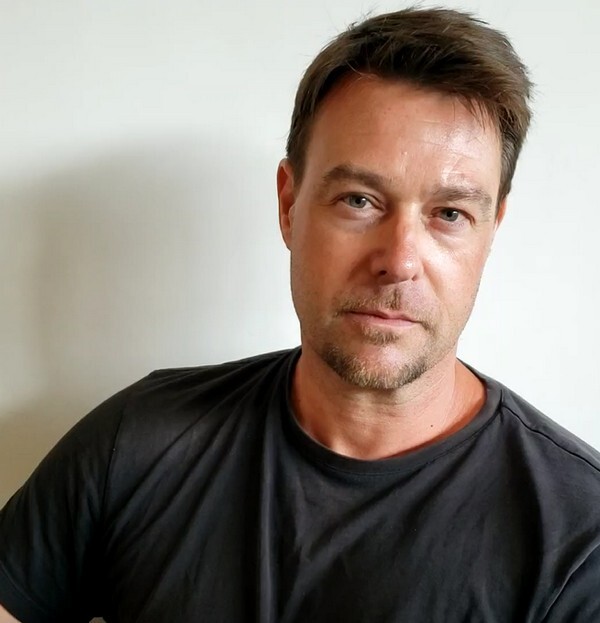
The gallery, run by cofounder and director Bill Dunleavy, aims to be a space for young, independent artists to meet each other and showcase their work to a broader audience. However, in recent years, Superchief has encountered financial hardships that threaten to close the gallery for good.
For Dunleavy, spaces like Superchief are so special and unique because they engage with the community in ways that more mainstream galleries don’t.
“It's a welcoming and inspiring environment for people from across lines of class, race, or gender, and I have always taken chances on lesser-known artists rather than trying to chase the same programming as everyone else,” Dunleavy said. “It's a beautiful mix of different communities that come together here and create something really unique and special."
In some cases, the gallery worked as an incubation space for young artists, many of whom have gone on to launch successful solo careers after their Superchief shows. One of the success stories he was most proud of was Isaac Psalm Escoto, AKA Sickid, who sold out his first solo show after debuting at Superchief for a group show and has since finished a solo show with Jeffrey Deitch.
“I've started a bunch of careers out of here, maybe six or seven that have really been debuted at Superchief and go on to become top-tier artists. So they're like my children a little bit,” Dunleavy said.
Dunleavy, a transplant from New York, came to Los Angeles in 2014 looking for a change of pace in the art scene. He wasn’t satisfied with what he saw in mainstream art galleries and sought to create something that was more accessible and relatable to a broader community.
“I was looking at the art galleries that promoted graffiti and photography, and I just found it all to be kind of bougie and elitist,” Dunleavy explained. “And, essentially, what I thought was I could probably do a better job of that.”
Dunleavy was inspired by art spaces on the East Coast and the colorful DIY culture of Mexico City to create a gallery filled with colorful and bold art from across cultures. Since moving to Los Angeles, he has developed a deep love for the surrounding community and wanted to create a gallery that reflected the diverse stories around him.
“I don't ever want to be a part of the art gallery industrial complex that just gentrifies neighborhoods and commodifies things,” Dunleavy said. “The goal is not to make it bougie. The goal is to make it sustainable and representative of the community and stay true to a subversive vision, and not just become one more generic art gallery in the landscape.”
The gallery has moved locations twice since its creation, starting on Skid Row for nearly seven years before an explosion destroyed their old gallery space right before the COVID-19 pandemic.
On that day, a powerful blast shook the building after an illegal hash oil accident that heavily damaged the structural integrity of the building and forced the gallery to vacate immediately. The gallery then went dormant for a few years as the pandemic spread before finding its current location, which they converted from an old evangelical church that had gone out of business.
However, the gallery’s largest challenge came in more recent years, as Dunleavy struggled to find ways to finance his dream. As part of the space’s commitment to independent financing, Dunleavy has sacrificed much of his own income to keep the gallery afloat while managing a downsized staff and long hours.
“I'm staying with friends, scraping by on side hustles,” Dunleavy said. “I'm hoping I can get things stable soon and find some traction, but I haven't been able to pay myself in over a year and a half despite putting way more than a full-time job's amount of work into Superchief. But I believe in the mission I'm trying to realize, and I do my best with the small team that I have and try to make sure to take care of them.”
Luckily, Dunleavy has developed a new method of financing the gallery that he hopes will sustain the space for a few more years: crowdfunding. Currently, Superchief aims to raise subscribers on their Patreon and host many community events at the gallery to help raise money.
As a thank you to the surrounding Los Angeles community that Dunleavy loves so much, Superchief is also known for putting on large community service events to help give back to those who have helped make the gallery what it is today.
“When the need arises in the community, I try to be there in that way also,” he said. “It's an art gallery and it's a space for events. But it's also like a mutual aid center when needed.”
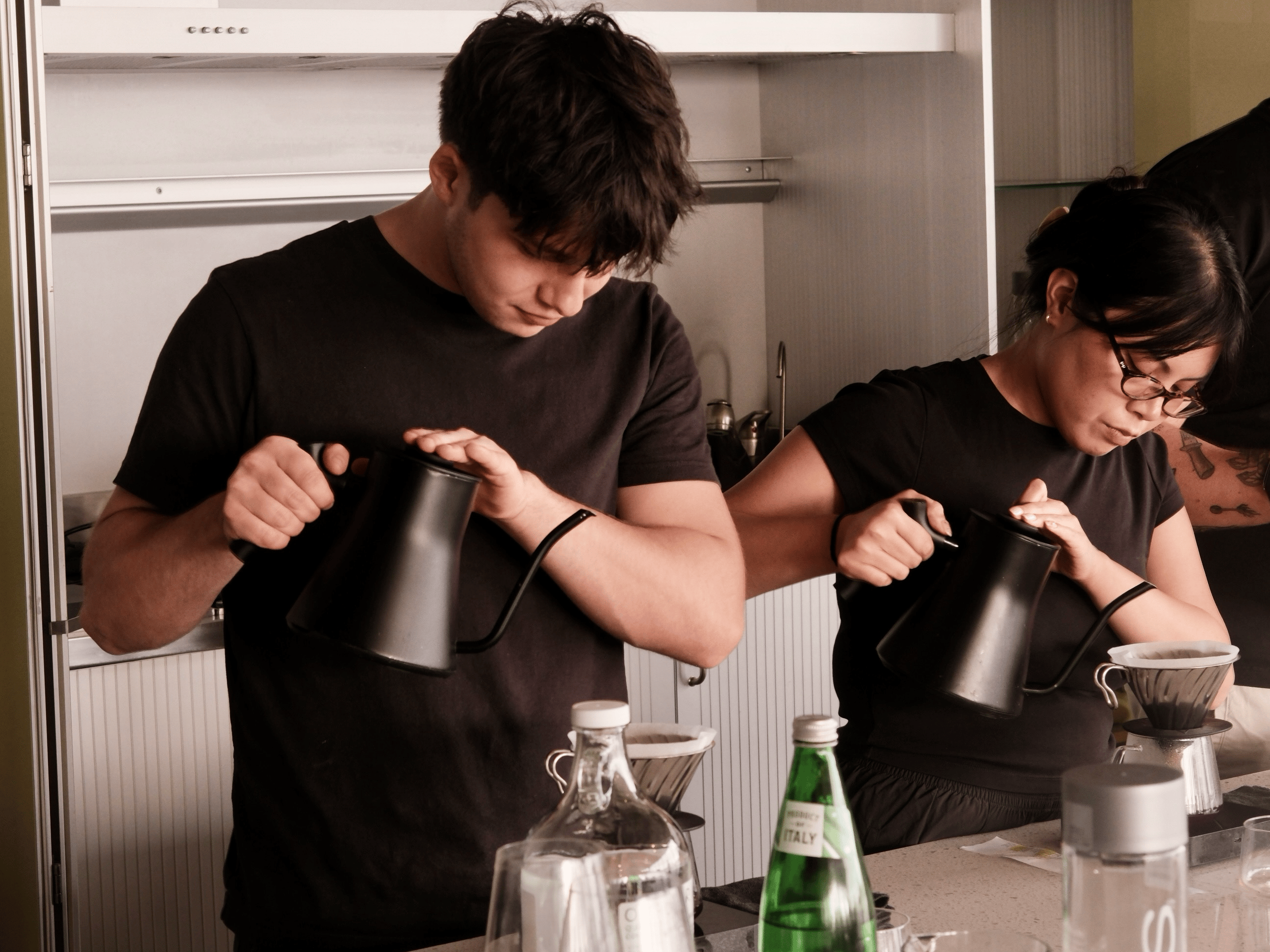
Some of this programming includes food and supply drives, fashion shows, film screenings, art classes, ethics and rights of protest photography panels, and so much more.
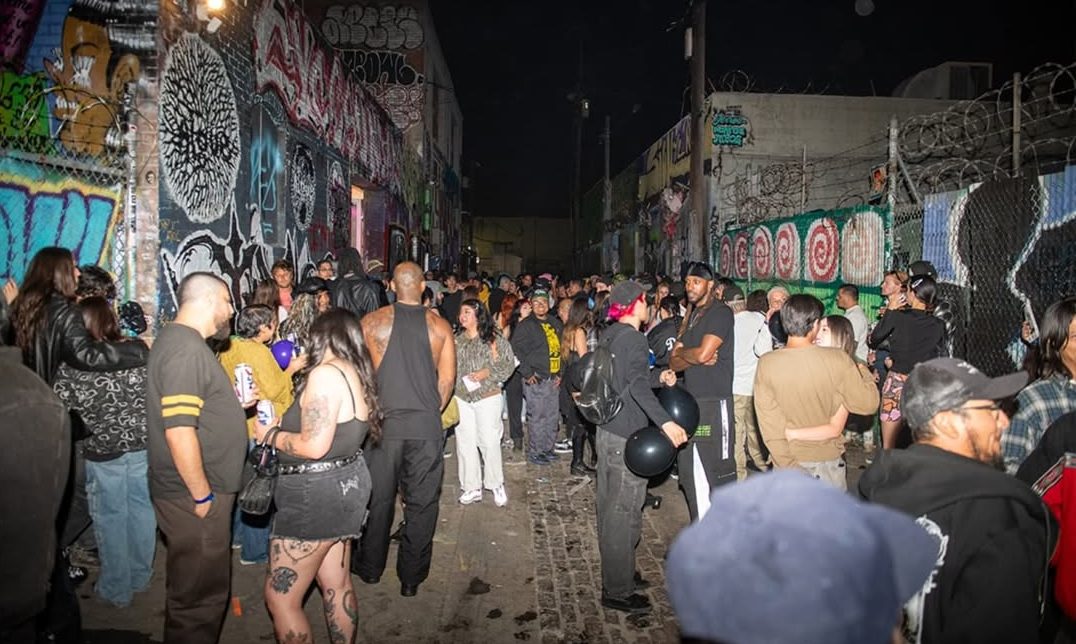
Most recently, Superchief has hosted a series of Anti-ICE protest events, a girls’ spray paint workshop, and a “No Kings Day” sign-making workshop that brought in large crowds. They have also hosted a multicultural fashion show, large community celebrations with proceeds going to local nonprofits, and even an event at the gallery that hosted supply drives for those suffering after the 2016 Mexico City earthquakes.
At the beginning of this year, Dunleavy also partnered with a friend to organize one of the biggest relief centers in the city for victims of the Altadena and Palisades fires.
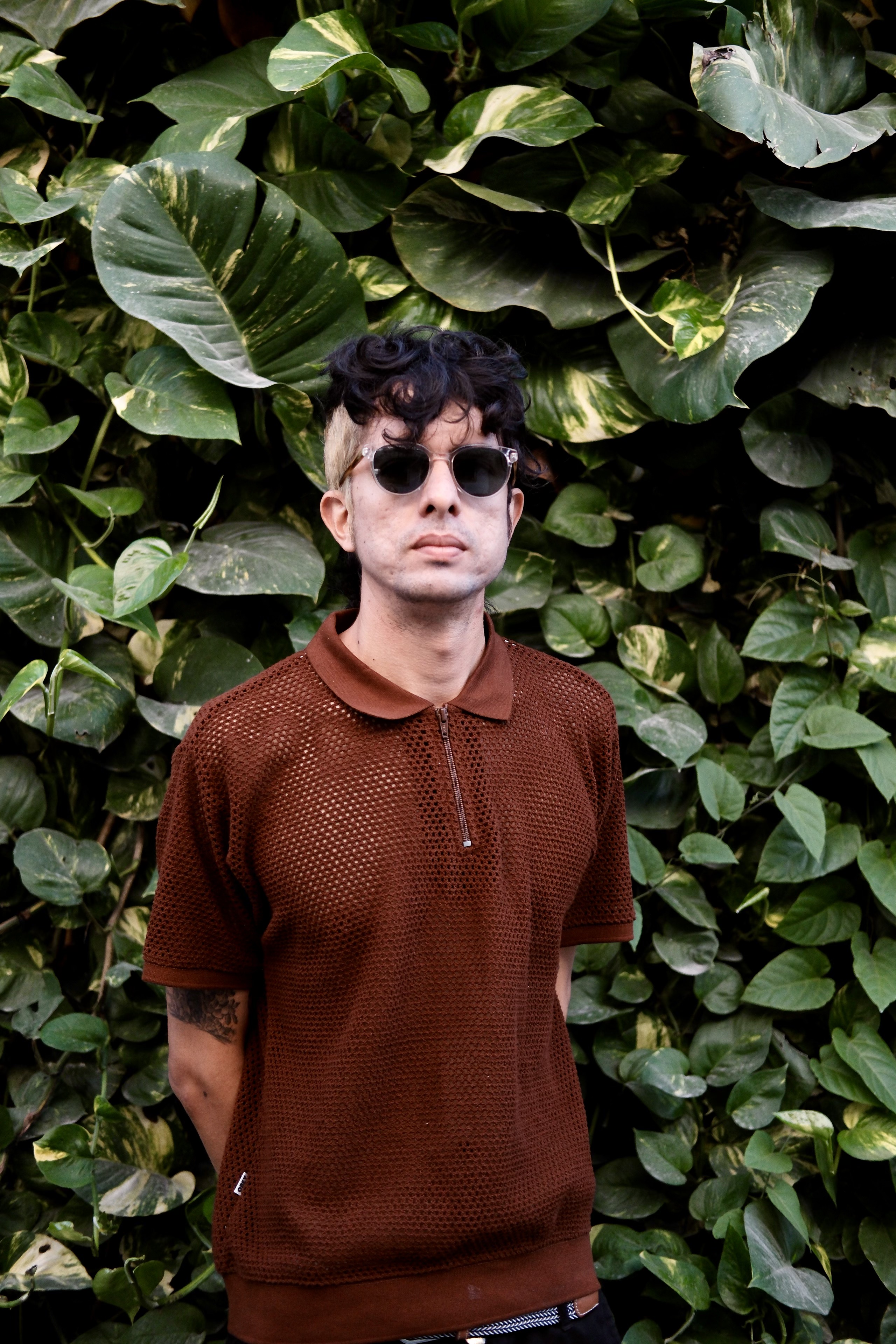
Superchief’s fanbase is still growing, putting on shows that Dunleavy hopes will allow different groups of people to find community in art. Shows span multiple genres, displaying underground graffiti culture, Chicano pride, political protest, fashion, and the queer community. Superchief’s most recent exhibition featured a collaborative show from Dead Relatives Magazine, showcasing Los Angeles’ vibrant punk street culture.
For Dunleavy, spaces like Superchief have never been more crucial for learning about different cultures and educating younger generations.
“This artistic community broadens people's world views and opens them up to new things,” he said. “It educates them about the artists who came before them, and shows them new influences. In many cases, it shows young people a path to pursue art as a career in their own lives, and that's really special to me.”
Similarly, John Millsap, a local USC Annenberg student who has gone to two of Superchief’s art exhibitions, believes that Superchief helps expose marginalized communities to art that they would normally not have access to.
“I've definitely grown to appreciate South L.A. a lot in my four years here,” he said. And it's a very underserved place. And a lot of people might think that just because a place is underserved, economically or socially, that it doesn't have as much to offer. But Superchief is a clear example of the fact that that's not true. I really hope that they're able to stay afloat and keep going.”
Superchief still has a long way to go before it achieves financial viability, but despite the challenges that it has encountered, Dunleavy’s hope for the gallery is stronger than ever.
“The number one thing I hope people get from Superchief is inspiration,” he said. “To see that art is more than something for upper-class people, and show them that art is a valuable thing for everyone.”
Despite having multiple close calls that have left Superchief in danger of permanent closure, the community has shown that it is willing to rally behind this one-of-a-kind gallery in ways that Dunleavy never would have imagined.
For all of the work that Superchief has done to support their surrounding community, it’s time for this gallery to get some of that love back—and right now, it could use it more than ever.
Superchief Gallery ~ 1965 S. Los Angeles St. Los Angeles, CA 90011