

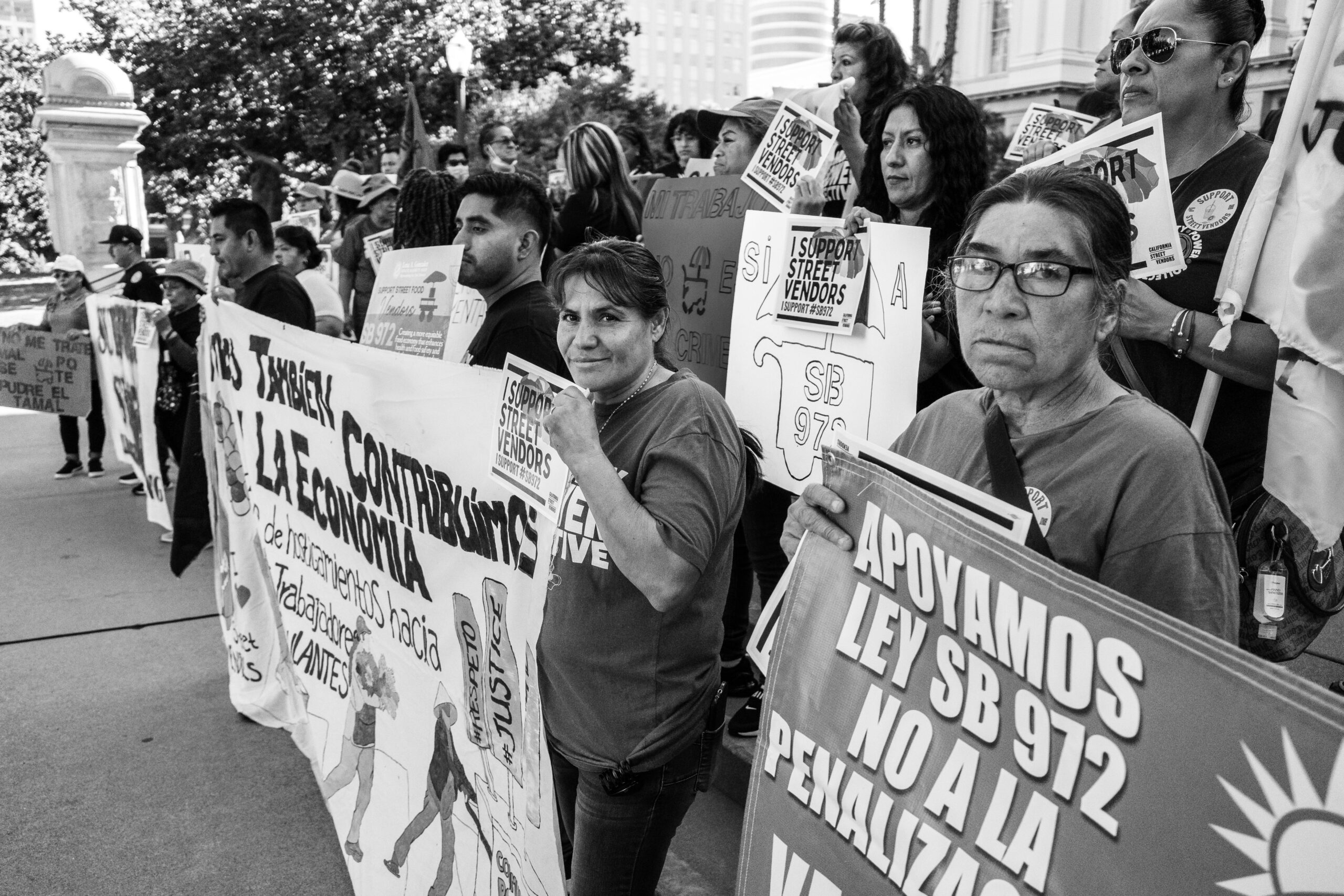
Historic street vending legislation passed both houses of California’s legislature this past week and is on its way to the Governor’s desk for review. After years of advocacy, street food vendors are on the precipice of a victory that can transform their and their families' lives. But this bill will not only impact paleteros, eloteros, and other street food vendors synonymous with L.A. street culture. Its provisions facilitate opportunities for other entrepreneurs in the “open air economy” who you may find at your local brewery, food festival, or a gentrifying neighborhood.
But as low-income street food vendors make their case to the Governor, some street food businesses who can benefit from this law have been noticeably quiet in their support. We need their help too.
Senate Bill 972 (Gonzalez) was introduced this year after years of advocacy by street food vendors throughout California. It comes on the heels of Senate Bill 946 (Lara), which in 2019 decriminalized street vending throughout the state, set guidelines for local street vending regulations, and expunged misdemeanors for street vendors. SB 946 was transformative for tens of thousands of low-income entrepreneurs who no longer face criminal misdemeanor charges from local police. And for merchandise vendors, the path to a permit and formal business is relatively straightforward. Unfortunately, street food vendors have continued to be shut out of new legal vending opportunities.
This is because a different law stands in the way. A comprehensive report from our Public Counsel and UCLA partners lays out the challenges in great detail. In short, any vendor selling food must obtain at least two permits: one from the city that imposes location restrictions and one from the Department of Public Health. The process for getting this public health permit is dictated by the California Retail Food Code (Cal Code)—a law that was simply never designed with low-income sidewalk vendors in mind. Inapt requirements, designed for restaurants and large food trucks, resulting in an overwhelming number of barriers that are impossible for food vendors to overcome and unnecessary to ensure food safety.
Senate Bill 972 addresses this issue by modernizing the Cal Code. If the Governor signs this legislation, it will create a new definition in the Code for street food vendors, streamline permitting processes, “right size” the design requirements for cart manufacturers who build for street food vendors, and open up opportunities for safe cart storage and food preparation in specific homes and other permitted locations.