

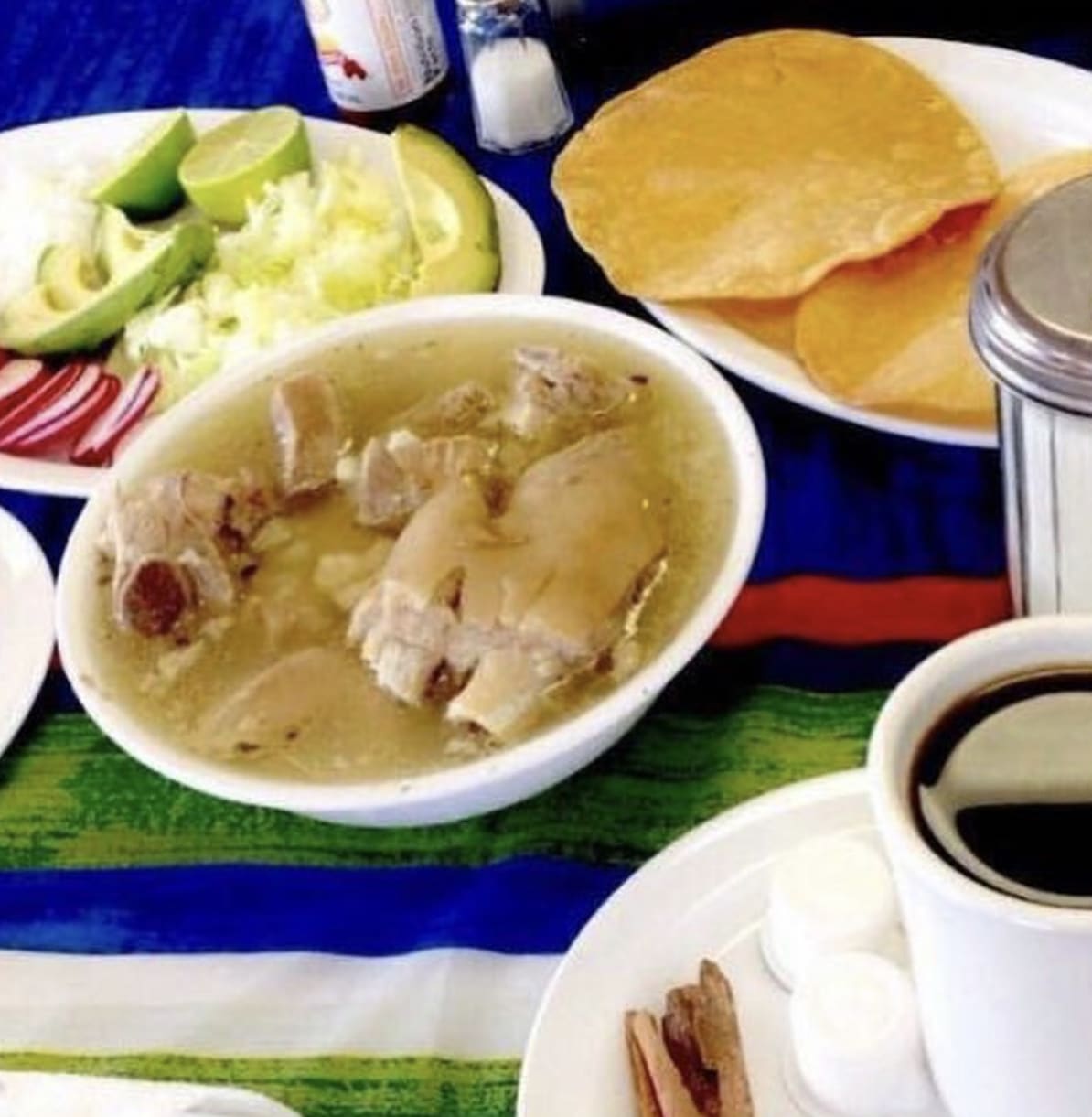
Welcome to L.A. Taco’s Pozole Week! Every day this week, we will celebrate a different style of the hominy and meat stew that really hits the spot when it is cold out, and share some delicious spots in Los Angeles to try it. For our third day, we are celebrating pozole blanco, the minimalist variation of the hominy and meat stew that uses no—or very little—chiles and spices. Grab a bowl and join us.
[dropcap size=big]P[/dropcap]ozole season is nigh.
Studies show that around this time fridges in Mexican households are a game of chance. Margarine container? No. It’s pozole. Sour cream? Nope. You ran out three weeks ago, it’s pozole. Again.
Pozole is a dish that’s usually associated with celebrations, gatherings, and holidays. That’s an improvement (depending on who you ask of course) considering that the origins of the dish used to call for four portions of human meat.
Pozole comes from the Nahuatl word pozolli which translates to “frothy” or “boiled” and was a ceremonial dish. According to Fray Bernardino de Sahagún, in the 1500s, he saw the human-meat-stew (then known as tlapozonalli) offered to Moctezuma at a festival honoring the sun god. But the protein eventually changed to pork because it is rumored to taste similar— effectively destroying the human meat economy. The pre-hispanic dish is one of the most popular dishes in Mexican gastronomy. There are several iterations throughout Mexico: red, green, and white. The differences are seen regionally through variance in proteins, spices, and chiles.