[dropcap size=big]I[/dropcap]n 2012, I was hired by graphic design historian and cultural anthropologist Jim Heimann to research vintage bars for a book he was working on. I was having a somewhat difficult time finding a substantial number of photographs of Prohibition-era drinking establishments. Some of the more well known speakeasies like “21” in New York were fairly well documented, but many lesser known examples (numbering in the thousands) were not. As it was my job to turn up as many images as I could, I was surprised there was not more photographic evidence of these illicit watering holes that existed between the years of 1920-1933.
Around that time I was driving down Pico Boulevard to work everyday to get from Echo Park where I lived to Mid-City where the office was located. Pico was and is one of my favorite streets in Los Angeles. Through the windshield, the stretch from downtown to La Cienega was a bustling montage of fruit stands, taco joints, storefront churches, psychic readers, and pot dispensaries––with a heavy emphasis on the latter. In particular, La Brea to Fairfax, which parallels Miracle Mile on Wilshire, was a hotbed of dispensaries with some areas having up to 3 on the same block, making it “the Green Mile.”
I was intrigued for a couple reasons. First, from what you might call a marketing standpoint, I wondered how so many dispensaries, which were in such close proximity to one another, managed to compete with one another and claim their own distinct niche. The only other kind of business I could think of which even came close to reaching that level of saturation was Starbucks. I began noticing how the dispensaries branded themselves through signage and typography, and what these choices might convey to their prospective clientele. Second, the fleeting nature of these businesses was such that the green paint hardly dried before a “For Lease” sign would appear on their their cryptic facades. There were, of course, mainstays that lasted for years, but many dispensaries came and went quickly and quietly, with little to no evidence of their brief existence. Remembering my difficulty in finding speakeasy photos, I began taking iPhone pictures of these strange creatures on my way to and from work for documentation purposes.
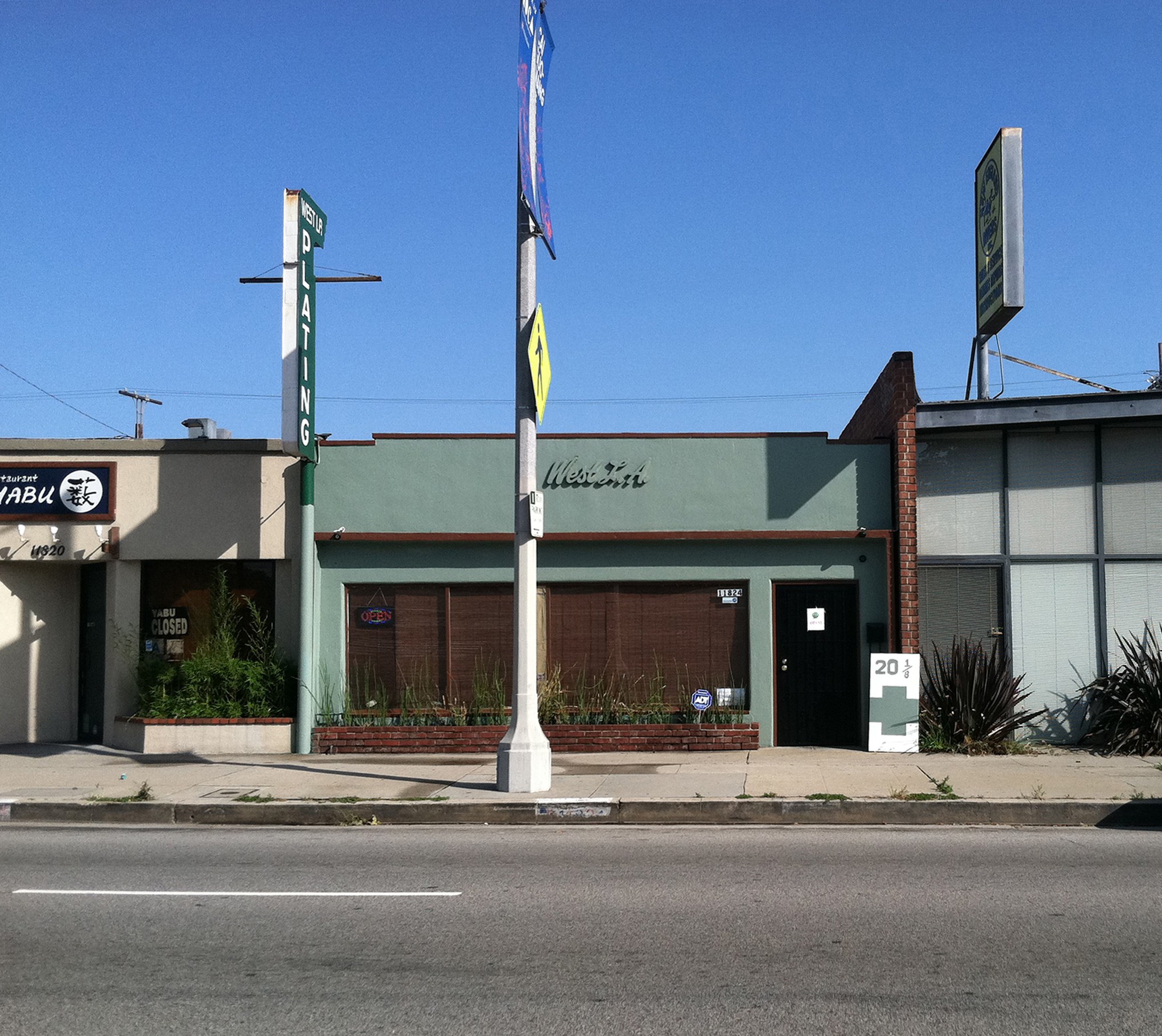
The project picked up steam when I began discussing it with Jim Heimann, who has an infectious enthusiasm for any and all things related to LA, especially the little known and under appreciated. Our conversations inspired me to go out on weekends in search of new dispensaries, venturing deep into the San Fernando Valley and East L.A. looking for variations on common themes––the green cross, one-way glass, names utilizing clever, pot-themed puns, and the ever-present security guard. Jim did the same, and within weeks we accumulated between 50 and 100 photos of dispensaries. We texted them back and forth, marveling at how the facades tended to blend into their environment like chameleons depending on what section of town they were in. The ones in West LA and Santa Monica tended to keep a lower profile, and could have easily been mistaken for a vitamin store or sushi restaurant, whereas the dispensaries in places like Van Nuys or downtown were a lot more loud and flamboyant, not even attempting to mask the fact that they sold pot.
Having recently been introduced to Ed Ruscha’s seminal artist’s books from the ‘60s, and having also been influenced by the “Dick” Whittington Studio, which took very straightforward, yet meticulous photos of commercial architecture in Los Angeles starting in the mid ‘20s, I was inspired to turn these images into a zine which I could distribute to friends and maybe sell a few copies of. The result is Pot Shots, a 28-page saddle-stitched publication featuring my favorite photos that Jim and I took in the Spring of 2012. Though it sold out fairly quickly, I have been accumulating images fairly regularly ever since. Many of the original dispensaries we took photos of are now gone, having been replaced by other transient businesses like a tax preparer’s office or raw juice shop. Perhaps one day, once the cannabis industry has matured to the point where more dispensaries are hiring designers and architects to build their brand in a way that creates a codified look and feel, someone will find these early images from the “Wild West” era of marijuana legalization and take pleasure, as I did, in the subtle nuances which made them so unique.
Ryan Mungia's Pot Shots is sold out, but you can view some of the images from the book below...