This article was supported by Viva La Book Review.
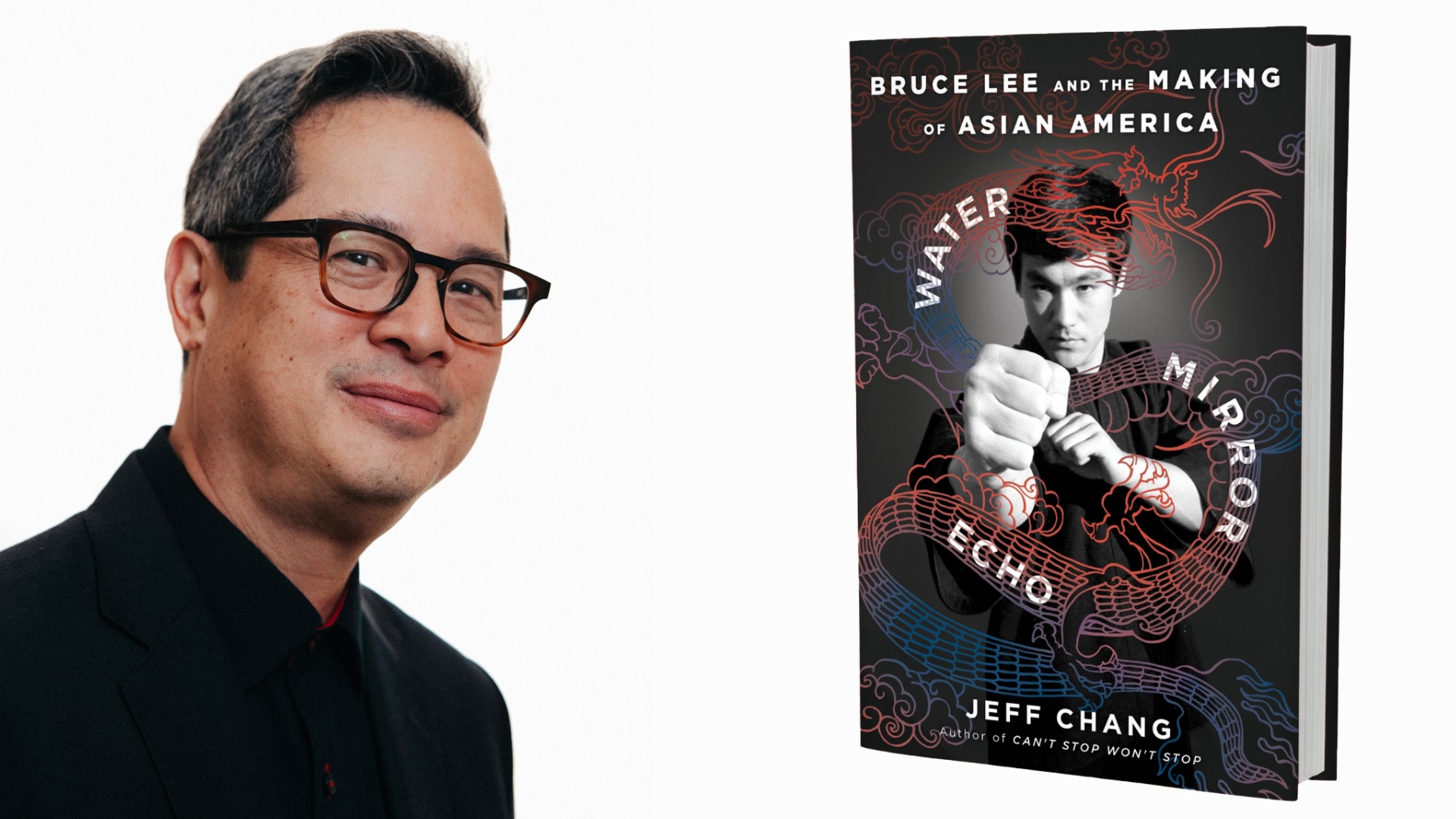
“Bruce was an Asian in America at the dawn of Asian America,” writes Jeff Chang in the introduction to "Water Mirror Echo: Bruce Lee and the Making of Asian America," his definitive biography of Bruce Lee.
“He was not only living in between two worlds,“ writes Chang. “But in a third place, one with its own history, meaning, and direction. The lives that he lived there expose the true size of the obstacle he faced, describe the complicated character of the man he became, and delineate his extraordinary achievement.”
By probing these worlds, and the spaces in between, Chang demonstrates how Bruce Lee’s ascension to global superstardom mirrored the rise of Asian America through the 1960s and early 1970s.
"Water Mirror Echo" enhances Chang’s reputation as one of our most important cultural historians.
As in his first two books, "Can’t Stop, Won’t Stop, Who We Be: A Cultural History of Race in Post-Civil Rights America" and "We Gon’ Be Alright: Notes on Race and Resegregation," this volume synthesizes life and history in a way that elevates the personal and the political.
This is not just a Bruce Lee biography. Chang uses Lee’s life story in order to document a movement, era, and generation of Asian Americans that came into its own, while Lee was navigating his career from Hong Kong to Hollywood, from Asian tenements to American ghettos and racist movie studios.
Drawing from a mix of private letters, rare documents, and interviews with the star’s closest relations, Chang shows how Lee overcame enormous obstacles. "Water Mirror Echo" catalogs nearly every step of the journey, including Lee’s friendships with Kareem Abdul-Jabber, Steve McQueen, Chuck Norris, and pioneering Asian-American actress Nancy Kwan. Eventually, Lee became an international hero.
On several occasions, Lee stood on the precipice of global success, only to be unjustly denied or demoted from projects that he’d help envision, such as the hit television show, "Kung Fu." Much like Bob Marley, Tupac, Kurt Cobain, and other kindred figures, Lee’s legacy grew exponentially after his death.
Chang does an admirable job of showing how Bruce Lee made good on his destiny. His credo synthesizes such sources as the Tao Te Ching, Zen Buddhism, and the prosperity gospel of early self-help guru Napoleon Hill.
Chang writes that Lee found “in Asian philosophy exactly what the Beat poets thought that they had found—a language of the self consonant with American notions of self-reliance and radical individualism.” Lee created his own successful persona, nurtured by his tireless work ethic and deep studying.
Among the many themes covered by Chang is how Lee captured the white imagination, or in other words, “how Kung Fu became American.”
“The American wars in Asia,” Chang argues, “had fueled a countercultural vogue for Asian martial arts, not unlike the entry of Commodore Matthew C. Perry’s battleships into the waters of Tokugawa-era Edo ignited a vogue for Japanese visual arts. The ascent of Asian martial arts in North America followed by postwar Americanization of Japan, and subsequent U.S. interventions in Korea, Vietnam, and Southeast Asia. Bruce’s appearance on American movie screens after Nixon’s 1972 visit to China, only magnified the curiosity.”
Chang not only examines the background stories behind Lee movies like "Fist of Fury" and "Enter the Dragon," he covers the creative relationships and emotional landscapes that made these films so compelling to American audiences.
To read about Lee’s career fifty years after his death is not only inspiring, it is breathtakingly tragic. Chang says that Lee “was a fuel, a flame consuming himself.” The actor spent his entire life fighting, first for himself, during his Hong Kong boyhood, but then into adulthood. His struggles come to signify a fable of success that is not only about Asian-Americans, but about anyone struggling to become their best self.
Lee’s series of trials and tribulations, Chang asserts, “represents the necessity of solidarity and the fight for freedom everywhere.” The performer was not only dignifying Asian Americans; his rise resonated with people of color everywhere.
As Andre Morgan told Jeff Chang, “It actually resonated with a lot of white folk, too. He was a hero for all seasons, all colors.”
As mentioned earlier, the 451 pages of text not only explicate Bruce Lee’s life, but provide a deep dive into the rise of the Asian American movement, supplying poignant, quick vignettes about activists such as Yuri Kochiyama, the actor George Takei, and Los Angeles poet Amy Uyematsu.
The lives of these people, along with Lee’s experiences, offer insights into what Chang calls “the Asian American awakening.” The book closes by documenting Lee’s afterlife and how, “in the decade after Bruce Lee’s death the necessary fiction of Asian America became true and real, a headlong leap into the flow of history.”
One of the merits of "Water Mirror Echo: Bruce Lee and the Making of Asian America" is that it covers both the big picture and intimate pressures simultaneously. Lee aficionados will love the close coverage of the legend’s experiences, while movement activists will appreciate how Lee’s rise reflects the arrival of the international movement.
Lee remains a cultural icon; in fact, many argue his legacy is now more relevant than ever.
Chang’s robust narrative adds valuable context and detail to previous accounts of Lee’s life. The biography pulls this off by synthesizing history, cultural studies, politics, and storytelling into a compelling tome that does justice to the lasting influence of the spirit of Bruce Lee.