[dropcap size=big]I[/dropcap]n Netflix’s Street Food: Asia series, each delicacy spotlighted became an object of culinary desire that viewers needed to put in their collective mouths ASAP. When the series made its way to the already famous Gwangjang Market in Seoul, Korea, every tasty fried or fermented food that appeared on camera was now more than merely famous—it was Netflix famous, meaning food hunters from all across the globe would be seeking out and eating the delightful dish after drooling over it back home in front of their 60-inch Samsungs.
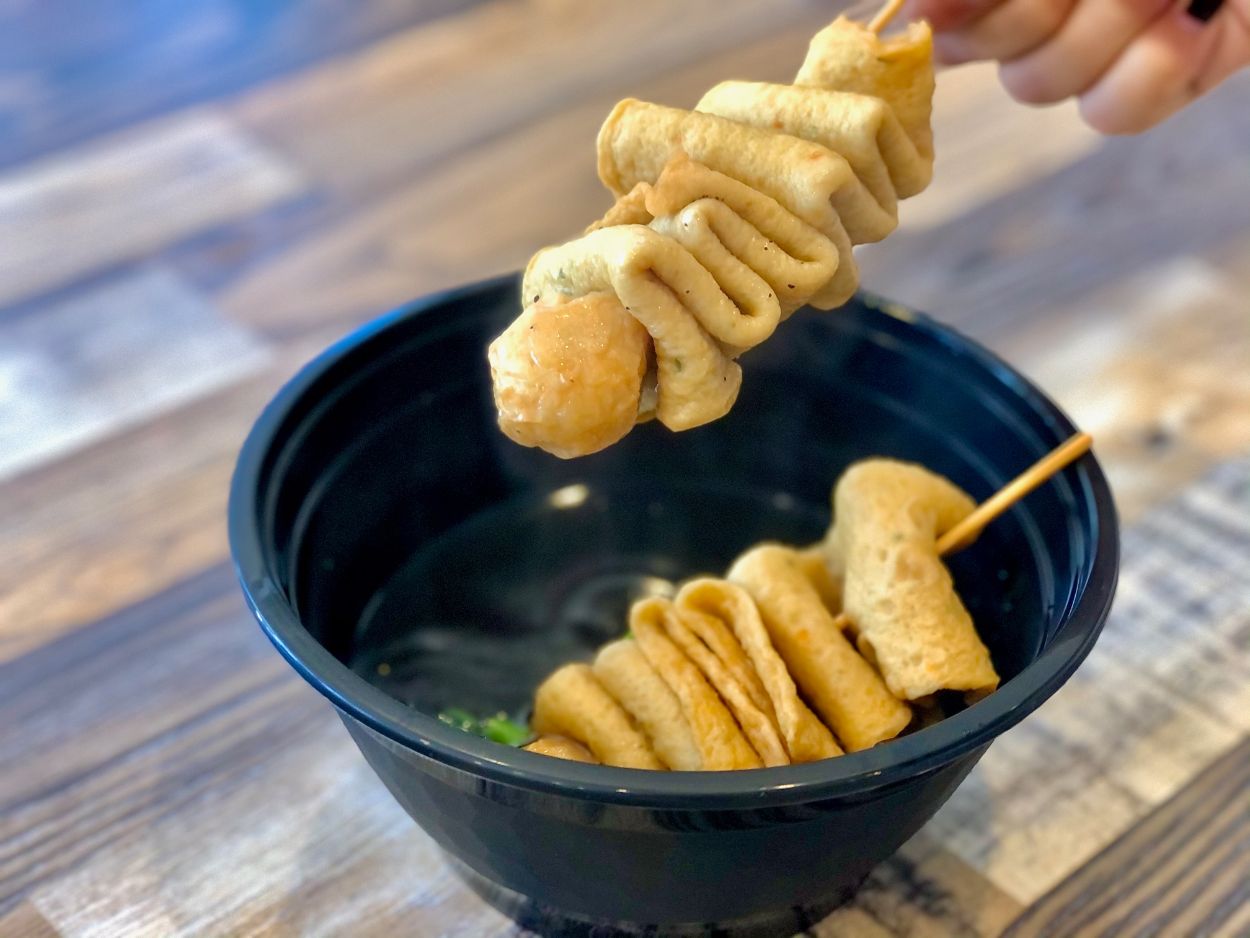
Gwangjang Market is arguably the most well-known of Seoul’s many street food areas, with over 5000 stalls, some of which offer a selection of Korean comfort foods that elicit warm and fuzzy feelings of a Korean grandma’s cooking. Much of the market’s vast choices are simple-to-prepare dishes like odeng guk, a basic soup adorned with skewered fishcake, or kimchi mandu, a dumpling filled with kimchi and pork.
Bindaetteok (sometimes nokdujeon) or mung bean pancake is considered by some to be the rockstar of street eats in Gwangjang Market. Why shouldn’t it be? Its deliciousness materializes right before your eyes. Buckets of mung beans that have been soaking overnight are emptied onto a traditional millstone for grinding. Out of it flows a coarse batter that is then blended with kimchi, mung bean sprouts, and green onion—ready for frying. Next, circles of mung bean batter sizzle in a shallow pool of oil until they form into crispy ½ inch thick discs. The cook, typically a working mother, grips one of the bindaetteok with her kitchen shears and cuts the pancake into four equal sections. The rest of the pancakes are stacked like golden doubloons waiting to be served, and with the most popular bindaetteok stalls selling over 1000 pancakes per day, they may as well be made of gold.
When you eat them freshly fried, there is a real risk of scalding your mouth, but that’s precisely the moment to bite into one when its savory flavors have been seared inside by the intense heat--plus that’s when bindaetteok has achieved crispiness maximus and the innards are pleasingly soft, like the perfect hash brown. The textural harmony is sublime, and when paired with soju or maekju (beer), surrounded by the hustle of Gwangjang Market, you may suddenly find yourself basking in one of the best food moments of your life.
Except you’re still at home watching Netflix.
Luckily for us, a bona fide mung bean pancake vendor from Gwangjang Market called Soon Hee Ga has opened its first restaurant overseas right here in the U.S. Even better, the location of this Soon Hee Ga master franchise is in Arcadia...in the big bad San Gabriel Valley.
Why not Koreatown? According to one of the owners, Esther Kim, they were interested in “more diverse people seeking Korean street food.” However, if all goes well, there will possibly be a KTown spot in the future.
What you can expect to see on the menu at Soon Hee Ga is pretty much what you’d find at its Gwangjang Market food stall: spicy rice cakes called tteokbokki, mayak gimbap (rice and vegetables rolled in dried seaweed), fish cake soup, and three types of mung bean pancake. Of course, the mung bean pancakes get top billing here. In fact, director Tim Burton is a big fan (photos of him smiling while enjoying his frisbee-sized bindaetteok adorn the stall at Gwangjang Market).
Although guests won’t be able to get an up-close look at the pancakes being made, it’s not the same process as in Gwangjang Market since the millstone and copper grill aren’t permitted by the local health department—the food itself still holds onto its origins because a representative from the home office trained the cooking staff. “The president himself of Soon Hee Ga, Mr. Chu (Geun-seong), came to Arcadia to train the local staff,” said partner Alan Liu.
Out of the three different styles of bindaetteok, the regular version has the best crunch since it’s mostly batter containing sparse vegetal filling. The pork mung bean pancake is chunky with ground pork and slightly smaller in circumference by a couple of inches. The seafood option is stuffed with shrimp along with corn, mung bean sprouts, and green onion. Every pancake includes the requisite jangajji, a vinegar sauce, sugar, soy sauce, and fermented onion, which does wonders to balance out the oily nature of bindaetteok.
If you’re taking a break from grease, try a bowl of tteokbokki. These cheerful little cylinders of rice flour chew in your mouth like pillowy gummies. Swimming in a gochujang broth, the flavorless rice cakes suddenly pack a red pepper punch. A few pieces of fishcake lend a hint of umami to the bowl.
Gradually the Arcadia Soon Hee Ga aims to offer the same items like the one in Gwangjang Market. “We’re hoping to sell the yukhoe (Korean steak tartare) on the menu. But that depends on the health department,” said Liu.
But if you’re desperate for Soon Hee Ga’s yukhoe, you could always turn off Netflix and book a flight for Seoul. Otherwise, we’re lucky to have this Korean street food restaurant in our backyard.
Soon Hee Ga
1033 S Baldwin Ave, Arcadia, CA 91007