If anyone had predicted a few years ago that one of this country’s major political parties would turn its back on capitalism and democracy, most people would have guessed it would be the Democrats.
But that’s not what happened. The full 360-degree turn has come from the Republican Party.
In the not-so-distant past, Democrats were easily demonized as radical, drug-induced hippies whose loyalties were constantly in question. Worse still, they were seen as obsessed with social engineering—championing far-out notions of equality and fairness while spending money without restraint. After all, the Democrats had long been the party of public works, labor unions, government programs for the poor, the New Deal, and civil rights.
Republicans, by contrast, it was commonly understood, stood for unrestrained profit, limited government, protections for the corporate world, and personal responsibility. They were the party of Ronald Reagan and John Wayne toughness, not of grievance. If you were poor, some even believed it made sense to be a Republican—you’d get rich through osmosis.
But under Donald Trump, the GOP has morphed into something closer to the old Soviet model: a centralized, personality-driven machine built on loyalty to one man and the victories of propaganda over principles.
The only difference is that the Soviet Union at least had an ideology.
While Ronald Reagan commonly gets credit for bringing down the Soviet Union, Trump can now take credit for importing its political logic to America—using the same anti-Communist rhetoric once used to defeat it.
Communism under Lenin and Stalin promised equality but demanded obedience. Those under Soviet rule ultimately got none of the equality, but nonetheless still had to obey.
Those who disagreed with its exalted leaders were labeled enemies of the state. Power was absolute, dissent was punished, and the people were expendable, from Zhukov's sacrificial waves of doomed men in World War II to the scores of young Russians, convicts, and mercenaries from other nations sent forth as cannon fodder in Putin's relentless attacks on a sovereign Ukraine.
Trump is now the unquestioned head of the Republican Party. The GOP today has no ideology beyond “Sí señor, Mr. Trump.” Trump once flirted with running as a Democrat, but saw those Dems as too unruly—too emotionally attached to notions like “equality,” “democracy,” and “civil rights.” Those silly little things.
So, he found a more suitable home in a movement guided by absolutism, a party now literally bowing to rule by decree. This base draws its political blood—its retribution—and Trump gets his throne. That haunted devil's bargain will shadow both the Republican Party and the nation for generations, in ways that we can’t even imagine.
How do you get MAGA all riled up? Feed them what they want to hear: “Lower taxes, no abortion, silence the Democrats, and hate the Mexicans.”
It’s a not-so-secret formula—tired but always ready to be deployed. Just add a few tariffs and a dose of nostalgia for a country that never existed, and the crowd roars. It never fails. No antidote can stave off the poison—it’s baked in.
What’s stunning is how many of the world’s elites once believed in old Republican ideals: free markets, meritocracy, and the rule of law. But the invisible hand has become a clenched fist. In just a few months, every idea from transparency to maintaining limited debt to promoting citizen voting is gone, no longer something the United States can teach or preach to other nations.
The International Monetary Fund (IMF) and World Bank, through the economic world order now being questioned, used to withhold funding if nations behaved the way the U.S. is behaving now. Schools of economics and political science would be filled with foreign students, who would in turn return to their country and exalt the U.S. system. That world is now gone.
Trumpism isn’t ideology; it’s transactional power—Leninism draped in red, white, and blue. The Leninist state demanded loyalty to the Party; Trump’s America demands loyalty to Trump and Trump only. And we’re not making this up—he actually demands loyalty first.
Both systems despise independent thought. Both replace belief with obedience. And both weaponize the machinery of government for personal gain.
The post-war GOP once preached that the market should be free and the state should never pick winners or losers. Today, by contrast, the federal government owns stakes in major corporations like Intel, MP Materials, and Lithium Americas—a reality conservatives applaud as long as it serves their leader. Republicans used to call this socialism.
Even the media isn’t immune. The Federal Communications Commission, once a neutral guardian of free speech, now entertains ideological tests for broadcast licenses—a chilling echo of Soviet censorship.
Instead of Pravda, we have FOX news and Truth Social, competing to glorify one man’s grievances. Even comedians such as Jimmy Kimmel and Steven Colbert have faced cancellation for their pointed political humor.
When Trump’s followers accuse others of “Trump Derangement Syndrome,” they miss the point. The real derangement is the movement’s abandonment of its own values: free markets replaced by cronyism, law and order replaced by mob loyalty, and patriotism replaced by idolatry.
History warns what happens when a society trades truth for loyalty. The Soviet Union collapsed, not from foreign invasion, but from the weight of its own lies to its people. The danger for the U.S. doesn’t come from the Left—it comes from a Right that has forgotten what freedom means. Or simply forgot that it cares about protecting freedom.
January 20, 2025, won’t mark a rebirth. It will mark the moment when the Republican Party completed its transformation into the Party of Lenin—American-style. The rest of the country must decide whether it still remembers what it once stood for, before democracy becomes permanent theater.
Even if Trump and MAGA are eventually defeated, the damage incurred will linger. The guardrails we once thought unbreakable—an independent Supreme Court, a civilian military, and law enforcement bound by the Constitution—are already bending or broken.
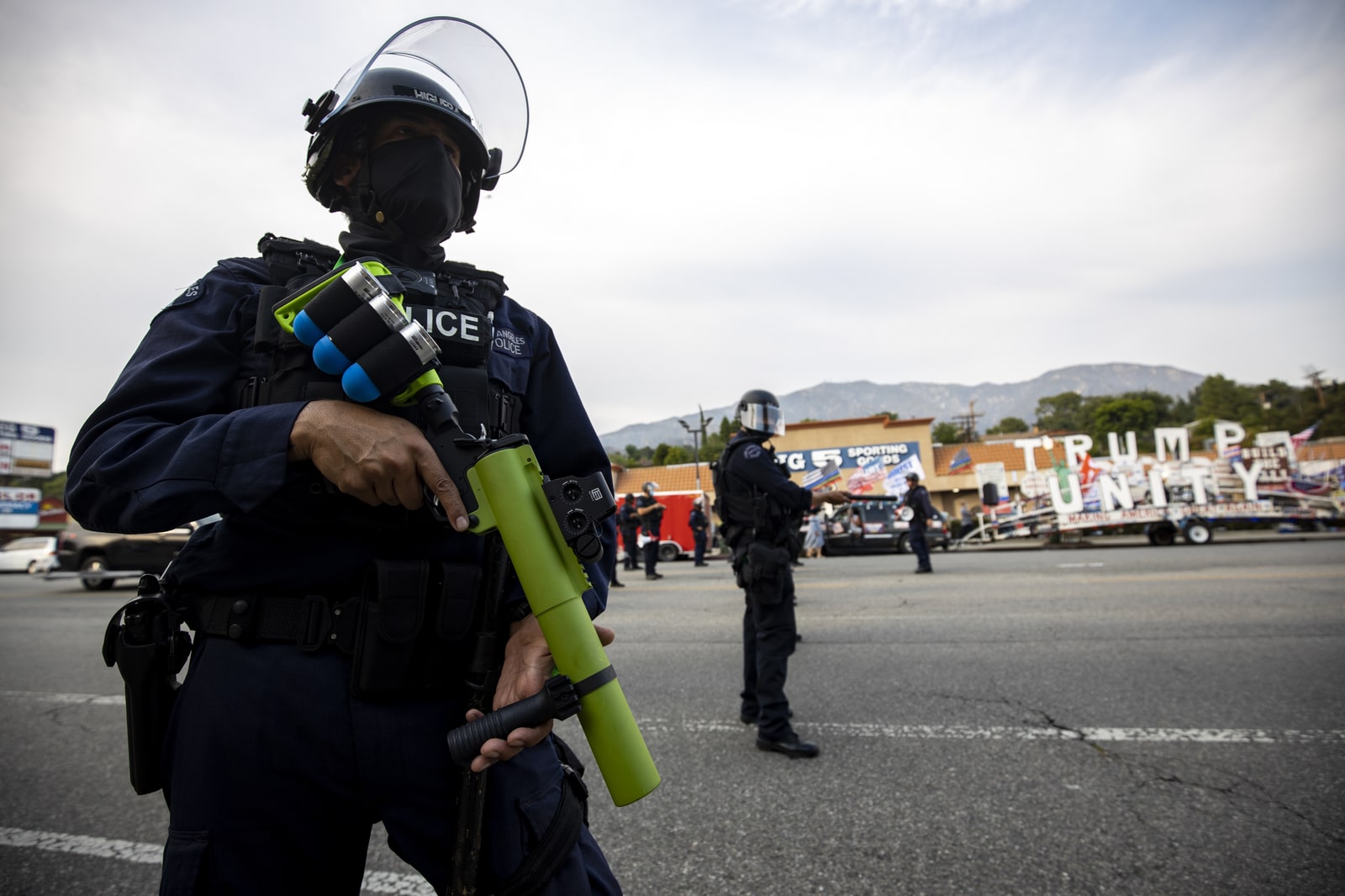
When courts hand near-limitless power to one man, when soldiers and ICE agents patrol the streets like enforcers at a political rally, the republic isn’t being defended; it’s in dress rehearsel for its own authoritarian remake.
The U.S. doesn’t need a Soviet-style invasion or a terrorist attack to lose its freedoms. It can apparently manage that all by itself.
Trump is indeed a change agent—but he’s 60 years too late. The world has shifted since the post-World War II era when the U.S. stood alone against the Soviets and the dollar ruled supreme.
We now live in a multi-polar world where other powers no longer fear America’s military spending—they simply let it burn itself out.
And the world is asking: with its institutions fraying and its myths collapsing, does the United States now mirror the Soviet Union under Lenin? Or Gorbachev? Can the United States keep spending like there’s no tomorrow? History says empires that believe they are exempt from reality never survive.
So why does any of this matter to you and me?
For most Americans born after World War II, we’ve lived inside a kind of historical bubble—an era of prosperity unmatched in human history. We grew up believing that the U.S. military was unbeatable, the dollar unshakable, and American ideology and technology eternally ahead of everyone else. For decades, that belief wasn’t arrogance; it was reality.
But reality changes. Other countries now openly challenge U.S. dominance in currency, technology, energy, and influence. The illusion of eternal supremacy is fading. We are becoming the first generation since 1945 that may have to share the world—not rule it.
That adjustment will be painful. We’ve been told since birth that the United States is exceptional, chosen, and destined to lead. Yet nations that once believed the same—from Britain to the Soviet Union—learned that history humbles even the proudest empires.
The test ahead isn’t whether this country can keep pretending it's number one. It’s whether we can rediscover humility, rebuild trust in facts and democracy, and live in a shared world without needing to dominate it.
If we can, the next chapter may yet belong to us—not as rulers, but as citizens of a nation finally grown wise enough to understand its own limits.