You want to do your part and have decided you have the ability and will to identify federal agents running amok in your community, and document what you see, both for everyone’s awareness in the immediate moment and for posterity, in the event your footage can help a detainee in a future court case.
What should you keep an eye out for, and how do you do it safely and legally?
We’ve compiled a few essential tips, drawn from the experiences of on-the-ground activists and immigrant rights groups.
It’s essential to remember that not all agents or agencies adhere to established legal procedures. Always act legally yourself and don’t assume anyone is ICE or another type of FED unless you’re 100% certain.
—Keep an eye out for midsize SUVs and large vehicles with tinted windows and out-of-state plates, no plates, or temporary plates. You may find them traveling in small groups or convoys of other automobiles, including similar cars. Official Border Patrol trucks have a diagonal green or blue stripe across their bodies. However, Unión Del Barrio has confirmed with L.A. TACO that they are also lone wolf ICE agents out there in just one vehicle as well.
—If you identify such vehicles, Siempre Unidos suggests honking your horn loudly to bring attention to such vehicles and warn vulnerable populations, and calling Rapid Response networks to report when you see people being harassed or detained.
—If you see agents, masked people, or people in tactical gear in the process of detaining anyone, Al Otro Lado suggests recording the incident with your phone, asking the detained person or persons to state their name, birth date, and anyone they want you to reach out to, to let them know what is happening.
—You are legally allowed to film on public property that is open to the public for journalistic, hobby, or social media purposes, though not for commercial reasons. You cannot film anywhere where there is an expectation of privacy, such as a bathroom, nor where signage has been posted against filming. If you’re on private property, you may not film, except when you own that property. Officers may try to intimidate and make you feel scared in the heat of a moment, but you have the legal right to film if you are on public property.
—It’s a good practice to blur the faces of any accused or bystanders in your social media videos, for whom you don’t have permission to film. There are free apps online for both Android and iPhone that automatically blur faces in both photos and videos, respectively.
—If documenting the detention or arrest for social media reporting or other reporting, narrate the incident and what you’re seeing as clearly and as detailed as possible, with timestamps and witness accounts.
—You can attempt to have the officer and agent identify themselves on video by asking their name and what department or agency they’re from. They likely won’t answer, but catching any false information or lies could become important evidence in the event of a future trial or lawsuit.
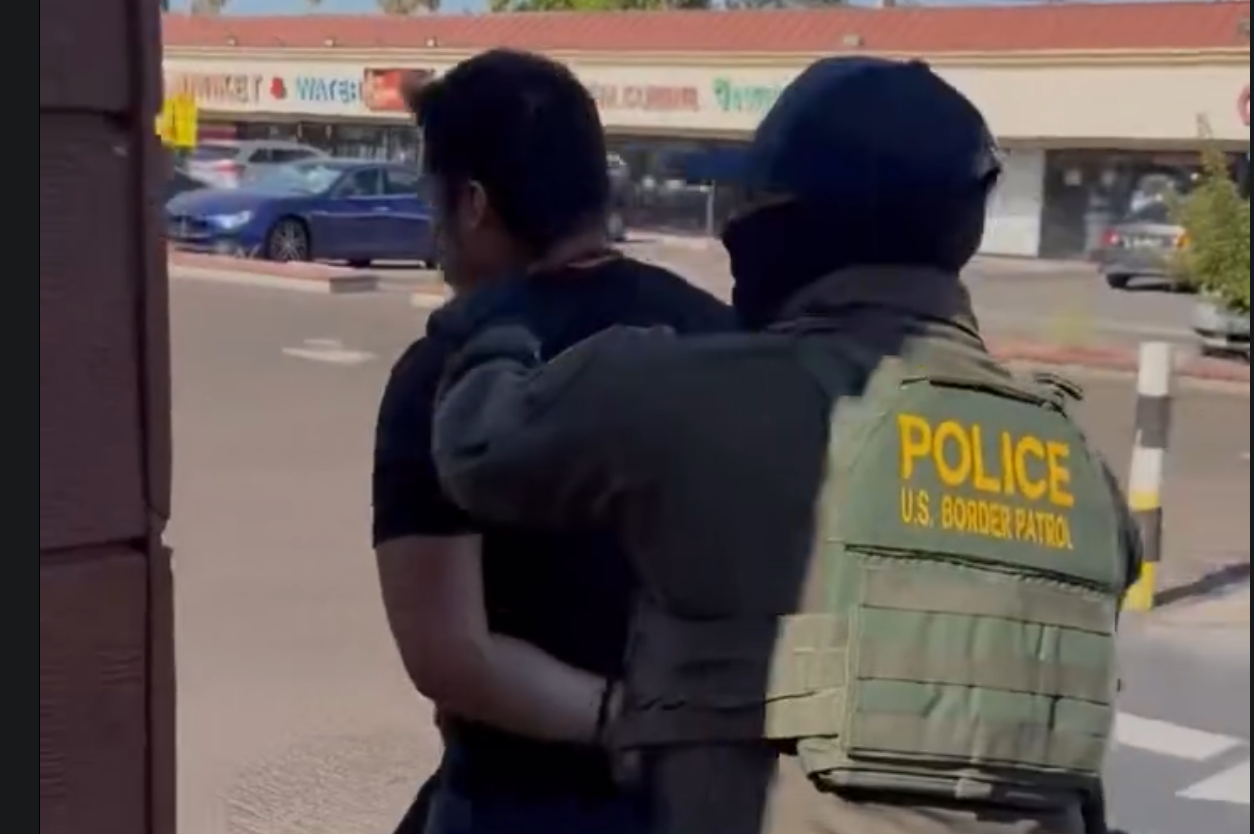
—Hints that they may be federal agents could include clearly identifiable uniforms, bulletproof vests over civilian clothing, and any tactical gear.
—Be extremely cautious and never get between an aggressor and a detainee if you're there to document activity. You don’t want to catch a charge yourself for obstructing an arrest, harassment of a federal agent, assault, or get hurt yourself in the process of documenting a detention or arrest.
—Yelling things like “La Migra, run!” and “ICE, nobody say a word to them!” can be considered obstruction. Consider using a warning phrase like, “ICE is here. I want to remind you of your right to remain silent,” instead.
—If you’re going out to document the actions of authorities, be smart. Don’t have an illegal pocket knife or other potential weapon on you. Don’t have illegal substances on you or in your body. Don’t give authorities any reason to charge you with something, or slap you with extra charges, should someone try to detain or arrest you for anything.
—If questioned or approached by an agent, you have the right to remain silent. Remember, even an innocent conversation you consent to can come back to haunt you. Never give any information about someone who is being detained, including whether you know them or not.
—If an ICE agent asks for your phone, politely refuse consent to search, stating, “I do not consent to a search of my phone,” and request to see a judicial warrant signed by a judge. For detailed guidance, refer to the ACLU’s “Know Your Rights” page, which outlines your protections and steps to take during ICE encounters.