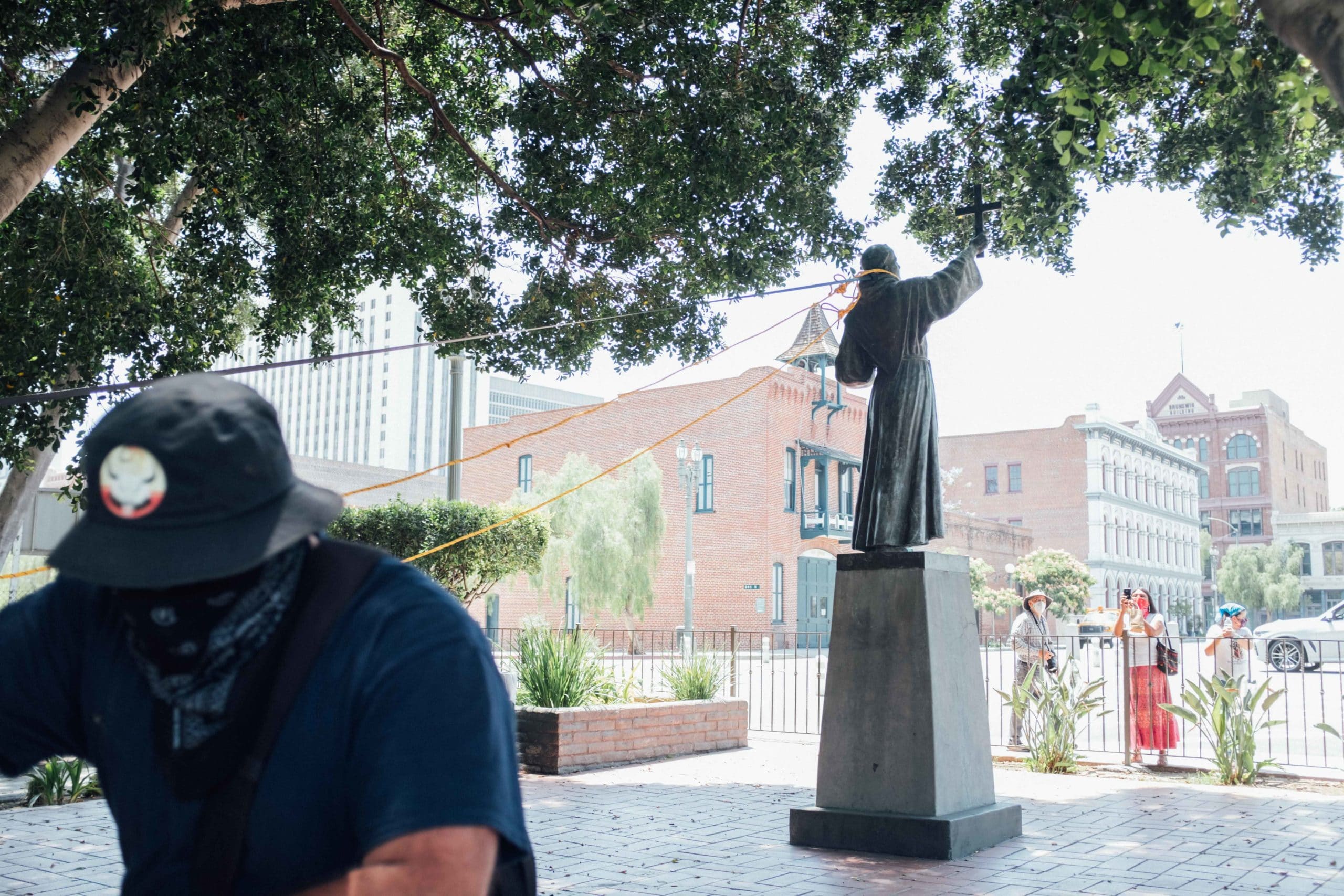
On Saturday, community members slowly gathered at Father Serra Park, a small patch of grass across the street from Union Station and Olvera Street that you’ve probably passed a million times and never noticed. On the west side of the park, a 15-foot statue of Father Junípero Serra—an 18th-century Spanish-born, Roman Catholic priest—stood across the street from La Placita.
By approximately 2:18 PM, the statue was taken down by the brute force of over 20 men and women. There were also community members who chose to not participate in the taking down of the statue.
“This doesn’t feel like a celebration, this is just the beginning of healing that needs to occur amongst our people,” organizer Jessa Calderon, a representative of the Ventureño Chumash and Gabrielino-Tongva Tribes, addressed a circle of over a hundred people after community members used tow straps and ropes to topple the controversial statue.
Fixed to the neck of Father Serra, community members stretched the straps over 20 feet away from the statue to apply pressure to its weakest point. Within 30 seconds, Father Serra was pulled to the ground. The sound of the bronze statue’s head bouncing off the ground was followed by loud and celebratory cheers from community members.
Later, children sat on the dethroned statue, after a security guard attempted to cut the ropes. At least one person spray painted the statue but an organizer quickly jumped in and asked them to stop. “Please don’t paint on our stolen land,” They said. The spray painter apologized. At no point during Saturday’s action did law enforcement show up.
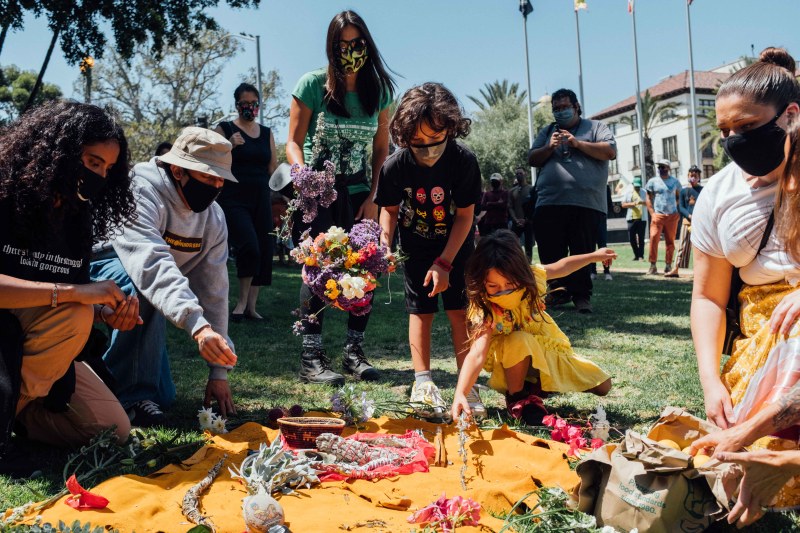
The action was organized in secrecy but also in solidarity with Black Lives Matter. On Saturday organizers reiterated their support for the movement. “We all need to come together as mother earth people to knock down White supremacy,” Yoatl with Ana Huak Underground said towards the end of Saturday’s blessing ceremony, following the toppling of the Father Serra statue.
Saturday’s action was centered on the polarizing Father Serra statue. Across the state and country, protestors have been taking down statues of Father Serra as well as the statues of other figures associated with colonialism and racism.
Earlier this month, the Mayor of Ventura and religious leaders agreed to relocate another statue of Father Serra from city hall to a non-public location.
Serra was responsible for establishing nine of the first California missions and greatly contributed to the spread of Roman Catholicism in the United States. Historians and members of the indigenous community however largely regard the missions as a tool that colonizers used to control and gradually erase the native population.
Under the mission system, natives were forced into what some people describe as concentration camps where they were forced to work, sometimes until death, and were exposed to diseases they had no immunity to.
The impacts of what amounts to institutional slavery for the indigenous community has had a multi-generational impact on community members. Relatives are still dealing with the trauma. “This is a man who has created genetic trauma for myself [and] our ancestry. These ancestors of ours, they struggled loving themselves because somebody like [Father Serra] told them that they were disgusting, told them that they were useless other than for sex and for slavery. And because of somebody like that, we struggle today as a community,” Calderon said on Saturday.
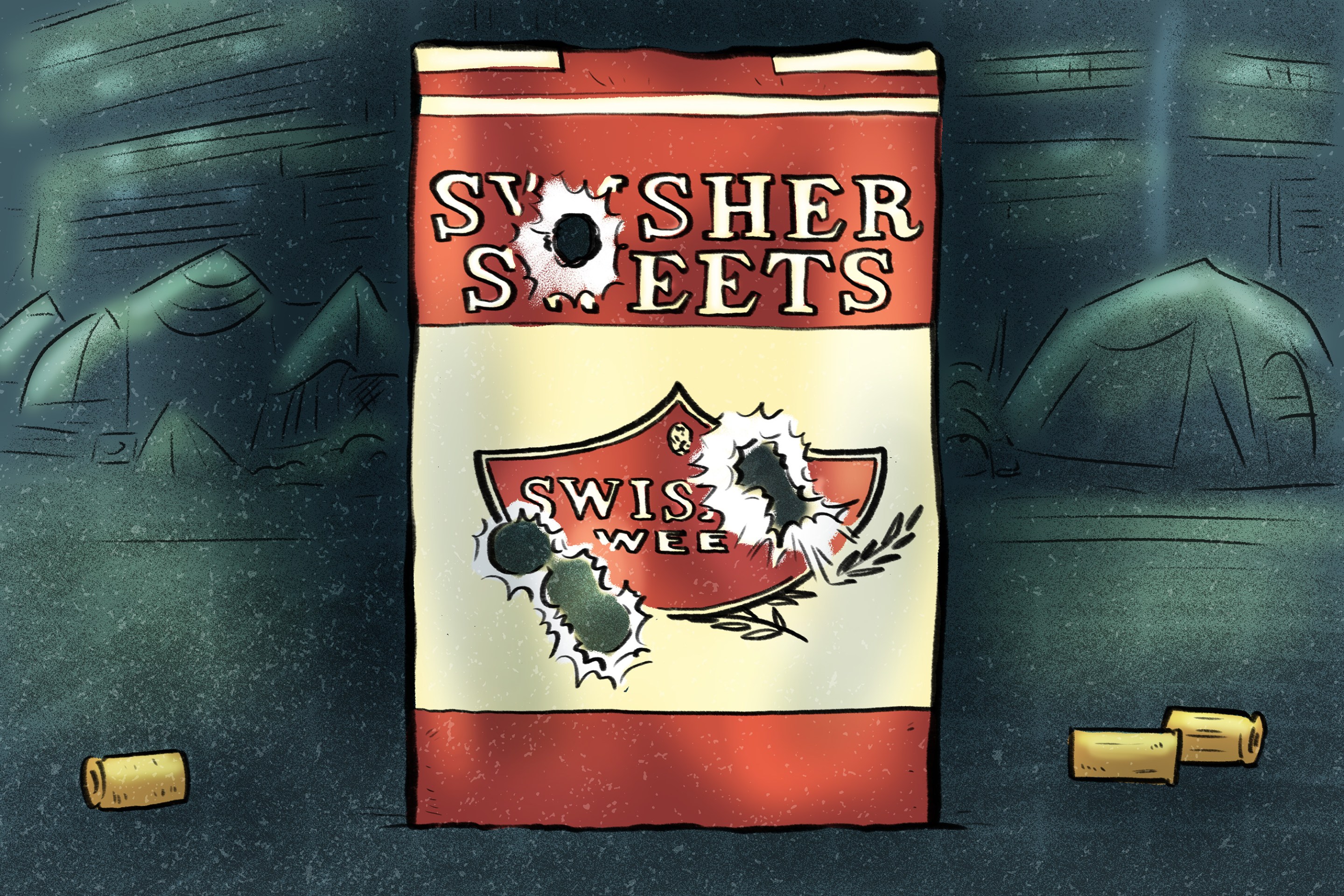
For years people criticized California school systems for glorifying the Spanish missions. Up until 2017, LAUSD students were required to build models of missions out of sugar cubes, cardboard, and popsicle sticks. It was also common for schools to organize “field trips” to missions without providing a larger context for how they negatively impacted indigenous people.
After revising the statewide framework on history and social science, the California department of education admitted, “Missions were sites of conflict, conquest, and forced labor. Students should consider cultural differences, such as gender roles and religious beliefs, in order to better understand the dynamics of Native and Spanish interaction.” The LAUSD quickly adopted the new guidelines after they were presented.
 On Saturday, community member Alan Salazar suggested that the churches need to address the conflicting history of the missions and move towards a resolution. “This is a symbol of oppression, a symbol of slavery, a symbol of our stolen land, our culture, our language. So it’s important that we remove this statue but that’s just the first step.” Salazar hopes to one day see a memorial to honor the native people that were worked to death and buried in mass.
Moving forward, despite cities across the state voluntarily removing statues of controversial figures, there are still a number of memorials within the city of Los Angeles that might see the same fate as the Father Serra statue that came down on Saturday. Community members have been sharing the locations of other controversial memorials on social media.
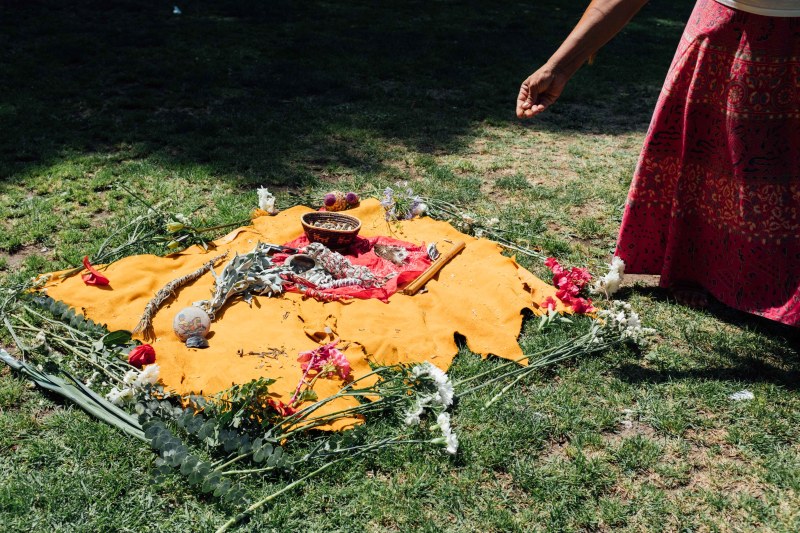
On Sunday at around 4 PM, signs from the Bureau of Street Services surrounded the indented head of Father Serra. Across the street, La Placita remained closed off while most of the stalls that lined Olvera Street remained boarded up. Against the backdrop of Union Station, a work of art that also led to the displacement of people of color, a statue-less plaque honoring Father Serra, was redecorated with fruit and other offerings. The offerings that organizers left basked in the sun, while the Father Serra statue remained on the ground in the shadows.
L.A. Taco reached out to Mayor Eric Garcetti’s office asking if the mayor was aware of the protest, what he thinks of the statue, and if there are any plans to replace the statue going forward. The Mayor’s office had no comment.