


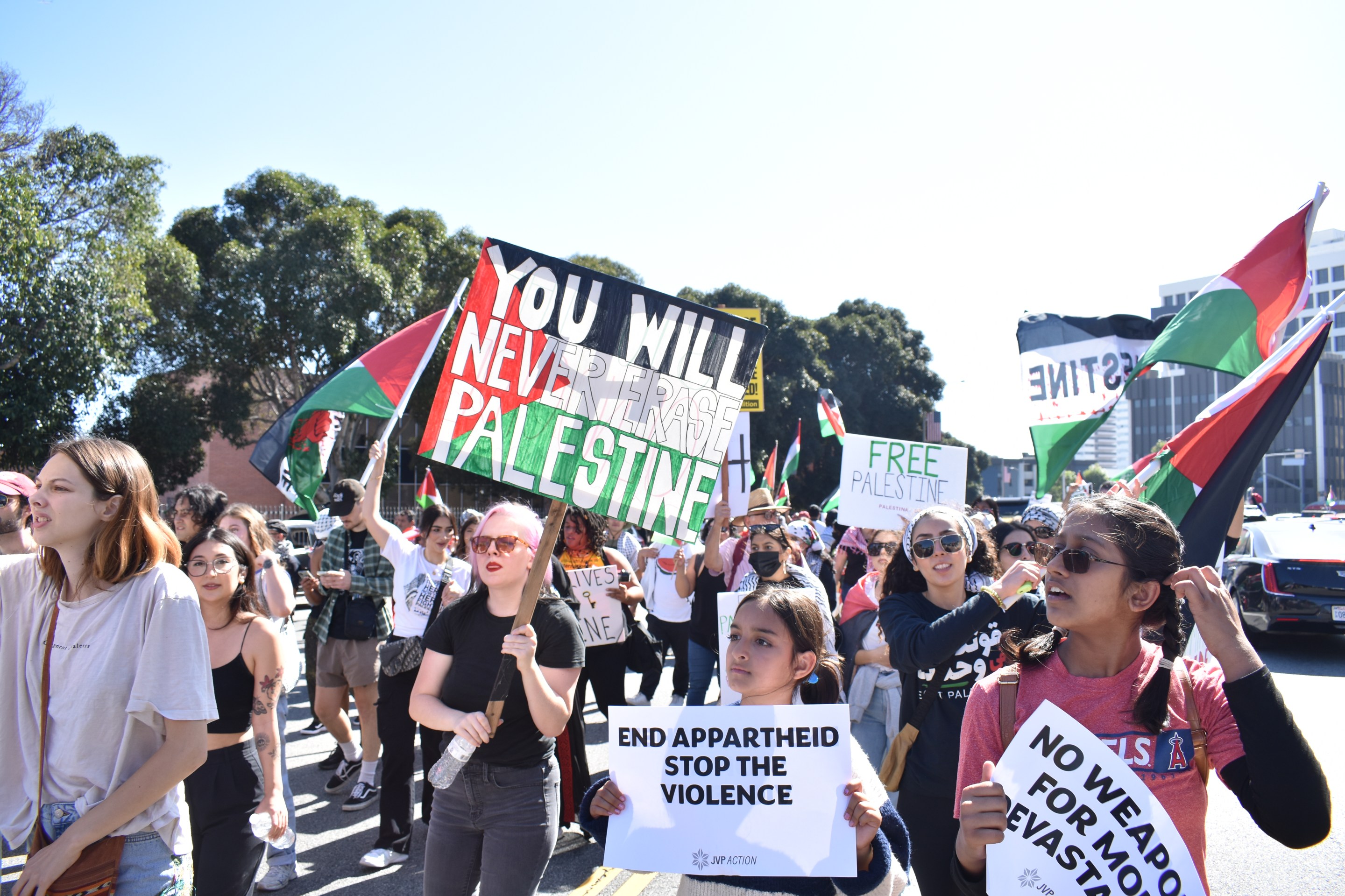
Gaza is under siege. For many Angelenos, the news reports, statistics, and videos on social media in the wake of Hamas's terrorist attack on October 7 and brutal Israel retaliation have been harrowing.
Thousands have taken to the streets in protest. For weeks Gaza, a small, densely populated strip of land, has had its food, fuel, and electricity supply cut off by the Israeli government. An act many are calling an illegal collective punishment. While there is some aid being allowed in, the UN said it is not enough. Densely populated and long referred to as “the world’s largest open-air prison,” this is not the first abuse Gaza has had to endure.
The current situation’s primary origin is the 1948 Nakba. It was then that Palestinians were forcefully driven out of their native land by the founding of the State of Israel. This included a campaign of mass murder, atrocities, and deliberate expulsions. Many people living in Gaza today are victims of this or are the descendants of those who were.
The West Bank and Gaza were occupied by Israel in 1967, resulting in a further 350 thousand Palestinians being turned into refugees. Now, Israeli bombs are taking a frightful toll and experts fear history is repeating itself. While 1,200 Israelis perished in the initial attack, over 13,000 Palestinians have been killed, almost half of them children. Independent U.N. experts warn there is a high risk of the Palestinians facing a genocide.