

Skip to Content
Personal Essay

Gay in a Macho Latino World: Why I Defend Pride

Growing up in an old, beaten-up apartment complex near Disneyland, I came of age in an environment that demonized queerness. Not only through verbal reprimands, machismo, and shaming, but also through violent means.

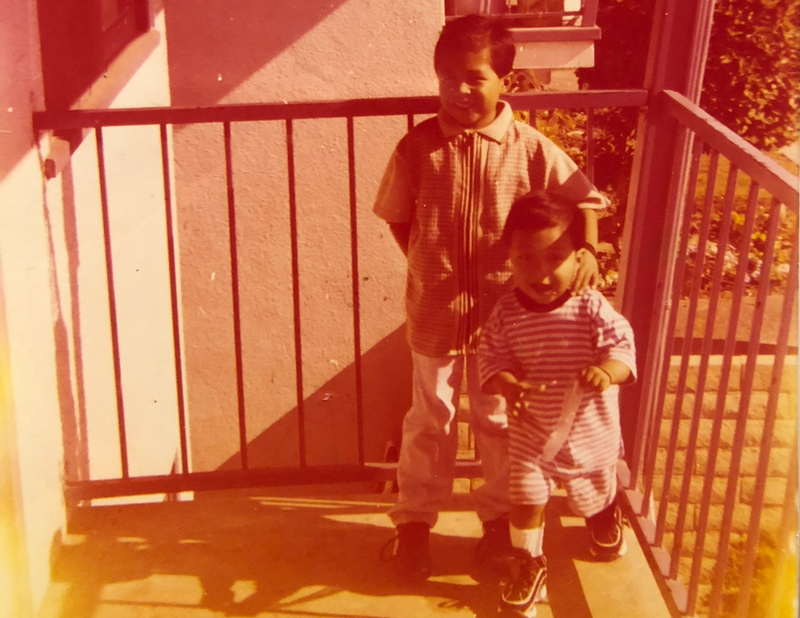
The author as a child with his older sibling. Photo courtesy of Izzy Ramirez.

I grew up in an environment that demonized queerness. Not only through verbal reprimands and shaming, but also through violent means. I was abused several times and also witnessed instances of neighbors assaulting gay men and teenagers who were out. 

I was also unfortunately never given the opportunity to come out; I was outed in eighth grade when I was still trying to understand my own identity.

We’re also living in an era of heavy transphobia, which even comes from marginalized communities as much as those in power. This is happening as queer leaders have helped organize against ICE through mutual aid and rapid response, while the number of transgender killings grows, and as some gay men even advocate to remove the TQIA+ from LGBTQIA+.

Pride has been, and continues to be, vital.

While violent rhetoric surrounded me as a child, I felt it lessen in the early 2010s, in my teens. There was music speaking out about suicide rates among LGBTQIA+ youth, and even viral campaigns hitting social media. This advocacy and demand for societal change began to dwindle; I no longer feel the same sense of allyship I did in high school and my early 20s. 

This is what my experience as a gay man has been like up to now, and why I vehemently defend PRIDE in 2026.

The author as an infant with his family. Photo courtesy of Izzy Ramirez.

My first instance of violent backlash to acting outside of the roles of the gender binary was when I was three years old. I remember watching cartoons and seeing a character paint her nails. Curiosity kicked in, and I grabbed a marker to color in my nails because I thought it seemed cool. I chose a blue Crayola marker. 

Despite being so young, I already had a hunch that what I was doing was “wrong.” After I finished watching the show, I could hear my mother walking towards my bedroom. Crazy enough, I literally hid in a closet.

After my mom walked in and called out to me, I stayed quiet. She began rustling through the room to find me and finally opened the closet door. 

She scolded me in Spanish after looking at my nails and yelled out to my father to come into the room.

“Johnny! Johnny! Come look at your son!”

When my dad got into the room and took a look at my hand, he swung his right heavy and calloused hand clear across my left cheek. He grabbed my hand and yelled at me, declaring that “this is only for girls to do.”

When I was enrolled in kindergarten a year later, I had already begun developing an affinity for one of my male classmates. Despite homophobic adults making the baseless claim that children do not “understand” homosexuality, I can tell you with clear experience that this is not true. 

I knew I had developed a small crush on my classmate. What I didn’t understand was why I couldn’t talk about it. Despite my earlier conditioning to be a “man,” I didn’t necessarily feel ashamed of how I felt. By this age, I was already aware that I was not like my peers, but I also had a sense of self-preservation about an identity I couldn’t quite name.

I did, however, fall victim to the culture of machismo, either through pressure or feeling like I had to compensate for any lack of “masculinity.” I grew up in a Latino neighborhood, often seeing “masculinity” and “manhood” as rugged, dirty, and loud. My earliest witness to it was through my father, who drank every night, hated when I displayed heavy emotion, and measured much of his worth in how often he worked.

My older brother was exposed to it as well; there’s even a home video on VHS of my father berating and hitting him when he was only 8-years-old for being bad at playing pool. My brother clearly channeled this, so did his friends. 

In one specific instance, I was expected to mimic what I now understand to have been clearly misogynistic flirtation. 

In our old, beaten-up apartment complex near Disneyland, my older brother and I were friends with all the kids. After I simply called a neighbor girl “pretty,” there was this ongoing pressure from my brother and other neighbors for me to kiss her. 

Eventually, I fell to this pressure and ended up locking lips with this girl several times. I always assumed she also felt the same pressure from our friends.

About a year later, my family and I moved out of this apartment complex to a new one on the west side of Anaheim, where we lived for the remainder of my childhood and teenage years. 

I experienced pretty typical misogynistic scolding, like being hit by my dad for coloring something pink in a coloring book at home, or being berated or hit for being bad at sports. Around eight or so is when I first began witnessing violent homophobia that radicalized me at such a young age. 

One of these instances was when my older brother and his friends assaulted a friend of theirs who came out. Unfortunately, my parents didn’t express any issues with it. They actually seemed to encourage it, especially my mother.

I remember hearing my older brother speak to my mom afterward about how he broke one of this guy’s ribs and sent him to the hospital, all after they heard about him kissing another male friend.

My family was not very religious in the early part of my childhood, until we started attending church when I was about 10 years old. This is where my general sense of self began to skew, as the homophobic rhetoric that permeated my surroundings turned to homosexuality being marked as sinful and a one-way ticket to eternal damnation.

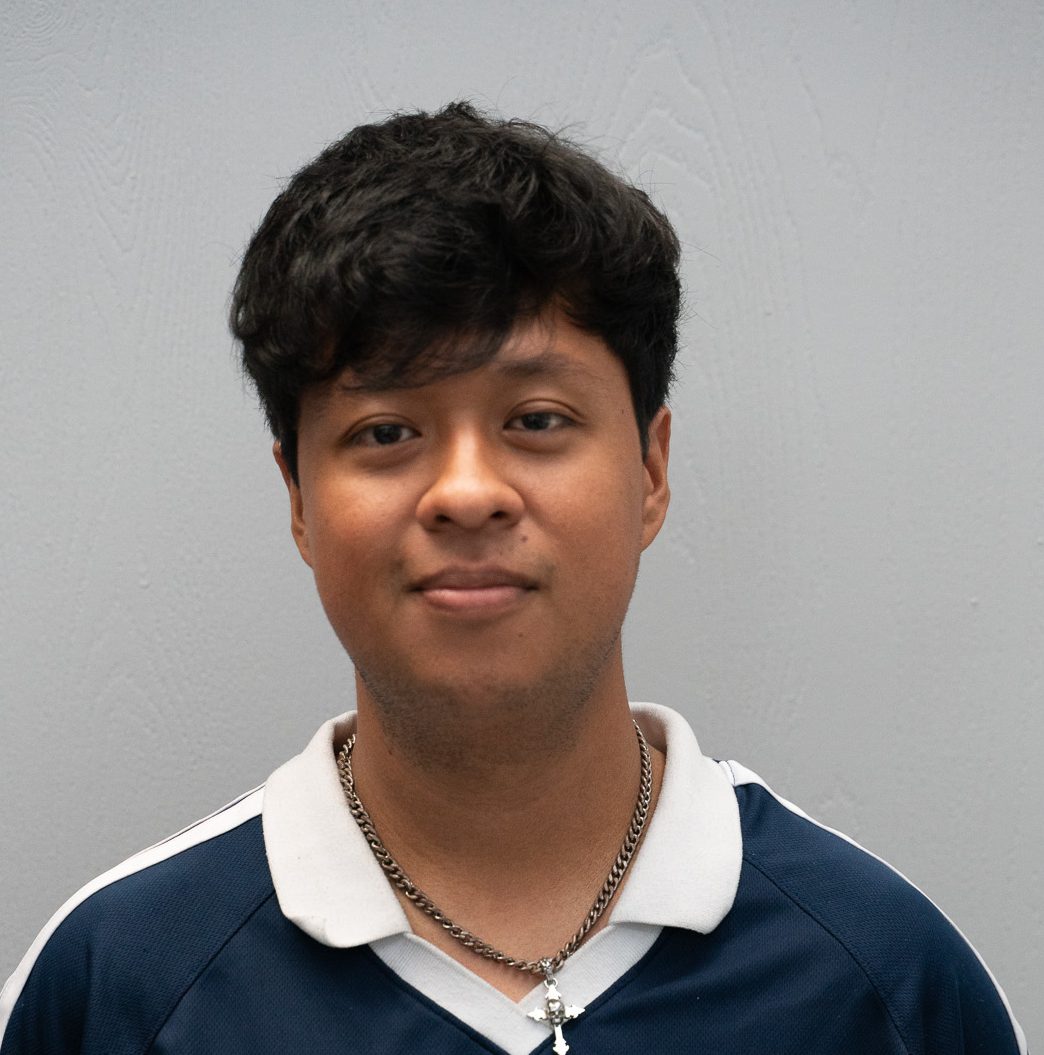
The author as a child. Photo courtesy of Izzy Ramirez.

Prayers and shame finally hit me for the first time in my life. I remember being about eleven years old, crying in our bathroom, pleading with God to cure me, to purify me, to fix me.

In spite of this, I found solace in strong queer characters in television shows and movies, like Will Truman and Jack McFarland from Will and Grace, Lindsay Peterson and Melanie Marcus from Queer as Folk, and even David Collins from The Bride of Chucky. These people became crucial in this fight for self-acceptance.

Unfortunately, when I was around twelve years old, this tumultuous battle turned outward. I was attending Sycamore Junior High in Anaheim and developed feelings for a classmate in my woodshop class. For the first time ever, I decided to talk about it. I texted a girl named Heidi, whom I considered a friend at the time, trusting her with this vital confession.

I was quite excited, to say the least. I trusted her to keep it between us, and I finally felt this heaviness out of my chest. I felt like I could finally explore who I am and tackle romance just as my heterosexual friends did.

But, not even 24 hours later, she told him.

To make a long story short, I came out to my parents. Not in this grand, beautiful gesture, but to make sure they heard it from me before anyone else told them about it. I lied to them and told them that I was seeking to “cure” myself. They bought it. 

I really never forget the words that my dad told me at the time:

“Good. I’m glad I don’t have to beat it out of you.”

At school, people made up rumors, and I lost some friends. I ended up transferring to a different junior high. Some of these vile rumors actually spread to other schools, so I had no other option but to start defending myself.

Unfortunately, my story gets worse. 

While I began to embrace my identity in high school, since I didn’t have much of a choice, I never processed any of the trauma. Even less so when the media's focal point of the gay experience was on young white men, not a Latino from an underprivileged and underrepresented community.

So, with all of this collapsing in on me, I turned to drugs, to alcohol, to casual sex with adults, which included lying about my age, literally every single self-destructive tendency you can think of. 

The author with an older sibling. Photo courtesy of Izzy Ramirez.

I eventually dropped out of school altogether.

Being myself has always felt like a war with society, and it always sounds dramatic until I really sit down and think about what I went through. While I have since then healed, it’s simply not something that could have been accomplished without the strength and pride I witnessed in queer people around me. In my transgender friends, in queer characters. All this support that existed outside of my world saved me and reminded me that things do get better.

But the reality is that this fight is not over.

I can’t think of a time when I wasn’t harassed at least once while holding any of my ex-partners’ hands. 

As a more or less “masculine” man, there are instances where other men will use a homophobic slur around me with complete comfort.

My transgender friends’ existences continue to be debated as if they aren't people.

Why do we need PRIDE in 2026?

Because liberation is not handed over. It continues to be won. 

Stay in touch

Sign up for our free newsletter

More from L.A. TACO

IE Taco Is Now a Reality, Thanks To Funding From The CIELO Fund At The Inland Empire Community Foundation

What started with an April Fool’s Day joke has now become a reality. Every month, L.A. TACO will feature a story about the Inland Empire as part of our new and official IE TACO section.

Daily Memo: Another Death In Detention As GEO Group Punishes Hunger Striking Detainees

Welcome to year two of the ICE Siege of L.A. Yes, it’s still happening, and we’re still on it.  Let’s get into the raids, an update on the Hunger strikes, and unfortunately, another death in ICE detention. 

This THC Matcha Latte Vendor in Long Beach Supports Immigrants with Her Proceeds

“I went to Amsterdam, and I saw the combination of the coffee shops and the smoke shops, and I was like, ‘We need something like that here in Cali,’” Nardo tells L.A. TACO.

Will L.A. taxpayers Be On The Hook For FIFA World Cup Costs?

LA officials haven’t revealed how much is being spent on security for the games. By comparison, the Los Angeles Police Department said this month that security costs for the 2028 Olympics in LA would amount to more than $1 billion.

June 7, 2026

Military Helicopters and Simulated Gunfire Disrupt Multiple Cities in L.A. County

"The city received no advanced notice. I was told that our staff contacted CalPoly officials and confirmed that it was indeed a military exercise by the Department of Defense,” said Council Member Andrew Chou of Diamond Bar, one of the cities affected by U.S. military exercises in the region this week.

Who Won and Who Lost On Primary Election Day and What Comes Next

Delusions, fantasies, lies, and the ultimate reality of what Angelenos chose to support on Tuesday's primary election day.

June 5, 2026
See all posts