


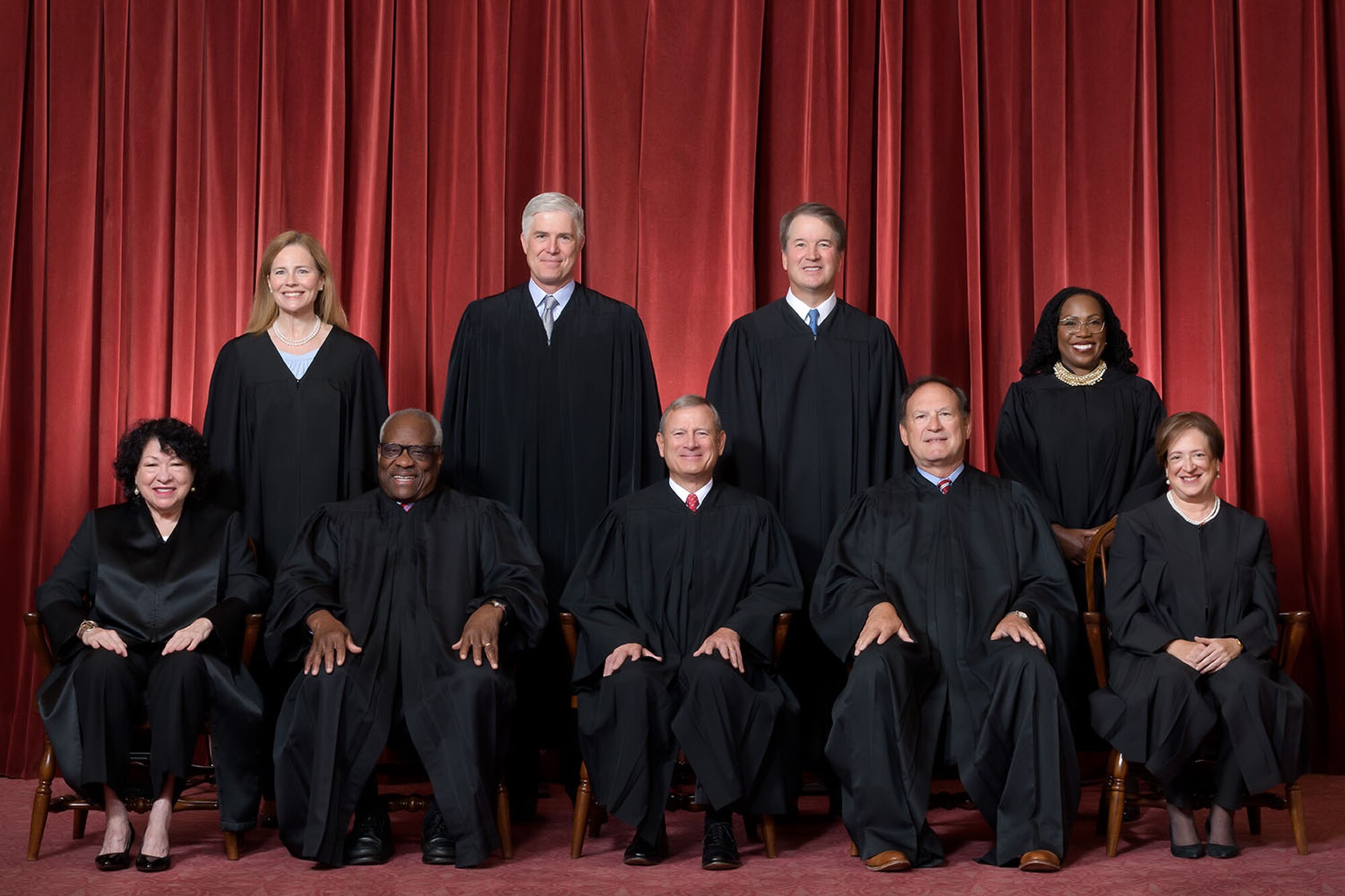
On Tuesday, International Transgender Day of Visibility, the Supreme Court justices ruled against a law that banned “conversion therapy” for LGBTQ+ minors in Colorado in an 8-1 majority after the 10th U.S. Circuit Court of Appeals in Denver upheld the law. In their ruling, they write, “Colorado’s law banning conversion therapy, as applied to Ms. Chiles’s talk therapy, regulates speech based on viewpoint, and the lower courts erred by failing to apply sufficiently rigorous First Amendment scrutiny.”
In 2022, an Alliance Defending Freedom (ADF) attorney filed a suit on behalf of Kaley Chiles, a licensed professional counselor in Colorado Springs, over Colorado’s ban on “conversion therapy.” Chiles argued that the law violated her First Amendment right to talk therapy by prohibiting licensed counselors from engaging in counseling conversations surrounding gender identity and sexual orientation.
In today’s ruling, Justice Elena Kagan wrote that a state could similarly not ban talk therapy designed to affirm a minor’s sexual orientation or gender identity. “Once again, because the State has suppressed one side of a debate, while aiding the other, the constitutional issue is straightforward,” she wrote.
Justice Neil Gorsuch wrote for the court, arguing that the Colorado law “censors speech based on viewpoint.” He stated that the First Amendment “stands as a shield against any effort to enforce orthodoxy in thought or speech in this country.”
Colorado disagrees, stating that its law allows a wide-range of conversations about gender identity and sexual orientation and exempts religious ministries. Colorado affirms that the law simply bars using therapy to try to “convert” LGBTQ+ people to heterosexuality or traditional gender expectations. The practice of “conversion therapy”, sometimes called “reparative” or “reorientation” therapy, stems from the scientifically discredited belief that being LGBTQ+ is a curable mental illness.